A combined baler wrapper is a single machine that bales forage into a round bale, transfers it to an integrated wrapping station, and seals it inside stretch film — all in one continuous pass across the paddock. For contractors who charge by the bale and for high-volume farms where silage quality directly affects livestock performance, this single-pass approach eliminates the two largest cost and quality risks in the conventional two-machine system: the labour cost of running a separate wrapper crew, and the time gap between baling and wrapping that degrades silage fermentation.
How a Combined Baler Wrapper Operates
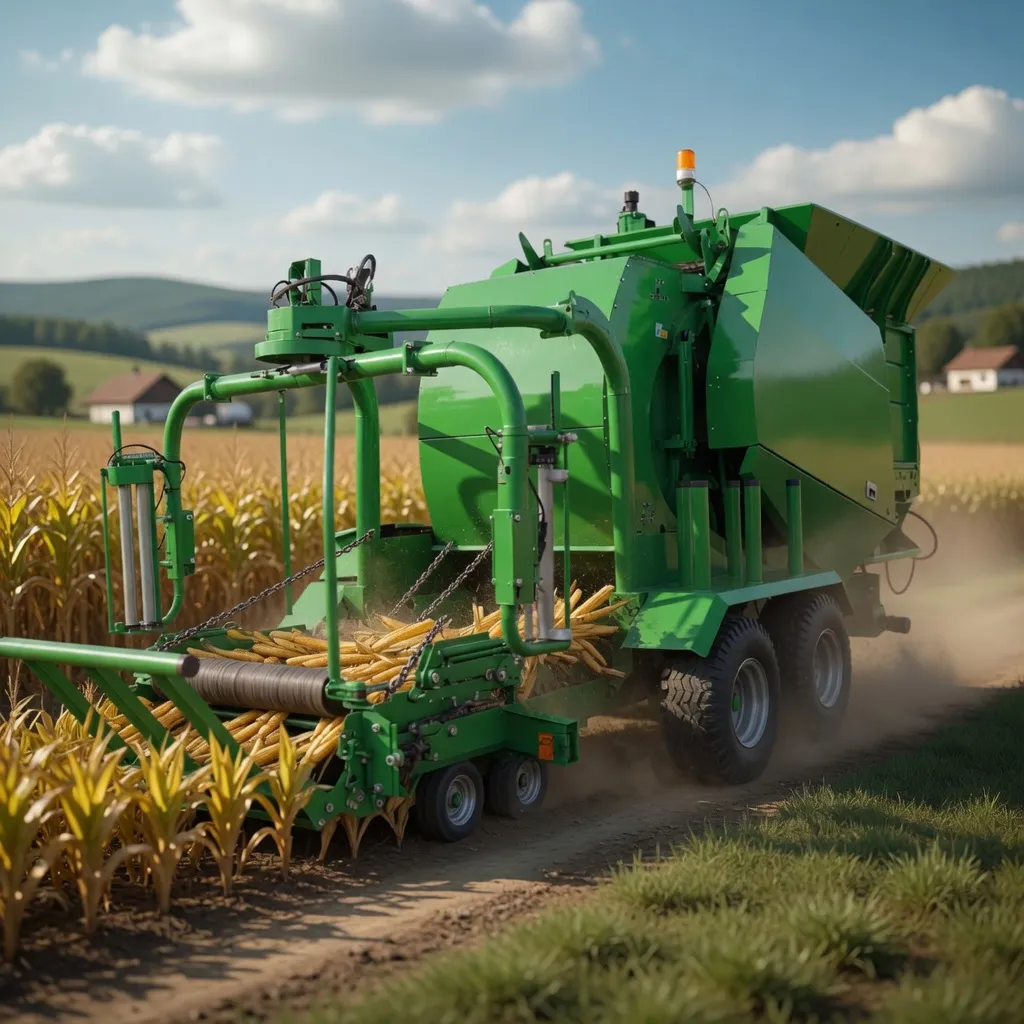
The machine combines two distinct mechanical systems on a single chassis, connected by a bale transfer mechanism. The front section is a conventional round baler — pickup reel, chamber with belts or rollers, and net wrap binding. The rear section is a wrapping table with a rotating arm that carries stretch film. The connection between the two sections is the transfer cradle that moves the finished bale from the chamber exit to the wrapping table without the bale touching the ground.
While the wrapping arm seals the current bale, the baling chamber is already filling with the next bale’s material from the windrow. The two cycles overlap: as the operator continues forward, the chamber compresses the next bale while the previous bale is being wrapped behind. This overlap is the engineering achievement that gives the combined machine its throughput advantage — the operator never stops to wait for wrapping, and the wrapping never waits for the operator to deliver a bale. The only pauses in the cycle are for net wrap and film roll replenishment, which occur at intervals that an experienced operator builds into the paddock turning pattern.
Combined vs Separate: The Two-Machine System It Replaces
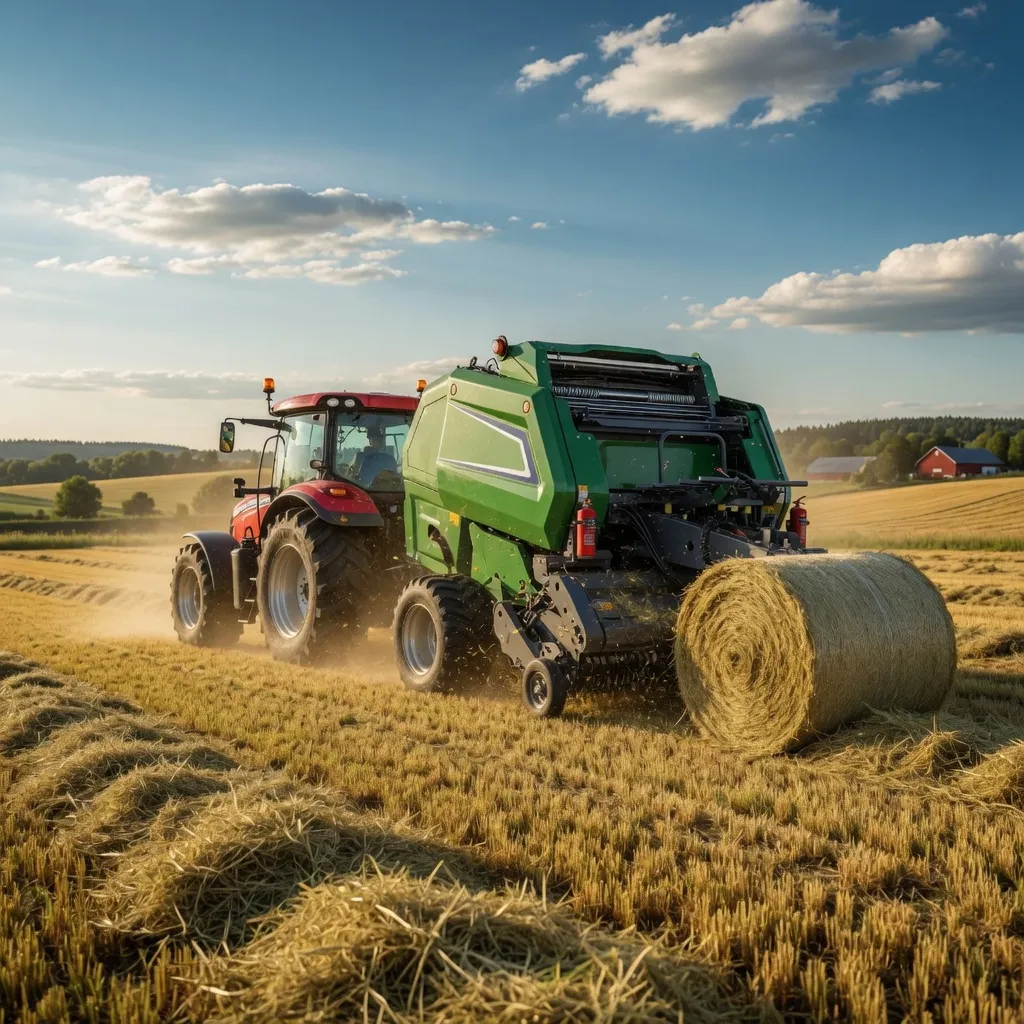
The conventional approach to bale silage production uses two separate machines operated independently. The round baler moves through the paddock and deposits net-wrapped bales at intervals. A second machine — a standalone bale wrapper machine — follows behind, collecting each bale, wrapping it with stretch film, and depositing the sealed bale at the storage site. This two-machine system requires two tractors, two operators, and careful time coordination to ensure that the wrapper reaches each bale before the 4-hour quality deadline that determines whether the silage ferments properly or begins to spoil.
The combined machine eliminates every element of that coordination problem. One tractor. One operator. Zero time gap between bale formation and film sealing. The bale transfers from the chamber to the wrapping table in seconds, not hours. The practical result is measurably higher silage quality (because every bale is wrapped within the fermentation-optimal window), lower seasonal operating cost (because the second tractor, second operator, and second fuel bill do not exist), and higher daily throughput (because the overlapping cycle means neither the baling nor wrapping step waits for the other).
Why Contractors Prefer the Combined Configuration
Silage contractors operate on a simple economic model: they charge per bale, their costs are per hour, and their profit is the gap between those two numbers multiplied by the number of bales they produce in a season. Every factor that increases bales per hour or decreases cost per hour directly improves the contractor’s margin. The combined baler wrapper addresses both sides of that equation simultaneously.
Throughput Advantage
A combined machine producing 80 to 120 fully-wrapped bales per day replaces a two-machine system that produces the same output using twice the equipment and twice the labour. The overlapping bale-and-wrap cycle means the combined machine’s output per hour approaches or matches the baling-only rate of a standalone round baler, because the wrapping occurs in parallel rather than sequentially. For contractors working across multiple properties during peak silage season, this throughput advantage translates directly into more customers served per season.
Labour and Machinery Saving
Running a separate baler and wrapper means two tractors consuming fuel, two operators drawing wages, and two sets of machinery depreciating and requiring maintenance. The combined machine halves the tractor requirement, eliminates one operator’s wages (which is typically the largest single operating cost item in a contractor’s seasonal budget), and consolidates maintenance into a single machine that can be serviced in a single workshop bay.
Quality Guarantee
Contractors who produce poor-quality silage lose customers. The single most common cause of quality failure in bale silage is delayed wrapping — bales sitting in the paddock for hours after baling while the wrapper works through the queue. The combined machine makes this failure impossible by design: every bale is wrapped within seconds of ejection. The contractor can guarantee wrapping timeliness to every customer on every job, which is a competitive advantage that translates directly into customer retention and pricing power.
When Does a Combined Machine Make Financial Sense?
The combined baler wrapper carries a higher purchase price than a standalone round baler because it includes two complete mechanical systems on a single chassis. The capital question is whether the operational savings — eliminated second tractor, eliminated second operator, reduced fuel, and the quality premium that consistent wrapping delivers — offset the higher upfront investment within an acceptable timeframe.
For operations producing 500 or more silage bales per season, the combined machine typically reaches breakeven within 3 to 5 seasons compared with running separate baler and wrapper machines. The exact breakeven depends on local operator wages, fuel costs, and the value placed on improved silage quality. Below 500 bales, the capital premium is harder to justify on pure financial terms, and a standalone baler paired with a standalone wrapper such as the EverPower 9YCM-850 is the more economical path. For contractors whose volume routinely exceeds 1,000 bales per season, the combined machine is not a marginal call — it is the only configuration that makes commercial sense.
Tractor and PTO Requirements for Combined Machines
A combined baler wrapper draws more PTO power than a standalone baler because both the chamber drive and the wrapping arm operate from the same PTO shaft. The additional load of the wrapping system typically adds 15 to 25 hp to the baseline baler requirement. A mid-range combined machine producing 1.25m bales needs 90 to 130 PTO hp, while a commercial-scale unit producing 2.24m bales may require 140 to 180 PTO hp. Hydraulic demand is also higher because the transfer mechanism, tailgate, and wrapping arm all draw from the tractor’s hydraulic circuit simultaneously during the transfer phase. Confirming that the tractor’s hydraulic flow rate meets the combined machine’s specifications is part of the pre-purchase matching that EverPower’s technical team completes during the quoting process.
Maintenance Considerations for Combined Machines
A combined machine has more components than a standalone baler: the wrapping arm bearings, the film pre-stretch rollers, the transfer cradle actuators, and the film cut-and-hold mechanism all require periodic attention. However, the total maintenance load is less than the sum of a separate baler plus a separate wrapper because the chassis, hitch, hydraulic circuit, and PTO interface are shared rather than duplicated.
The consumable items specific to the wrapping function — stretch film rolls and the film knife blade — are the same items that a standalone wrapper uses and are stocked by EverPower’s Condell Park depot for same-day dispatch. The wrapping arm bearings and the pre-stretch rollers are the maintenance items that distinguish the combined machine from a standalone baler, and their service interval is typically seasonal rather than daily. Pre-season service should include inspection and re-greasing of the wrapping arm bearings, verification of the film pre-stretch ratio (which determines layer thickness and film consumption), and confirmation that the transfer cradle alignment is correct.
Recommended Product: EverPower 9YCM-850 Bale Wrapper
For farms that already own a standalone round baler and want to add wrapping capability to their silage programme, or for operations producing fewer than 500 bales per season where a combined machine is not yet justified financially, the EverPower 9YCM-850 Bundling Film Wrapping Machine is the standalone wrapper that pairs with any round baler in the EverPower range. The 850mm turntable handles bales up to 1.8m diameter and 850 kg, accepts both 500mm and 750mm film widths, and delivers the same wrapping quality that the integrated systems produce — the operator simply needs to manage the bale-to-wrapper transport within the 4-hour quality window.
Related reading: See the combined baler-wrapper in contractor operations: One Machine, Double the Speed: Combined Baler Wrappers for Contractors.
EverPower Baling Machinery Australia Pty Ltd
27 Harley Crescent, Condell Park NSW 2200
+61 2 9708 3322
[email protected]
Frequently Asked Questions
27 Harley Crescent, Condell Park NSW 2200 | +61 2 9708 3322 | [email protected]
About Us | Contact Us