Purchasing a silage baler is among the highest-value equipment decisions an Australian farm or contracting business makes. The machine will operate for 10 to 20 years, process thousands of tonnes of forage, and directly influence the quality and cost of the feed programme for the entire herd. Getting the purchase right — the right machine from the right source at the right price — is a decision worth careful analysis rather than impulse.
Buying Channels for Round Balers in Australia
Australian farmers have four primary channels for purchasing a round baler: major brand dealerships (John Deere, New Holland, CLAAS, Krone through their dealer networks), direct importers who represent manufacturers not carried by the major dealer networks, second-hand private sales (primarily through online marketplaces like Machines4U, TradeFarmMachinery, and Facebook agricultural groups), and clearing sales at auction.
Each channel carries a different balance of price, warranty coverage, parts support, and risk. The dealership network provides the most comprehensive after-sale support but typically at the highest purchase price. Direct importers often deliver equivalent or superior machine specifications at a lower price point because their distribution model has fewer intermediary margins, but the buyer needs to verify that parts support and technical service are genuinely available locally rather than promised on a website and delivered from overseas with a six-week lead time. Second-hand private sales offer the lowest entry price but transfer all mechanical risk to the buyer. Clearing sales combine second-hand pricing with the time pressure and limited inspection opportunity of an auction environment.
New Baler: What You Get for the Investment
A new silage baler machine delivers three things that a used machine cannot guarantee: known condition across every component, a manufacturer’s warranty that covers defects and premature failure, and a full expected service life ahead. For a variable chamber round baler, the new-machine service life under Australian conditions is typically 15 to 25 years for a farm-use machine and 8 to 15 years for a contractor-use machine, depending on annual bale volume and maintenance discipline.
The purchase price of a new round baler in Australia ranges from approximately AUD 25,000 for a compact 1.0m model to AUD 80,000 or more for a full commercial 2.24m variable chamber unit. Combined baler-wrappers start from approximately AUD 70,000 and can exceed AUD 150,000 for high-specification commercial units. These are substantial capital outlays, but when amortised over the machine’s service life and the number of bales it will produce, the cost per bale of a new machine is often lower than the cost per bale of a used machine that requires early belt replacement, bearing overhaul, or pickup reconstruction.
Used Baler: Risks and How to Mitigate Them
A used baler can represent genuine value when the machine has been well-maintained, lightly used, and is being sold for verifiable reasons (farm sale, retirement, upgrade to larger model). It can also represent an expensive mistake when the machine has been run hard by a contractor, poorly maintained, and is being sold because the cost of the next major repair exceeds its residual value to the current owner.
The buyer cannot distinguish between these two scenarios without a thorough mechanical inspection. The inspection should be conducted before purchase, not after delivery. At minimum, the inspection should cover the items in the checklist below — and any seller who refuses inspection access is providing useful information about the machine’s condition through that refusal.
Why Parts Availability Should Drive the Purchase Decision
A baler that cannot be repaired is a baler that cannot bale — and the timing of baler breakdowns is never convenient. Bearings fail on the busiest day of the season. Net wrap knives dull when the next paddock is ready and the weather window is closing. The value of a baler is not just its purchase price; it is the combination of its mechanical capability and the speed at which it can be returned to operation when something wears out.
Before committing to any baler purchase — new or used — confirm that common wear parts (belts, pickup tines, bearings, net wrap knives, hydraulic seals) are available from a local or national supplier with same-day or next-day dispatch capability. A baler from a brand that is no longer represented in Australia, or a grey-import machine from a manufacturer without local parts support, may be attractively priced but carries a hidden cost in parts lead time that only becomes apparent at the worst possible moment. EverPower maintains a full spare parts inventory at its Condell Park depot in Sydney, providing same-day dispatch for all models in the current and recent range.
Direct Importers: The Third Option
Direct importers occupy the middle ground between the premium-priced dealership model and the risk-laden second-hand market. Companies like EverPower Baling Machinery Australia import directly from the manufacturer, hold stock in Australia, and provide warranty, parts, and technical support from a local base. The advantage for the buyer is a new machine with full warranty at a price point that reflects the direct-import distribution model rather than the multi-tier dealership markup. The critical question to ask any direct importer is not about the machine’s specifications — those can be compared on paper — but about the depth and speed of their parts support and the accessibility of their technical service team when the machine needs attention in the field.
Financing and Total Cost of Ownership
The purchase price is only one component of the total cost of owning a round baler. The full picture includes the purchase price, financing costs (if applicable), annual maintenance costs, consumable costs (net wrap, twine, lubricants), fuel consumption (as a proportion of tractor fuel cost), and the eventual resale value. A well-maintained new baler from a recognised brand typically retains 40 to 60 percent of its purchase price after 10 years, which offsets a significant portion of the original capital outlay. A used machine purchased at a lower initial price but requiring early major repairs may have a higher total cost of ownership over the same period. Running the total cost calculation before purchase — not after — is the financial discipline that separates a good investment from an expensive lesson.
Recommended Product: EverPower 9YG-2.24D S9000 Beyond
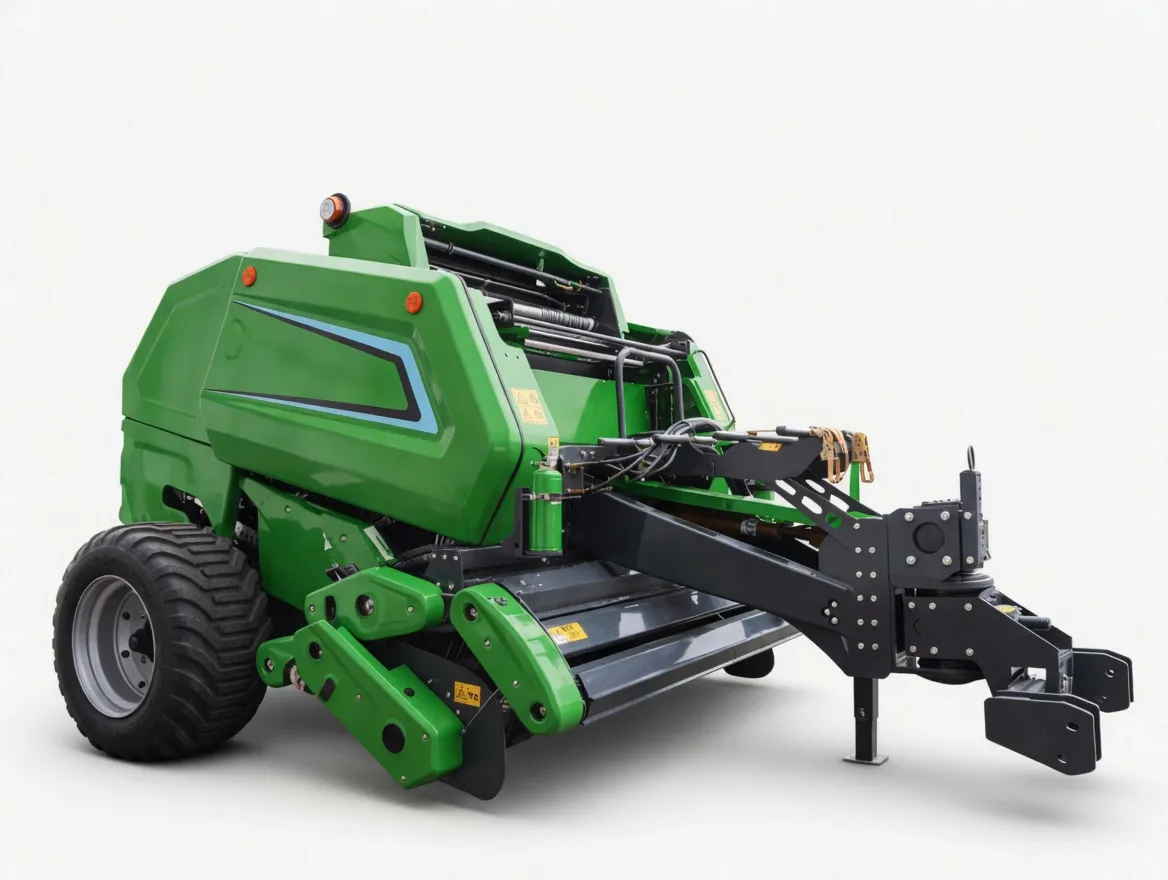
For operations comparing new-purchase options across the commercial baler market, the EverPower 9YG-2.24D (S9000 Beyond) represents the direct-import model at its most compelling. The machine delivers commercial-grade specifications — 2.24m bale capacity, heavy-duty variable chamber, reinforced pickup, precision net wrap — at a price point that reflects the direct-import distribution model. Warranty, parts, and technical support are provided from EverPower’s Australian base in Condell Park, NSW, with same-day parts dispatch for all wear items.
Related reading: See how the right baler investment maximises contractor profitability: Maximising ROI as a Silage Contractor with a High-Throughput Round Baler.
EverPower Baling Machinery Australia Pty Ltd
27 Harley Crescent, Condell Park NSW 2200
+61 2 9708 3322
[email protected]
Frequently Asked Questions
27 Harley Crescent, Condell Park NSW 2200 | +61 2 9708 3322 | [email protected]
About Us | Contact Us