Research consistently shows that improperly stored outdoor round bales lose 15 to 35 per cent of their dry matter within six months — and most of that loss is entirely preventable. The spoilage is not caused by being outside per se; it is caused by moisture contact. Rain that soaks the outer layer, ground moisture that wicks upward through the bottom, and condensation trapped between touching bales all create the conditions for mould, heating, and nutrient breakdown. These seven practical strategies keep moisture away from the forage so your round bales retain their quality from the day you stack them until the day you feed them.
Tip 1 — Choose a Well-Drained Site on High Ground
The storage site matters as much as anything you do to the bales themselves. A flat section at the bottom of a slope collects runoff after every rain event, and bales sitting in standing water absorb moisture through their base faster than any cover can prevent it. Choose the highest, best-drained area available, even if it means a slightly longer transport run from the paddock. Ideally, the site should have a gentle slope of two to three per cent so that rainwater flows away from the stack rather than pooling underneath it. Avoid areas where the water table rises close to the surface during wet months, and never store bales on low-lying creek flats or dam overflow zones.
If your property does not have naturally elevated ground near the storage area, consider building a simple compacted gravel pad. A 150-millimetre layer of compacted road base over the existing soil surface lifts the bales above ground level, improves drainage beneath the stack, and provides a firm surface for loader access. The cost of a gravel pad is modest compared to the value of the forage it protects. For a 200-bale stack occupying approximately 400 square metres, the gravel investment pays for itself if it prevents even five per cent additional dry matter loss over the storage season.
Tip 2 — Elevate Bales Off Bare Soil
Even on well-drained ground, the point where a round bale contacts the soil surface is the most vulnerable spot for spoilage. Soil moisture wicks into the outer few centimetres of the bale through capillary action, and because the bottom of a round bale is a curved surface resting on a flat plane, the contact zone concentrates that moisture into a narrow band that saturates quickly. Over several months, that saturated zone expands inward and upward as far as 100 to 150 millimetres, turning the forage in that section into a dark, mouldy mass that animals will refuse to eat.
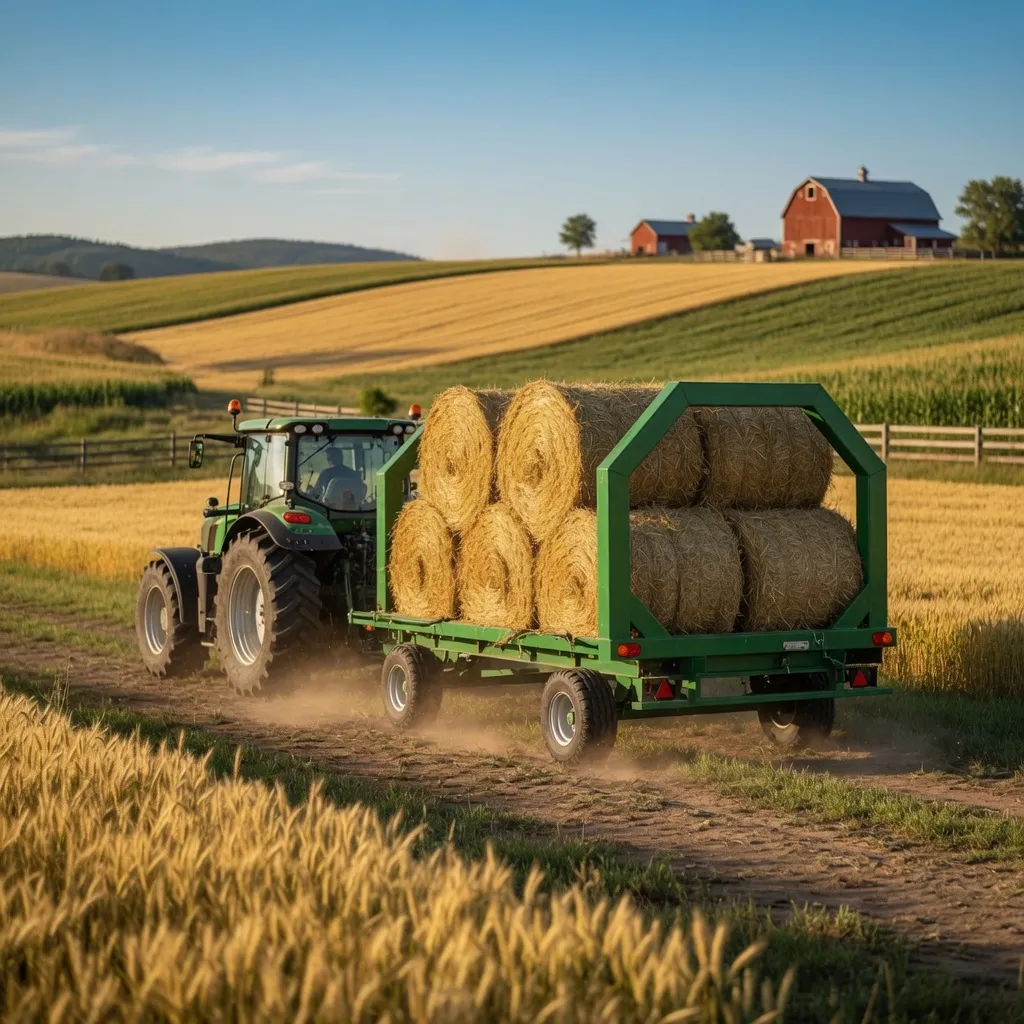
The simplest barrier is a row of old wooden pallets or railway sleepers laid on the ground beneath the bales. Pallets lift the bale 100 millimetres off the soil and allow air to circulate underneath, which prevents moisture wicking and speeds drying after rain. If pallets are not available, a strip of used silage film laid flat on the ground beneath each row provides a waterproof barrier, though it does not allow air circulation and may trap condensation in very humid conditions. In large-scale operations, purpose-built bale cradles made from treated timber or steel rails provide the most durable and effective elevation, but any method that breaks the soil-to-bale contact reduces bottom spoilage dramatically.
Tip 3 — Orient Rows North–South and Leave Gaps for Airflow
How you arrange bales relative to each other and to the prevailing weather determines how quickly they dry after rain and how much moisture accumulates between them. Round bales should be stored in single rows running roughly north to south in the Australian context. This orientation exposes both the east and west faces of each row to sun during the day, which maximises the drying effect on the outer layer after a rain event. Rows running east to west leave the southern face in permanent shade during winter, and that shaded face dries far more slowly, creating a persistent moisture zone.
Leave a gap of at least 600 millimetres between the flat ends of adjacent bales within a row, and at least one metre between parallel rows. These gaps serve two purposes. First, they allow air to circulate around each bale, which speeds surface drying and prevents the humid microclimate that forms when bales touch. Second, they prevent the capillary bridging effect where moisture moves from a wetter bale into a drier neighbour through direct contact. Tight stacking looks efficient and saves space, but the three to five per cent of storage area you save is trivial compared to the 10 to 20 per cent of dry matter you lose to inter-bale spoilage in a tightly packed stack.
| Layout | DM Loss (6 months) | Airflow | Ease of Access |
|---|---|---|---|
| End-to-end, touching, on soil | 25 – 35% | Poor | Difficult |
| Single rows, 600 mm gaps, on soil | 15 – 20% | Moderate | Good |
| Single rows, 600 mm gaps, elevated | 5 – 12% | Good | Good |
| Elevated, covered with tarp | 2 – 6% | Excellent | Moderate |
Tip 4 — Store Bales on Their Flat Ends, Not on the Barrel
Round bales can be stored in two orientations: standing on a flat end or lying on the barrel (the curved surface). For outdoor storage, standing the bale on a flat end is almost always preferable. When a bale lies on its barrel, rain runs down the curved surface and collects in the long contact strip where the barrel meets the ground. That strip becomes a continuous channel of trapped water running the full length of the bale. Standing the bale on its flat end reduces the ground contact area to a circle, concentrates any bottom spoilage into a smaller zone, and allows rainwater to run off the curved barrel sides and away from the bale.
The exception to this rule is wrapped silage bales, which should be stored on their barrel to prevent the weight of the bale from compressing the wrap at the flat end and creating a fold that traps air. Air pockets inside silage wrap break the anaerobic seal and cause localised spoilage. For unwrapped hay bales, however, standing on the flat end is the correct choice for outdoor storage. If you need to stack bales two high for space reasons, always stack flat-end-down bales on top of flat-end-down bales so the weight transfers evenly. Never pyramid round bales more than two high without a containment system, as the risk of a bale rolling off the stack is a serious safety hazard.
Tip 5 — Use Covers or Tarps When Rain Is Unavoidable
If your area receives regular rainfall during the storage period, a tarpaulin or purpose-made bale cover is the single most effective investment you can make to protect outdoor bales. A heavy-duty UV-stabilised polyethylene tarp draped over a row of bales and weighted at the edges sheds rain before it contacts the forage. The key is ventilation: the tarp should not wrap tightly around the bales like cling film. Instead, it should sit above the bales with a gap at the bottom edges that allows air to move through the stack and carry away moisture. A tightly sealed tarp traps condensation, which can be just as damaging as rain.
Breathable bale covers designed specifically for round bale storage are available from agricultural suppliers. These covers use a woven polypropylene material that blocks rain but allows water vapour to pass through, eliminating the condensation problem entirely. They cost more per metre than standard tarps but last multiple seasons and provide measurably better forage quality. For high-value hay destined for sale or for feeding to lactating dairy cows where nutritional quality directly affects production, the investment in proper covers returns many times its cost through reduced dry matter loss and maintained feed value.
Tip 6 — Wrap Silage Bales Properly and Inspect Regularly
Wrapped silage bales are inherently better suited to outdoor storage than unwrapped hay because the plastic film provides a complete moisture barrier. However, that protection is only as good as the wrap integrity. A single puncture from a bird beak, a stick, or a rough handling grab allows air into the bale, breaking the anaerobic fermentation environment and inviting mould growth. The spoilage zone around a puncture expands rapidly, and within a few weeks a small hole can ruin the outer 50 to 100 millimetres of a bale section, which on a 1.2-metre bale represents a significant volume of wasted feed.
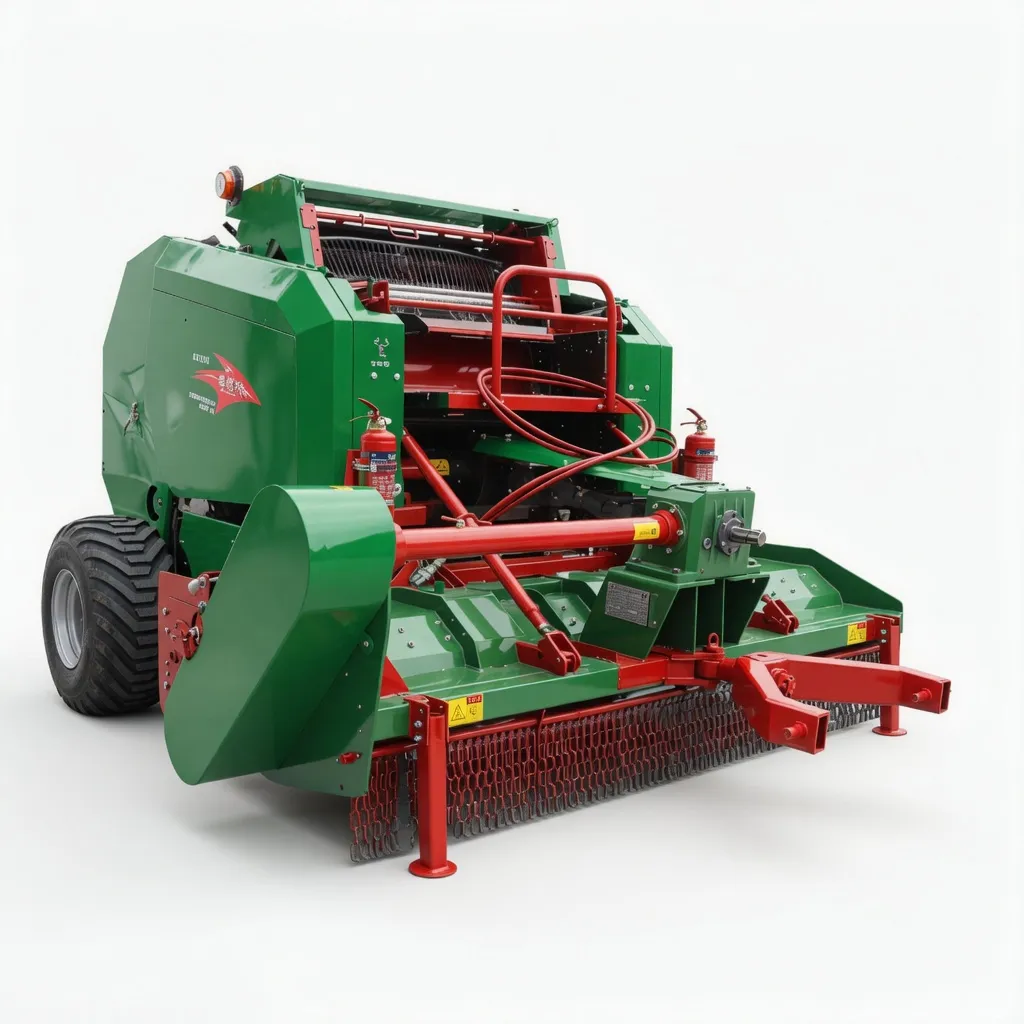
Walk your silage bale stack at least once a month during the storage period and inspect every visible surface for damage. Carry a roll of silage repair tape — a self-adhesive UV-resistant film that seals punctures instantly. Patch any hole you find immediately, no matter how small. Prevention is equally important: keep the storage area free of sharp objects, fence out livestock that will rub against bales, and use a bale handler with smooth, rounded grab arms rather than a spike. The EverPower 9YG-1.0C Type Round Baler produces compact, uniform bales with a smooth barrel surface that accepts wrap film evenly without folds or creases, which means fewer weak points in the wrap and better long-term outdoor storage performance. For operators working across multiple forage species, see our guide to which silage baler works best for ryegrass, lucerne, and oats.
Tip 7 — Manage Vermin, Livestock Access, and Fire Risk
Spoilage is not only about moisture. Rats, mice, and birds damage bale wrap, contaminate hay with droppings, and create warm nesting cavities inside bales that accelerate mould growth. Keep the area around the bale stack clear of long grass, old machinery, and scrap materials that provide harbour for rodents. A cleared perimeter of three to four metres around the stack reduces the cover that rodents use to approach the bales. If rodent pressure is severe, bait stations placed at regular intervals around the perimeter provide an effective control measure.
Livestock must be excluded from the storage area. Cattle and horses will rub against bales, puncturing silage wrap and pulling hay from the outer layer of unwrapped bales. Even sheep can cause significant damage by pulling at loose net wrap edges. A simple electric fence or post-and-wire enclosure around the stack is sufficient. Fire risk is the final consideration that many producers overlook. A stack of dry hay bales is a substantial fuel load. Store the stack at least 30 metres from buildings, fences, and overhead powerlines. Maintain a firebreak of slashed or bare ground around the perimeter during high-risk months, and never park machinery that has been operating in the paddock — with a hot exhaust or catalytic converter — next to the bale stack.
How Net Wrap Quality Affects Outdoor Storage Life
The net wrap applied during baling is the first line of defence for outdoor-stored hay bales. Premium net wraps use UV-stabilised polyethylene with a higher strand count per metre, which creates a tighter, more uniform mesh that resists stretching and tearing. Cheaper net wraps may cost 10 to 15 per cent less per roll, but they often have fewer strands per metre, weaker knot integrity, and lower UV resistance. In the Australian sun, a low-quality net wrap can degrade within three to four months, allowing the outer layer of the bale to loosen and absorb rain like a sponge.
For bales that will be stored outdoors for more than three months, invest in a premium net wrap rated for at least 12 months of UV exposure. Apply at least two full wraps — some operators apply two-and-a-half wraps for extra security. The additional cost per bale is minimal compared to the value of the forage protected. If you are storing bales for more than six months, consider applying an additional half-wrap to ensure that the net does not loosen as the bale settles slightly during the initial weeks of storage. A tight net wrap compresses the outer layer of forage, reducing the surface area exposed to rain and slowing the rate of moisture penetration.
Feeding Out First-In, First-Out to Minimise Total Loss
Spoilage in outdoor-stored bales is cumulative. A bale that has been outside for three months has less spoilage than one that has been outside for nine months, even if both were stored identically. The practical implication is that you should feed out on a first-in, first-out basis, using the oldest bales first. Arrange your storage layout to make this easy: stack bales in rows ordered by baling date, and access the oldest row first. If your layout forces you to move newer bales to reach older ones, you are wasting time and risking damage to the newer bales during the extra handling.
A simple labelling system helps. Mark each row with the baling date using a paint marker on the net wrap or a tag on a nearby fence post. When you are feeding 500 or more bales across a winter, knowing which rows to access first saves both feed quality and handling labour. For silage bales, the first-in-first-out principle is even more important because the anaerobic fermentation process stabilises within four to six weeks of baling, and feeding a bale before fermentation is complete produces poorer quality silage with higher butyric acid content and lower palatability.
Frequently Asked Questions
27 Harley Crescent, Condell Park NSW 2200
Phone: +61 2 9708 3322 | Email: [email protected]
About Us | Contact Us