Choosing a silage baler is a decision that locks in your baling capability for the next 10 to 20 years. The right machine matches your annual volume, your tractor fleet, your crop mix, and your handling infrastructure. The wrong machine costs you either in underutilisation (too much baler for the operation) or in bottlenecks and compromised quality (too little baler for the demand). These six factors, evaluated in order, narrow the field to the model that fits.
Annual Bale Volume
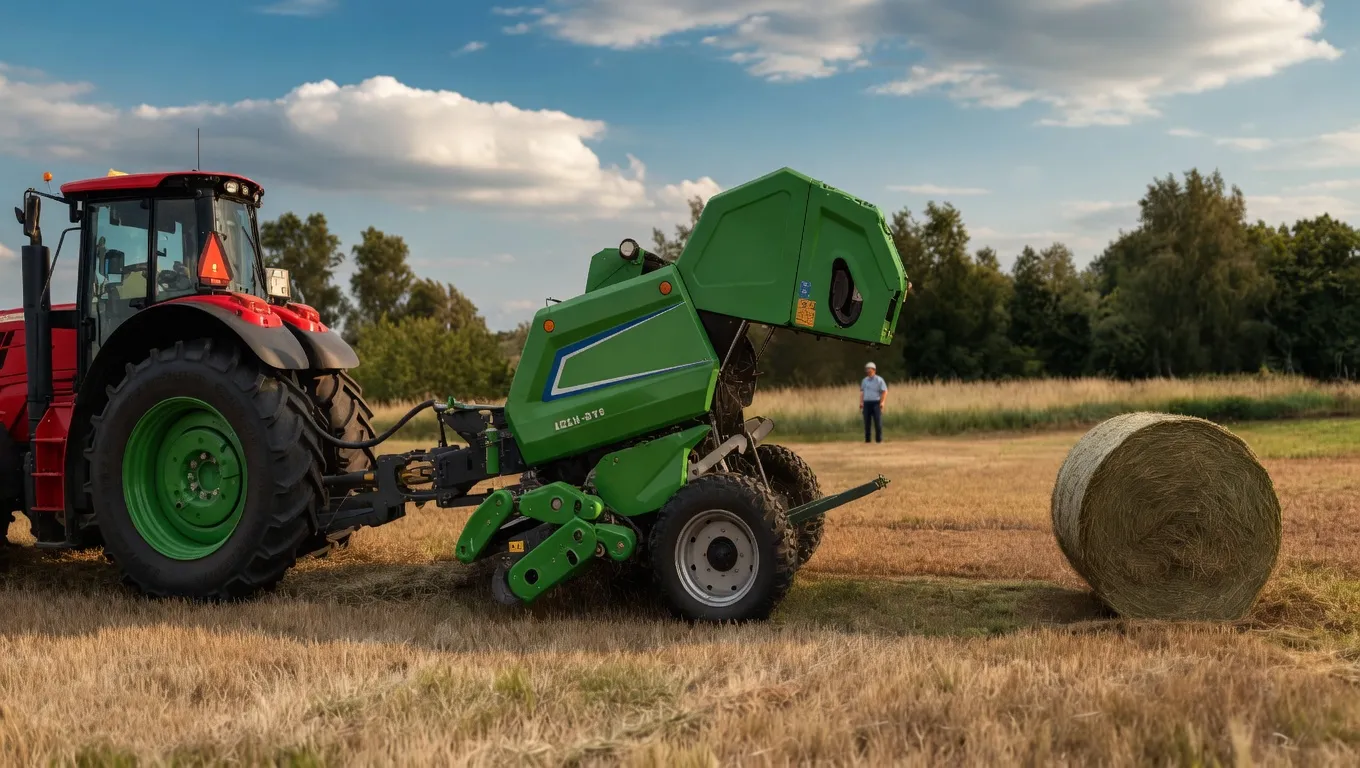
Annual bale volume is the single most important sizing factor. A farm producing 100 to 300 bales per year has fundamentally different equipment requirements from a contracting operation producing 3,000 to 10,000 bales per season. Small-volume operations (under 500 bales/year) need a baler that is economical to own and maintain, reliable when called on for a few intensive days per season, and simple enough that an operator who uses it only a few times per year can set it up and run it without extensive practice.
High-volume operations (1,000+ bales/year) need throughput speed, durability under continuous operation, and the capacity to maintain consistent bale quality at production pace. Between these extremes, mid-volume operations (500 to 1,000 bales/year) typically find the best value in mid-range commercial balers that offer the build quality for extended runs without the premium pricing of contractor-grade machines.
Tractor PTO Horsepower
Every round baler has a minimum PTO horsepower requirement that must be met by the tractor it is paired with. This is the non-negotiable constraint: a baler that requires 80 PTO hp cannot be operated satisfactorily with a 60 PTO hp tractor, regardless of how well the other factors align. The tractor’s PTO horsepower rating (not engine horsepower) is the figure that matters. Compact balers producing 0.9 to 1.0m bales typically require 35 to 50 PTO hp. Mid-range balers producing 1.2 to 1.5m bales require 60 to 100 PTO hp. Full-size commercial balers producing 1.5 to 1.8m bales require 80 to 140+ PTO hp. If your current tractor does not meet the PTO requirement of the baler you want, the options are to upgrade the tractor or select a smaller baler that matches the tractor you have.
Crop Types and Moisture Range
A farm that bales only dry hay from a single grass species can use almost any baler type, including simpler fixed chamber designs. A farm that produces both silage and hay, or bales multiple crop species (ryegrass, lucerne, oats, sorghum, cereal straw), needs a baler with more adjustability. Variable chamber balers with adjustable pressure settings handle the transition between wet silage and dry hay without mechanical changes. Farms working with high-moisture crops (above 55%) should prioritise balers with proven performance in wet conditions — this means robust pickup design that resists blockages, chamber systems that maintain bale shape under heavy, wet material, and net wrap mechanisms that function reliably with moisture on the bale surface.
Fixed Chamber vs Variable Chamber
This decision follows directly from Factors 1 to 3. If the farm produces only dry hay from a single crop type at modest volumes, a fixed chamber baler offers adequate performance at a lower purchase price with simpler maintenance. If the farm produces silage, works with multiple crop types, or needs to vary bale size between batches, a variable chamber baler provides the adjustability and density control that silage quality demands. The variable chamber adds belt maintenance and slightly higher purchase cost, but delivers superior fermentation outcomes in wrapped silage bales because of the more uniform density from core to surface.
Bale Handling and Transport Chain
The baler does not operate in isolation. Every bale it produces must be handled by a loader, transported to a wrapper or storage site, and stacked for the storage period. If the farm’s loader can handle a maximum bale weight of 600 kg, there is no benefit in choosing a baler that can produce 900 kg bales — the handling bottleneck negates the baler’s capacity. Similarly, the wrapper must accommodate the bale diameter the baler produces, and the transport trailer must fit the bale dimensions.
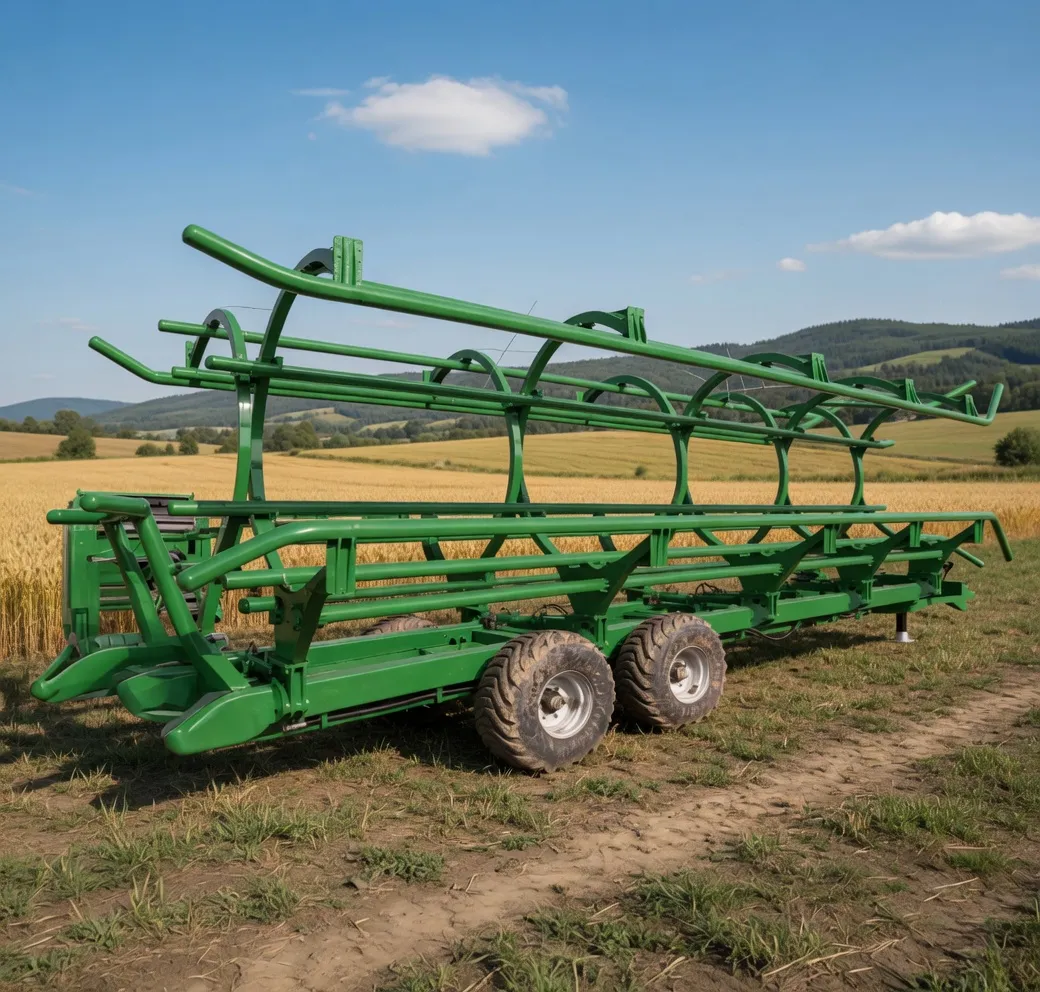
The bale conveyor is an often-overlooked component that can transform the efficiency of the handling chain. A hydraulic bale conveyor attached behind the baler collects each bale as it is ejected and deposits it gently at a designated collection point, eliminating the need for a second tractor and operator to follow the baler for bale retrieval. For operations where labour is limited, the conveyor converts a two-person baling operation into a one-person operation.
Budget: Purchase Price vs Total Cost of Ownership
The purchase price is only the first chapter of the cost story. Total cost of ownership includes annual maintenance and consumables, belt or roller replacement over the machine’s life, downtime costs when the baler is out of service during the baling window, and the resale value at end of life. A baler purchased at AUD 25,000 that requires frequent repairs and produces 15 percent bale waste costs more per usable bale than a baler purchased at AUD 45,000 that runs reliably and minimises waste. Evaluate the total cost per bale over the expected service life (10 to 20 years) rather than comparing purchase prices alone. Ask the supplier for spare parts availability, service support, and estimated annual maintenance costs before committing to a purchase.
| Farm Type | Annual Volume | Bale Size | Suggested Model |
|---|---|---|---|
| Small hobby / horse | < 200 | 0.9–1.0m | 9YG-1.0 / 1.0C |
| Mid-size sheep / beef | 200–800 | 1.25m | 9YG-1.25 / 1.25A |
| Large dairy / pastoral | 800–2,000 | 1.5–1.8m | 9YG-2.24D S9000 |
| Contractor / custom | 2,000+ | 1.5–1.8m | 9YG-2.24D S9000 Beyond |
Recommended Product: EverPower 9JYY-4.5 Hay Baler Conveyor
When choosing a baler, also consider the handling chain. The EverPower 9JYY-4.5 Hay Baler Conveyor attaches behind any EverPower round baler and gently catches each ejected bale on a hydraulic cradle, lowering it to the ground at a predetermined collection point. This eliminates bale drop damage, reduces labour requirements, and allows the baling operator to maintain forward momentum without stopping to retrieve bales. For farms where a second tractor or operator is not available during the baling window, the conveyor is the component that makes single-operator baling practical.
Related reading: See what equipment farm contractors need and what to look for: Silage Baler Equipment for Farm Contractors: What to Look For.
EverPower Baling Machinery Australia Pty Ltd
27 Harley Crescent, Condell Park NSW 2200
+61 2 9708 3322
[email protected]
Frequently Asked Questions
27 Harley Crescent, Condell Park NSW 2200 | +61 2 9708 3322 | [email protected]
About Us | Contact Us