
Sorghum, vetch, and clover are not interchangeable silage crops. They sit at very different points on the spectrum of fermentation difficulty, harvest management complexity, and equipment demand — and lumping them together under “summer fodder crops” or “legume silage” obscures the specific decisions that determine whether each one produces excellent feed or expensive disappointment. This guide treats each crop on its own terms: what makes it challenging to bale well, what the baler needs to handle it correctly, and what the wrapping and fermentation management looks like when the right decisions are made at each step.
Forage Sorghum: The High-Yield Crop That Punishes Mistakes
Forage sorghum is the highest dry matter yield silage crop available to Australian farmers in summer-dominant rainfall regions — and the one with the most specific management requirements before a bale is even made. The prussic acid issue is the most widely known, but it is far from the only sorghum-specific challenge that determines whether the crop produces excellent silage or feeds that are either dangerous or nutritionally disappointing.
Prussic acid (hydrocyanic acid, HCN) is produced in sorghum plants under stress conditions — drought, frost, or the early growth phase before the plant has developed sufficient structural carbohydrate to dilute the cyanogenic glucosides in the leaf. Fresh sorghum regrowth below 60–70cm carries the highest HCN concentrations; as the plant matures and the structural biomass increases, HCN concentration per unit DM declines to safe feeding levels. The management rule is simple but must not be violated: never cut sorghum for silage when it is below 60cm height in regrowth situations, and never cut sorghum immediately after a frost or severe drought stress event. The HCN dissipates during ensiling — fermentation is a reliable detoxification mechanism — but only once fermentation is complete, which takes a minimum of 4–6 weeks after wrapping. Sorghum silage must not be fed before this period regardless of urgency.
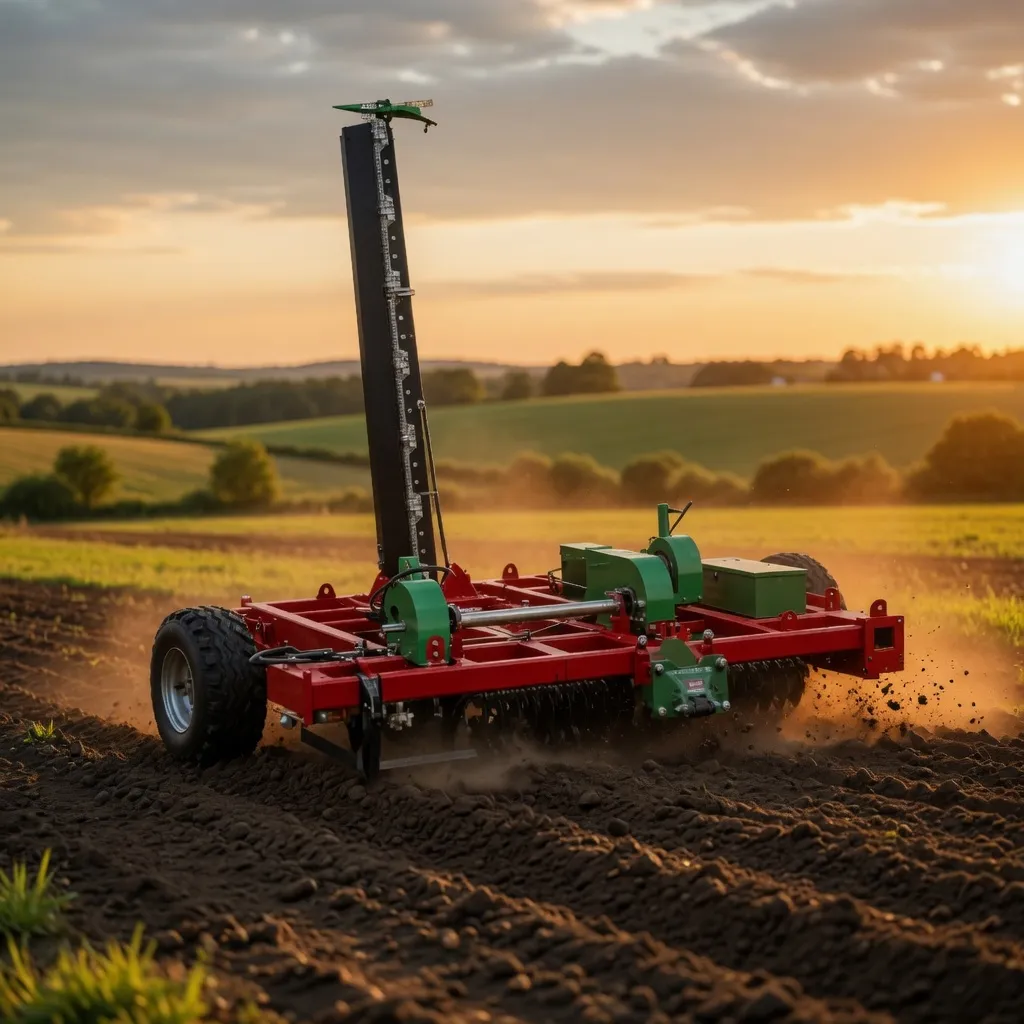
Beyond the prussic acid window, the baler decisions for sorghum silage centre on crop architecture. Mature forage sorghum at the late-boot to early-head stage — the target cutting window for quality — carries thick, fibrous stems that are genuinely different from any grass or cereal crop the baler encounters in the rest of the season. Stem diameter on BMR (brown midrib) sorghum varieties at cutting maturity can reach 15–20mm at the base, and a heavy forage sorghum paddock produces a windrow of significant density and stem toughness. The baler’s feed rotor and pickup system need to be capable of handling this material without bridging, and the chamber pressure system needs to be set appropriately for the crop’s density rather than defaulting to a setting established for ryegrass silage.
The forward speed discipline on sorghum silage is more important than on any other crop the EverPower 9YG series will encounter. Heavy sorghum windrows in lodged paddock sections can stop the pickup entirely if the operator drives into them at standard grass silage speed. Slowing to 3–4 km/h in dense sections, allowing the feed rotor to work through the material progressively rather than being overwhelmed, prevents the pickup blockages that are the most common source of lost time on sorghum baling days. On standard upright sorghum in a well-prepared windrow, 5–7 km/h is achievable; on lodged or tangled sections, the operator needs to read the windrow and respond before reaching the dense patch, not after.
Sorghum Silage: Baler and Wrapper Specifications
For forage sorghum silage, the EverPower 9YG-1.25A is the appropriate starting configuration for most eastern Australian beef and mixed farming operations. The pickup system handles the heavier stem material without requiring modification. Density setting should be at medium-high rather than maximum for sorghum — sorghum’s fibrous stems compress differently from grass, and over-pressuring the chamber on thick-stem material can cause feeding problems rather than producing denser bales. Six layers of film minimum on sorghum silage, and a homo-fermentative inoculant is strongly recommended to accelerate the pH drop through what is often a slow-fermenting, low-WSC crop. Target DM at baling: 55–65% for best quality outcomes.
Vetch: The Silage Legume That Rewards Timing Precision
Vetch is grown as a silage crop primarily because it brings high crude protein — typically 18–24% DM at the correct cutting stage — into a silage ration at a cost that is substantially below the alternative of supplementary grain protein. The combination of high protein and moderate energy (9.5–11.0 MJ ME/kg DM) makes well-made vetch silage a versatile supplementary feed for both dairy and beef enterprises. The challenge is that the quality envelope is narrow and the crop’s physical structure creates specific baling management requirements.
The optimal cutting window for vetch silage is early to full flower — the point at which protein content is at its peak before pod filling begins, and before the stems become too fibrous to ferment readily. This window is typically only 7–10 days wide in eastern Australian conditions, and it coincides with rapid changes in plant structure: the vetch vine is climbing and tangling at this stage, stems are elongating, and the crop’s characteristic tendency to lodge and wind around itself creates windrow management challenges that don’t apply to upright crop species.
The tangling and vine growth of vetch creates the most distinctive pickup challenge of any silage crop. Vetch windrows from a heavy crop frequently form mats — dense, tangled layers that can cause the pickup tines to stall if the operator drives into the mat at standard speed. The correct approach is to ensure the windrow is raked to a manageable width (no more than 75% of the baler’s pickup reel width), that only a single merging pass is made to avoid creating an over-dense mat, and that forward speed in any tangled sections is reduced enough to allow the tines to work through the mat progressively. Operators who have not baled vetch before are frequently surprised by how much the tangled vine material differs from grass silage — the crop gathers rather than flowing through the pickup in the way grass does.
Vetch’s fermentation characteristics place it in a similar category to lucerne — a high-protein legume with relatively low WSC and high buffering capacity that resists pH drop without inoculant supplementation. A homo-fermentative inoculant is not merely recommended for vetch silage; it is effectively required if the target is quality silage at 10+ MJ ME/kg DM rather than variable, partially fermented product. The protein level that makes vetch valuable is also the buffering mechanism that makes it difficult to ferment — the same nitrogen compounds that raise crude protein analysis are the organic acids and amino acids that buffer against pH change.
Vetch Silage: Critical Management Points
Target DM at baling for vetch silage is 45–58% — similar to lucerne. Like lucerne, vetch dries more slowly than cereal crops, and conditioning at mowing is important to achieve the target DM within a 24–36 hour window. The bale-to-wrap deadline is strict: 2–3 hours maximum on vetch silage in warm weather, for the same reasons as lucerne — the low WSC and high buffering capacity leave the crop vulnerable to aerobic deterioration before LAB can establish. Combined baler-wrapper machines are the most reliable equipment configuration for vetch silage quality, particularly in the warmer conditions typical of southern Australian spring. Six layers of film minimum, and bale placement on well-drained ground to prevent base moisture accumulation under what is often a heavier-than-average bale due to the vetch’s high moisture content at target DM.
Clover: The Versatile Legume With a Specific DM Challenge
Subterranean clover, white clover, and red clover are grown across southern and eastern Australia as both permanent pasture components and dedicated silage crops, particularly in higher-rainfall districts where they form a significant proportion of the spring pasture. Their nutritional profile as silage — typically 16–22% crude protein and 10.0–11.5 MJ ME/kg DM at the correct cutting stage — makes clover silage one of the most valuable supplementary feeds available on mixed livestock-cropping farms. The challenge is a combination of fermentation difficulty (similar to vetch, due to high protein and moderate WSC) and the practical difficulty of achieving consistent DM targets across a crop that wilts unevenly.
Clover wilts more slowly than ryegrass in most conditions, and more unevenly. The thick leaf bases and short stems retain moisture longer than the thin stems of ryegrass or cereal crops, and a windrow that appears dry on the surface can be significantly wetter at the base. This wetting gradient means that a DM test from the top of the windrow will overestimate the average DM of the baled material — the operator must sample from multiple depths in the windrow, including the lower layers, to get an accurate picture of what is going into the bale. Operators who sample only the top of the windrow and proceed to bale consistently produce clover silage that is wetter than expected, with the fermentation consequences that follow from that.
The optimal cutting stage for clover silage is early flower to 20% flower — similar to the vetch window, and similarly narrow. Beyond 20% flower, stem lignification begins to reduce digestibility and the protein:fibre ratio shifts in the wrong direction. Spring clover swards in high-rainfall districts can move through this window in as little as 5–7 days, which places a real premium on being ready to cut and bale when conditions align rather than waiting for ideal weather.
Mixed Clover-Ryegrass Silage: The Common Reality
In practice, most clover silage on Australian mixed farms is baled from mixed clover-ryegrass swards rather than pure clover stands. This mixed sward context changes the fermentation management significantly: the ryegrass component brings high WSC that helps drive fermentation down through the pH range even without inoculant, partially compensating for the clover’s high buffering capacity. The blended silage typically ferments more reliably than pure clover silage, and with lower inoculant benefit because the ryegrass WSC does much of the fermentation work.
The baler decision on mixed clover-ryegrass swards is governed primarily by the clover proportion — if the sward is 70%+ clover, manage it as clover silage; if it is 70%+ ryegrass, manage it as ryegrass silage. For balanced 40–60% mixed swards, a conservative approach — treating to the stricter of the two sets of requirements — is the right default: inoculant application, 55% DM target, 6 layers of film, wrapping within 3 hours of baling.
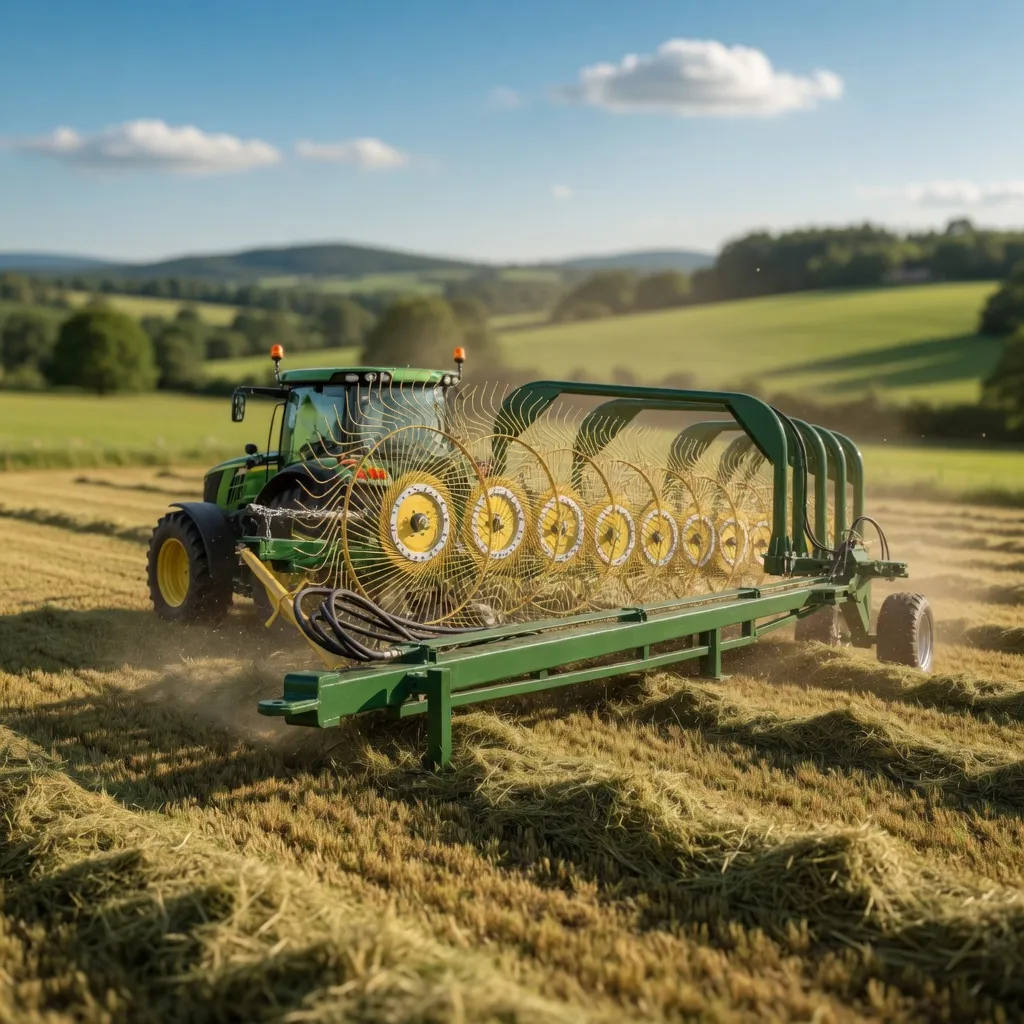
One baler-specific note on clover silage: clover leaf at the correct cutting stage is as fragile as lucerne leaf and equally vulnerable to shatter losses from aggressive raking. The EverPower 9LZY-9.0 Finger Wheel Rake is the preferred raking configuration for clover-dominant swards — its gentler raking action preserves the leaf fraction that carries the highest protein concentration in the plant. Raking clover with an aggressive lateral rake at high speed is a reliable way to lose 5–8% of the crop’s most valuable DM before a bale is even made.
Baler Selection Summary: Matching Machine to Crop
The three crops discussed in this guide cover a wide range of demands on baling equipment and operator management. The table below consolidates the key decision variables for each crop.
| Factor | Forage Sorghum | Vetch | Clover |
|---|---|---|---|
| Target baling DM | 55–65% | 45–58% | 50–60% |
| Inoculant requirement | Strongly recommended | Essential | Recommended |
| Max wrap delay | 3–4 hours | 2–3 hours | 2–3 hours |
| Minimum film layers | 6 | 6 | 6 |
| Pickup challenge | Heavy stems, blockage risk in lodged sections | Vine tangling, mat formation | Leaf shatter risk; uneven wilting |
| Minimum wait before feeding | 4–6 weeks (prussic acid) | 3 weeks | 3 weeks |
| Combined machine advantage | Strong | Critical | Critical |
Mixed Crops: Oats-Vetch and Sorghum-Sudan Combinations
In practice, many eastern Australian farms grow mixed crops rather than pure stands of any of the three species discussed above. Oats-vetch mixtures are one of the most common silage crop combinations in southern NSW and Victoria — the oats provide structural support for the vetch vine, reduce lodging, contribute WSC that aids fermentation, and raise the overall DM of the windrow relative to pure vetch. The baling management for oats-vetch follows the vetch rules on fermentation (inoculant required, strict wrap deadline) but is physically easier than pure vetch because the oat stems provide a more consistent, less tangled windrow for the pickup to handle.
Sorghum-sudan grass hybrids are increasingly popular in northern NSW and Queensland as lower-input alternatives to pure forage sorghum — the hybrid vigour produces high DM yield with somewhat lower input requirements, and the finer stem diameter of sudan grass compared with sorghum makes the windrow less demanding on the pickup reel. The prussic acid consideration applies to sorghum-sudan hybrids as it does to pure sorghum, though in most commercial hybrid varieties the prussic acid concentration at cutting maturity is somewhat lower than in standard forage sorghum. Confirm HCN levels with your specific variety data before adjusting management accordingly.
The baling equipment is unchanged across these mixed crop combinations — the EverPower 9YG-1.25A handles all of them without mechanical modification. The variables that change are the operator settings (forward speed, density), the management protocols (DM testing, inoculant application, wrap timing), and the crop-specific safety considerations (prussic acid wait time on any sorghum component). EverPower’s NSW team can advise on the specific settings and management protocols for any specific crop mix on request.
EverPower’s Role in Specialist Crop Silage Programs
Each of the crops discussed in this guide requires a round baler with specific capability: a robust pickup that handles both thick sorghum stems and tangled vetch vines, a variable chamber that accommodates the density range from light clover to heavy sorghum, and a net wrap system that cuts cleanly on high-moisture legume material. The EverPower 9YG series delivers these capabilities with the additional advantage of local NSW-based technical support from a team that understands Australian crop conditions.
The wrapper decision — combined machine versus standalone — is crop-type dependent, as the table above makes clear. For farms where vetch and clover silage form a significant proportion of the annual program, a combined baler-wrapper is the configuration most likely to consistently produce quality silage from these demanding crops. For farms where sorghum dominates and the bale-to-wrap window is manageable, a standalone baler with the EverPower 9YCM-850 wrapper is a viable and cost-effective configuration.
EverPower Baling Machinery Australia Pty Ltd
27 Harley Crescent, Condell Park NSW 2200
+61 2 9708 3322
[email protected]
Frequently Asked Questions
27 Harley Crescent, Condell Park NSW 2200 | +61 2 9708 3322 | [email protected]
About Us | Contact Us