
Contractors and Large Farms Have Different Demands From the Same Machine
A hay baling contractor who moves the 9JYY-4.5 between 15 different properties per season has completely different setup and operational priorities from a large commercial hay farm that runs the same conveyor in the same shed for 40 days per year. The contractor needs fast deployment, reliable performance across variable shed types and power supply situations, and a machine light enough that one person can handle it from the service vehicle without site labour. The large farm needs sustained high throughput, minimal downtime, and a maintenance schedule that keeps the machine fully operational through a demanding continuous season without unexpected failures. Both can be achieved with the 9JYY-4.5 — but the configuration choices, maintenance scheduling, and operational workflow differ significantly between the two contexts. This guide covers the specific setup and operational approach for each.
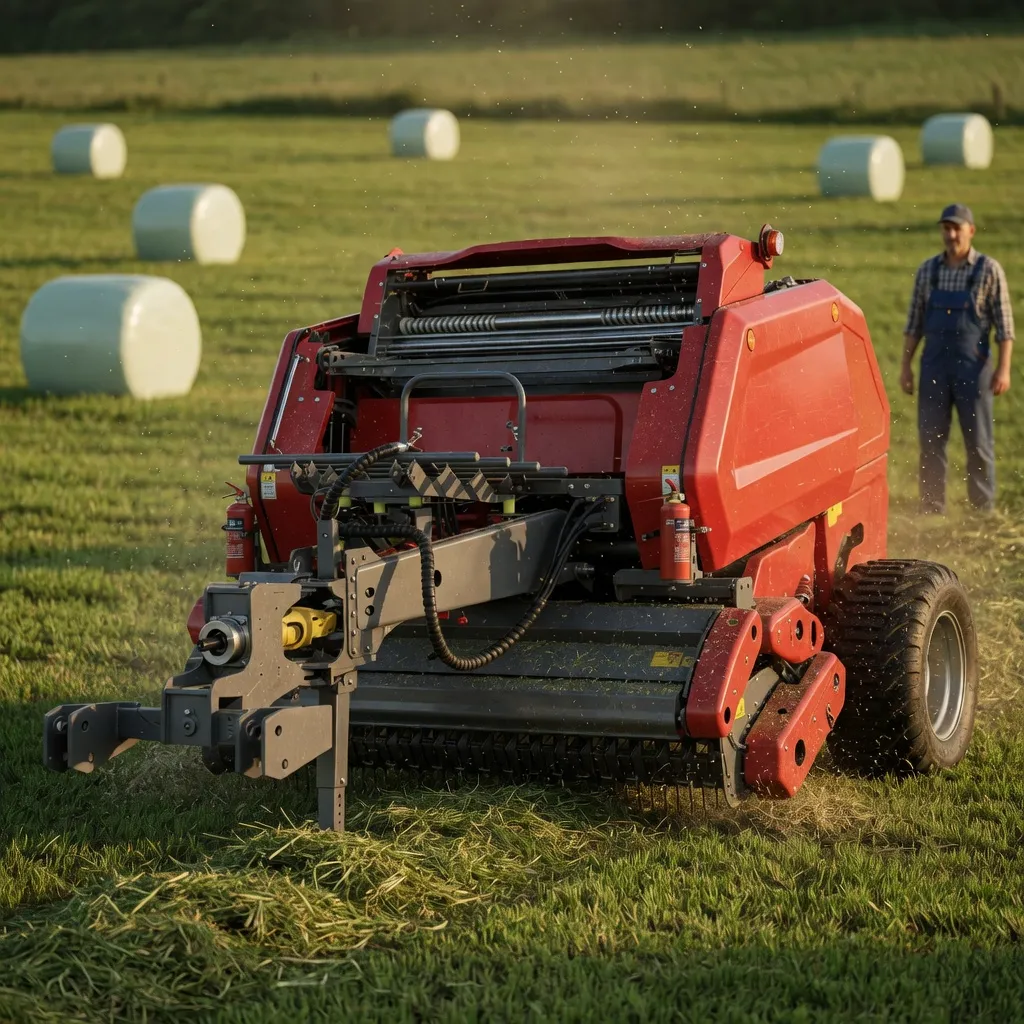
Contractors and large farms share the same productivity goals from the 9JYY-4.5 but require different approaches to deployment, maintenance scheduling, and spare-parts management to achieve them reliably.
Contractor Configuration: Speed, Portability, and Self-Sufficiency
A contractor’s primary operational challenge is minimising non-billable time — the time spent travelling, setting up, packing down, and dealing with site-specific issues rather than actually stacking bales. The 9JYY-4.5’s 65–80 kg weight and 4.5-metre length are well-suited to contractor use: it fits in a standard ute tray or single-axle trailer and can be unloaded, positioned, and running in under 15 minutes by one person. This setup time is unavoidable overhead — the goal is to minimise it through systematic preparation, not to eliminate it.
Transport configuration: Mount the conveyor on a custom-built trailer with the angle already set at 30 degrees and the support legs folded into travel position. At site arrival, the trailer positions the conveyor at the shed entrance — two people unfold the support legs, confirm the angle, connect the extension lead, and the machine is operational without unloading. This eliminates the lift-off and re-positioning step entirely for standard shed configurations and reduces setup time to under 8 minutes.
Power supply kit: Contractors cannot assume every property has a conveniently located 240 V outlet. Carry a 25-metre outdoor-rated 10 A extension lead as standard equipment, plus a 2.5 kW petrol generator as a backup power source for properties without shed power access. The generator also provides power for the conveyor in paddock-based operations where no shed is involved. A generator that can run the 9JYY-4.5’s 1.1 kW motor with adequate headroom costs AUD $400–$800 and eliminates the single most common cause of contractor delays at remote properties.
Field parts kit: For contractor operations, carry: 2 spare tension adjustment bolts (the highest-loss item in transport), 1 spare motor fuse or circuit breaker of the correct rating, a belt repair kit (vulcanising cement and repair patch), and silicone lubricant spray for the belt surface in sticky hay conditions. These items weigh under 2 kg and fit in a small toolbox on the service vehicle — they cover the majority of minor field issues that would otherwise require a service call or lost production day.
Contractor Pricing: How the Conveyor Affects Your Service Rate
A contractor providing bale-and-stack service with a 9JYY-4.5 and a 2-person crew completes 640 bales per day compared to the 480 bales per day of a 4-person manual stack crew. On a per-bale contract rate of AUD $1.50 per bale, this is the difference between AUD $960/day revenue and AUD $1,280/day revenue from the same service — a 33% increase in daily revenue with lower labour cost per bale. The machine ownership cost of approximately AUD $0.08 per bale adds a negligible amount to the contractor’s cost base relative to the revenue uplift from higher daily throughput.
Contractors who offer a full-service bale-and-stack option at AUD $1.40–$1.80 per bale — compared to a manual-only stack option — typically find clients willing to pay the premium for the speed advantage: hay under cover the same day, not waiting for a large crew to be assembled. The conveyor is what makes the same-day promise deliverable with a 2-person crew.
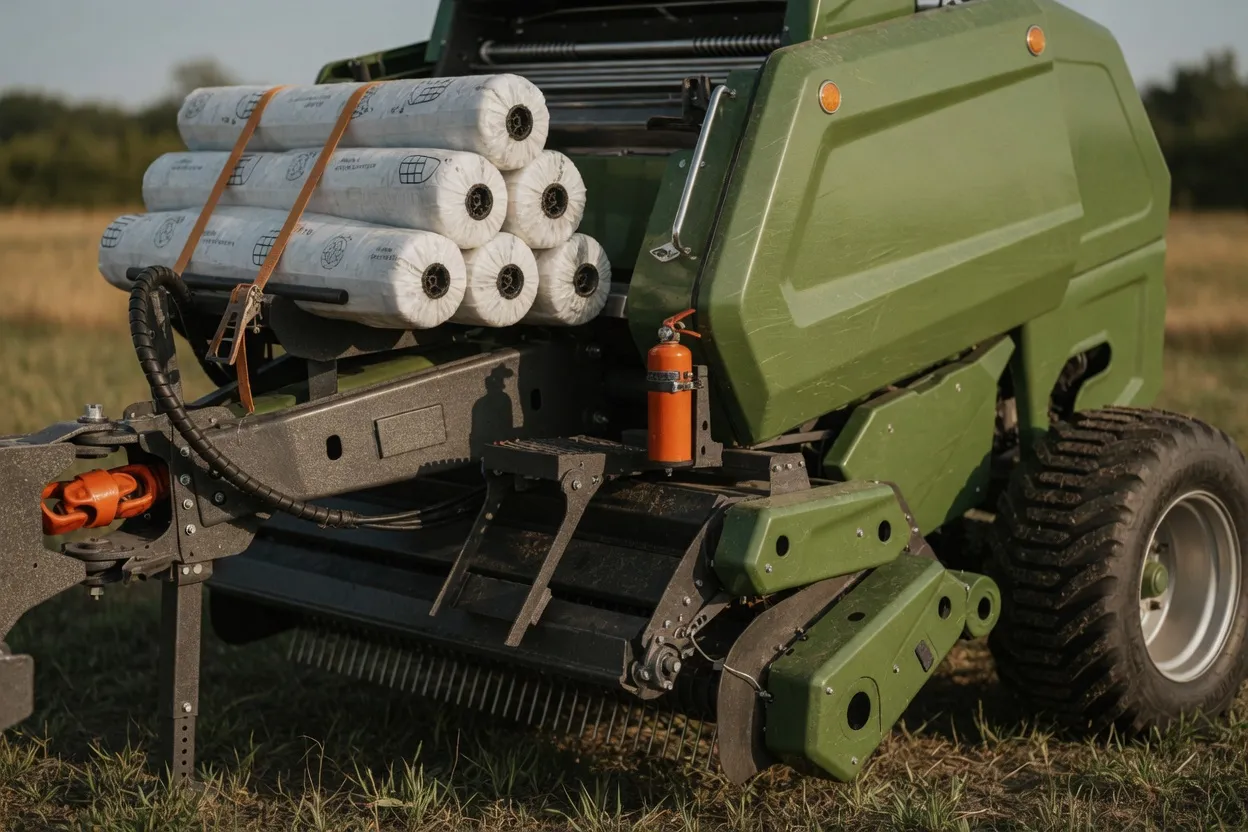
Commercial hay operations running high-output balers require matching throughput at the stacking end — a single 9JYY-4.5 with a 2-person crew can keep pace with most single balers, while two units in parallel can match a high-output double-baler system.
Large Farm Configuration: Sustained Throughput and Planned Maintenance
A large commercial hay farm running 40 stacking days per season at 640 bales per day accumulates approximately 25,600 bales per year through the conveyor — a significant operating load that demands a more disciplined maintenance approach than a small-scale operation doing 3,000 bales per season. At this volume, the belt completes approximately 170,000 cycles per year (each bale represents approximately 6–7 belt revolutions from infeed to discharge). The drive roller bearings see their full rated load cycle approximately every 12–15 months at this production rate — meaning bearing replacement is an expected scheduled maintenance task, not a failure event, in the second season of heavy use.
Maintenance scheduling for large farms: Implement a formal maintenance log recording operating hours or bale count per session. Replace drive and tension roller bearings preventively at 15,000 bales (approximately 23 full stacking days) rather than waiting for noise or failure. Replace the belt at 50,000 bales or when edge fraying exceeds 10 mm, whichever comes first. Re-tension and re-track at the start of every 5th stacking day regardless of apparent condition. This schedule converts bearing and belt failures from unexpected production stops into planned maintenance windows, typically completed in an hour before the day’s stacking begins.
Two-conveyor parallel operation: Large farms processing 800+ bales per day may benefit from running two 9JYY-4.5 units simultaneously — one at each end of the shed, or one on each side of a centre-aisle shed. Each unit has its own 2-person crew; total crew is 4 people; total daily throughput is approximately 1,280 bales. This configuration also provides redundancy: if one unit requires attention, the other continues at half capacity rather than the entire operation stopping. For operations running two high-output balers simultaneously, two conveyors are effectively a requirement to maintain pace with bale production.
Spare Parts Strategy for High-Volume Operations
An operation stacking 25,000+ bales per year cannot afford a 3-day production stop while waiting for a replacement bearing or belt. The spare-parts strategy for large farms should include: one full spare belt (stored flat in a dry location), one spare bearing set for both drive and tension rollers, one spare drive chain or belt (motor to roller), and two spare tension adjustment bolts. These items cost AUD $400–$600 total and allow any common failure to be repaired within one day without waiting for a parts delivery. Contact EverPower at the start of each season to pre-order and confirm availability — parts ordered proactively cost less in time and money than parts ordered urgently mid-season.
Recommended Product: 9JYY-4.5 Hay Baler Conveyor
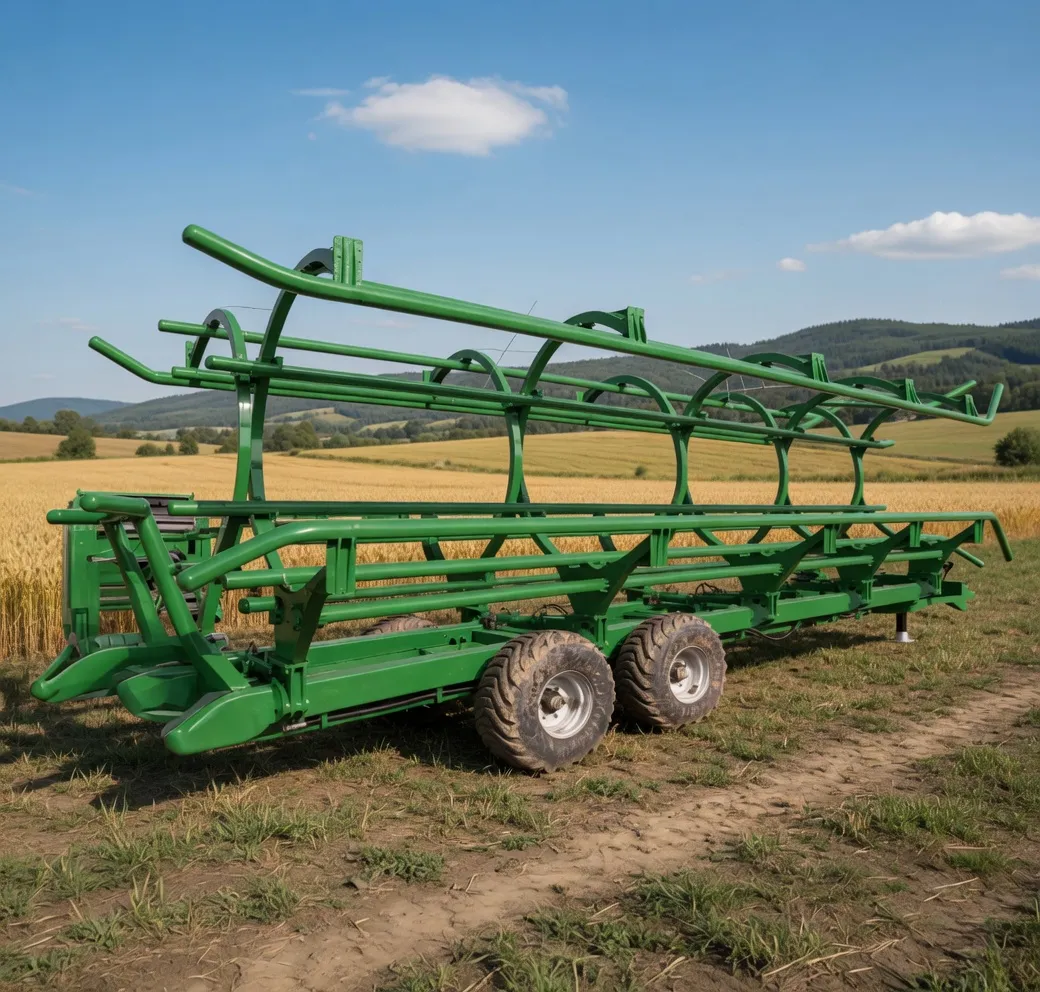
65–80 kg, 4.5 m — fits in a ute tray, deploys in under 15 minutes for contractor use. Supports 640 bales/day with 2-person crew for commercial farm operations. Two units in parallel achieve 1,280 bales/day for high-volume farms. All wear parts stocked at EverPower’s Condell Park NSW warehouse for scheduled preventive maintenance or emergency repair. Australia-wide delivery.
Frequently Asked Questions
Built for Contractors. Built for Commercial Farms.
EverPower can advise on configuration, transport setup, and parts stocking for the 9JYY-4.5 in both contractor and large-farm applications.
EverPower Baling Machinery Australia Pty Ltd | 27 Harley Crescent, Condell Park NSW 2200
📞 +61 2 9708 3322 | ✉️ [email protected]