
Choosing a round baler for a small to mid-size sheep farm is a decision that sounds straightforward but rarely is. The wrong machine — too large, too complex, or mismatched to available tractor power — becomes a liability that costs money in fuel, maintenance, and operator frustration. The right machine, properly specified to the farm’s actual annual baling volume and feedout logistics, pays for itself through reduced contractor costs and consistently better silage quality within three to five seasons. This guide works through the decision from the ground up: what specifications actually matter for sheep farm use, how to match machine scale to flock size, and which EverPower models sit in the sweet spot for different sizes of Australian sheep enterprise.
Defining “Small” and “Mid-Size” in Australian Sheep Farming Terms
The terms “small” and “mid-size” mean different things in different farming regions, but for the purposes of equipment selection, the most useful definition is based on annual baling volume rather than flock headcount alone. A small sheep farm for baling purposes is one producing 150–350 bales per year across hay and silage applications. A mid-size operation is producing 350–900 bales annually. Above that threshold, the economics start pointing toward machines in the commercial-scale category that are beyond the scope of this guide.
Flock size provides a rough proxy. A pure Merino breeding operation running 400–800 ewes will typically need 180–450 silage or hay bales per year to cover its supplementary feeding requirements, depending on rainfall reliability and the proportion of total feed sourced from paddock versus supplement. A composite or prime lamb operation of the same headcount tends to have higher nutritional peak demands and may need more bales per head due to the twin-bearing genetics and the additional requirements of growing lambs post-weaning.
The important number for equipment selection is not how many bales you make in a good year — it’s how many you need to make in a poor year when pasture fails. Building the baling program around the realistic drought-year requirement, and selecting a machine that can deliver that volume reliably in the available weather window, is the right starting point.
The Five Specifications That Actually Matter for Sheep Farm Use
Round baler specifications can be overwhelming at first — pickup width, chamber type, roller count, belt configuration, net wrap speed, hydraulic flow requirements, and more. For a sheep farm buyer, the list of genuinely decision-relevant specifications is much shorter. These are the five that have the biggest practical impact on whether the machine suits the operation.
1. Bale Diameter
Bale diameter determines how much DM is in each bale and therefore how many sheep it feeds for how long before the bale needs to be replaced. For most small to mid-size sheep operations, a 1.0m bale (approximately 180–220 kg DM) or a 1.25m bale (approximately 380–420 kg DM) is the appropriate range. Larger diameters produce bales that are too heavy for single-person handling without specialist equipment and contain more DM than most sheep mobs can consume within the 48-hour aerobic stability window for silage. Matching bale size to mob size is not a minor operational detail — it directly determines feedout wastage rates, which can be 20–30% on mismatch and under 5% on a well-matched setup.
2. PTO Power Requirement
Sheep farms typically run smaller tractors than cattle or dairy operations — a 60–90hp general-purpose tractor is the standard across most mid-size Australian sheep properties. Any baler selected needs to run comfortably within the actual PTO output of the farm’s existing tractor, not at the absolute rated ceiling of what the baler specification sheet lists. Running a baler at or near tractor PTO limit on silage crops — which demand more power than dry hay — results in excessive tractor stress, fuel consumption, and accelerated wear on both machines.
3. Chamber Versatility
Sheep farms bale across a wide range of crop types and conditions across the year — early-spring silage crops, mid-season oaten hay, late-summer native pasture, and post-harvest straw. A machine that handles all of these adequately without requiring mechanical setup changes between jobs simplifies the operator’s workflow and reduces the chance of a mismatch between machine setting and crop condition causing poor bale quality.
4. Simplicity of Operation and Maintenance
On a small to mid-size sheep farm, the person driving the baler is usually also responsible for half a dozen other jobs that day — water checks, animal health monitoring, fencing, and paddock management. A baler that demands constant attention, complex setup adjustments, or frequent unblocking doesn’t fit this reality. Simpler machines with robust, proven mechanisms and clear operator interfaces are genuinely more productive on sheep farms than technically advanced but operationally demanding units.
5. Parts Availability and Local Support
A breakdown on day two of a three-day silage window is a real financial event on a sheep farm. Parts availability from a local or NSW-based supplier — rather than an extended wait for overseas or interstate supply — is a specification that never appears on a technical data sheet but consistently comes up when experienced sheep farmers talk about equipment reliability. EverPower’s Condell Park base provides the local parts supply and technical support that keeps machines running through the harvest window.
EverPower 9YG-1.0: The Right Entry Point for Small Sheep Farms
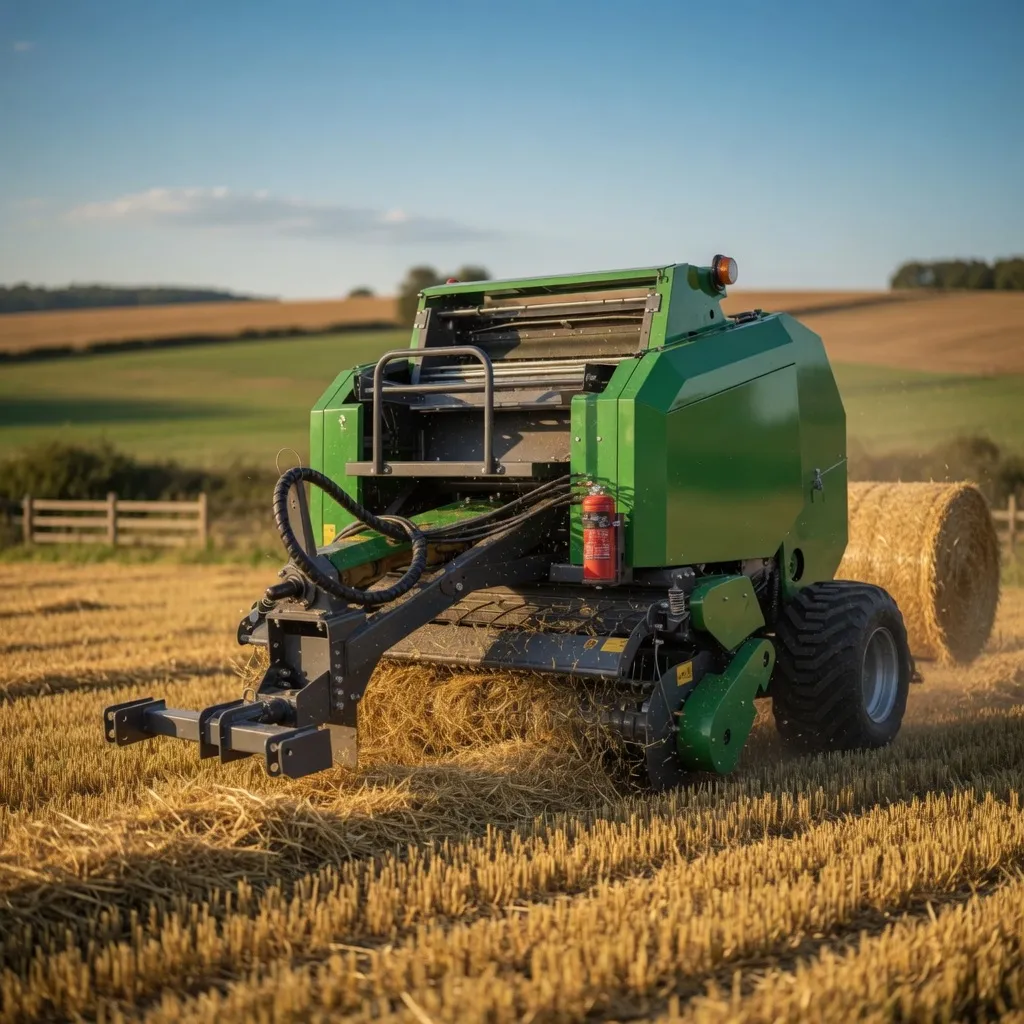
For sheep farms running 200–500 breeding ewes and targeting 150–300 bales per year, the EverPower 9YG-1.0 is the most sensible starting point. Its 1.0m bale diameter produces bales at the right feedout scale for small-to-medium sheep mobs, its PTO power requirement of 45–65hp sits comfortably within the capabilities of standard sheep farm tractors, and its straightforward variable-chamber design handles the range of crops that small sheep properties typically bale without adjustment.
The 9YG-1.0 is not a compromise machine — it is purpose-appropriate equipment for small-scale professional use. It produces consistently dense, uniform bales in silage crops, oaten hay, and light straw conditions, and its compact footprint means it manoeuvres comfortably in the smaller paddock sizes and tighter gateway accesses common on southern NSW and Victorian sheep properties.
Maintenance demands on the 9YG-1.0 are low by design — the machine has fewer hydraulic and electronic subsystems than larger commercial units, which means the typical sheep farmer who self-services their equipment can stay on top of the maintenance schedule without specialist help. Pre-season service involves pickup tine inspection, belt tension check, net wrap knife sharpness verification, and basic lubrication — a half-day job that any competent farm mechanic can handle.
EverPower 9YG-1.25A: The Mid-Size Sheep Farm Workhorse
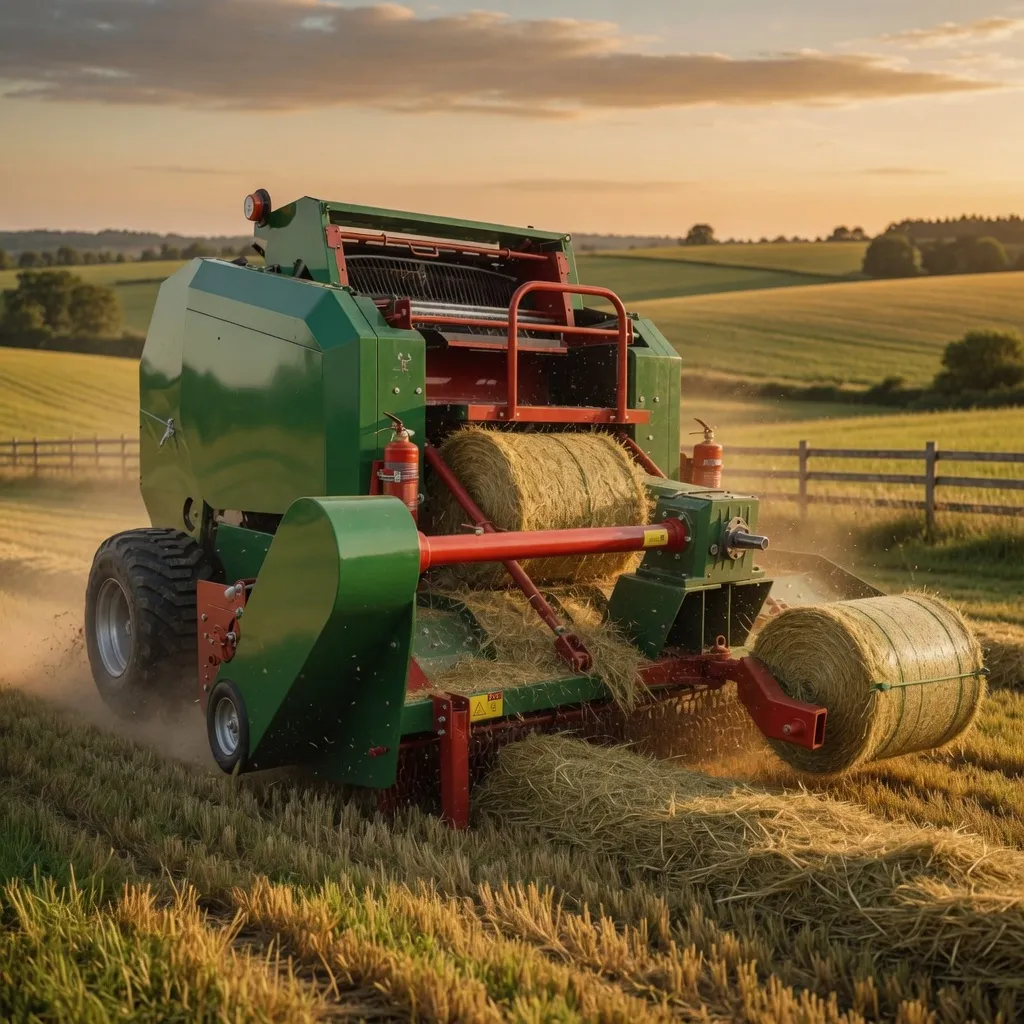
For sheep operations running 500–1,200 breeding ewes, or mixed sheep-and-cattle enterprises where bale volume climbs above 350 per year, the step up to the 9YG-1.25A delivers meaningfully more capacity without moving into the heavy-commercial machine category. The 1.25m bale diameter suits mid-size sheep mob feedout — a mob of 350–500 ewes will consume a 1.25m bale over 2 days, keeping aerobic exposure within safe limits while reducing the number of bale handling and replacement events per week.
The 9YG-1.25A handles the full range of mid-size sheep farm crops — annual ryegrass silage, oaten hay, sub clover, vetch, phalaris, and cereal straw — with a pickup system designed for the diversity of windrow presentations these crops produce. Its 75–100hp PTO requirement is met by most mid-weight general-purpose farm tractors in the 85–105hp class that are common on sheep properties of this scale.
Where the 9YG-1.25A particularly earns its place on a mid-size sheep farm is in the silage application. Silage baling at the pre-joining flushing window, the late-pregnancy supplementation period, and the post-weaning recovery phase are all time-sensitive operations that benefit from a machine capable of completing the paddock within the available quality window. The 9YG-1.25A’s throughput at normal sheep farm crop densities allows a single operator to bale 50–70 bales per day, which is more than sufficient for most mid-size operations to complete their silage program in 2–4 days of good harvest weather.
Comparing the 9YG-1.0 and 9YG-1.25A: Decision Framework
The choice between these two models for a sheep farm in the 400–700 ewe range is genuinely close and depends on several farm-specific factors. The following comparison addresses the key decision points directly.
| Decision Factor | 9YG-1.0 (Suits…) | 9YG-1.25A (Suits…) |
|---|---|---|
| Typical mob size | 100–250 ewes per mob | 250–600 ewes per mob |
| Annual bale volume | 150–350 bales/yr | 350–900 bales/yr |
| Available tractor hp | 45–75 hp PTO | 75–105 hp PTO |
| Bale handling equipment | Manual / quad bike spike | Tractor front-end loader |
| Paddock size / access | Small / restricted access | Medium / standard access |
| Primary baling application | Mainly hay, some silage | Hay and silage equally |
If the comparison genuinely sits at the boundary — say, a 550-ewe operation with an 85hp tractor and 280 bales per year — the 9YG-1.25A is usually the better long-term choice. Sheep farms tend to grow and the baling program grows with them; buying the capacity needed for the operation in 3–5 years rather than today avoids an early upgrade cycle. The 9YG-1.0, by contrast, is the clear choice when tractor power is genuinely limiting or when the feedout logistics of a small operation make the compact bale size the right match.
Tractor Compatibility: Getting the Pairing Right
The baler-tractor pairing is one of the most frequently mismatched combinations on small to mid-size sheep farms, and it creates chronic problems that are often misattributed to the baler itself. An under-powered tractor struggling to maintain bale density on high-moisture silage crops will produce variable, light bales — not because the baler is a poor machine, but because the tractor cannot maintain consistent PTO speed under load. The result is silage that ferments unevenly, with lower-density sections that retain more oxygen and produce inferior fermentation quality.
The practical rule for silage work is to allow a 20–25% power buffer above the baler’s minimum PTO requirement. For the 9YG-1.0 with a 45hp minimum, a 60–65hp tractor provides this buffer. For the 9YG-1.25A with a 75hp minimum, a 90–95hp tractor is the comfortable working range for silage. Dry hay and straw baling is considerably less demanding on tractor power — a tractor at minimum rated PTO will generally manage dry material without issue.
Before purchase, provide EverPower with your tractor’s make, model, and engine specifications. The team can confirm compatibility and flag any potential issues with specific tractor-baler pairings — including hydraulic flow requirements for the net wrap system, which can occasionally be a constraint on older or lower-specification tractors.
Net Wrap vs Twine: The Right Choice for Sheep Farm Applications
On sheep farms producing both hay and silage, the net wrap versus twine decision has practical implications beyond simple cost comparison. For silage production — which makes up a significant proportion of most sheep farm baling programs — net wrap is not optional. Twine-tied silage bales deform under the stretch film applied by the wrapper, creating the bale-shoulder air pockets that allow oxygen infiltration and degrade fermentation quality. Net wrap holds the bale shape rigidly, enabling the wrapper to apply consistent, gap-free film coverage.
For dry hay baling, twine is a legitimate and lower-cost alternative. A well-bound twine bale of oaten hay stores and handles adequately, and the cost saving across 200+ hay bales per year is tangible. Some sheep farmers split their binding approach seasonally — net wrap for all silage production, twine for dry hay and straw — and the EverPower 9YG range accommodates this hybrid approach without mechanical modification.
For sheep farms producing mostly silage and minimal dry hay, the simplest approach is to standardise on net wrap across all applications. The slight cost premium over twine is outweighed by the consistency of bale shape — which improves stacking stability in storage and makes wrapping more predictable — and the faster wrap cycle time that net wrap achieves compared with twine on most modern baler systems.
Do You Need a Wrapper? Planning the Silage Side of the Program
A round baler alone is sufficient for dry hay and straw production. For silage, a wrapper — either a standalone satellite wrapper or a combined baler-wrapper unit — is essential. The question for small to mid-size sheep farms is which wrapping configuration makes most sense given their scale of silage production.
For farms producing 100–200 silage bales per year as a supplement to a mainly hay-based feed reserve, a standalone satellite wrapper (EverPower 9YCM-850) operated alongside the 9YG-1.0 or 9YG-1.25A baler is the most cost-effective configuration. The wrapper can be operated by a second person following the baler, or the baler operator can switch to wrapping after completing a paddock — as long as no bale waits more than 4 hours before wrapping.
For farms where silage is the dominant product and the operator is frequently working alone, upgrading to a combined baler-wrapper unit eliminates the wrapping delay entirely and removes the logistical challenge of coordinating two machines solo. The cost premium of a combined unit over a standalone baler plus wrapper is usually modest at the small-to-mid-scale sheep farm level and is justified quickly by the quality consistency it delivers.
Total Cost of Ownership: What to Budget Across 5 Years
The purchase price of a round baler is the most visible cost, but it’s not the only one. A realistic 5-year total cost of ownership assessment should include purchase price, annual maintenance and service costs (parts and labour), consumables (net wrap or twine, film for silage), fuel consumed per bale, and any lost production from unscheduled downtime. Across 5 years of operation at 300 bales per year, these costs accumulate to a figure that may be 1.5–2x the original purchase price — a reality that makes machine reliability and local parts availability genuine economic factors, not just preferences.
Buying New vs Used: What Small Sheep Farms Should Know
The used baler market in Australia carries genuine appeal at the price point — a three-year-old mid-range baler at 60% of new price looks attractive against a full new-machine investment. But for small to mid-size sheep farms, used balers carry specific risks that new buyers often underestimate. Chamber belt wear, pickup tine fatigue, and net wrap knife degradation are not always visible on inspection, and a used machine that looks serviceable in the paddock can fail on a critical silage day when the weather window is short and the ewes are two weeks from lambing.
A new machine from EverPower comes with a warranty, commissioning support, and a known service history from day one. For a sheep property where the owner-operator does their own servicing and needs to trust the machine to perform without scheduled intervention during the harvest window, the reliability certainty of a new machine has real value beyond what appears in the price comparison. For farms with an experienced farm mechanic on staff who can assess and manage used equipment condition, the used option may be valid — but the assessment needs to be thorough and honest about hidden wear rather than appearance alone.
27 Harley Crescent, Condell Park NSW 2200 ·
+61 2 9708 3322 ·
[email protected]
Frequently Asked Questions
27 Harley Crescent, Condell Park NSW 2200 | +61 2 9708 3322 | [email protected]
About Us | Contact Us