
The decision to build a drought feed reserve is not fundamentally an equipment decision. It is a strategic decision about how a livestock enterprise positions itself against the most predictable financial risk in Australian agriculture. Drought will happen. The frequency, severity, and timing are uncertain; the fact of occurrence is not. The farms that navigate drought events with the least financial damage — the ones that don’t destock at the bottom of the market, don’t buy emergency feed at the top of the price cycle, and don’t lose productive breeding animals they’ve spent years building — are the ones that treated drought preparation as a year-round discipline before the drought arrived. This guide is about building that discipline into a practical annual silage reserve programme, with the right equipment to make it achievable.
The Reserve Target: How Much Is Actually Enough?
The most common mistake in drought reserve planning is setting an insufficiently ambitious target. Farmers who think about reserve size in terms of “one bad month” or “a short dry spell” consistently find themselves returning to market for purchased feed within 6–8 weeks of a serious drought onset, because the reserve they built protects against the drought they expected rather than the drought that actually arrived. Australian drought events — particularly those associated with El Niño sequences or multi-year La Niña breakdowns — regularly run for 12–20 months before meaningful pasture recovery. A feed reserve designed for 12 weeks provides no protection against a 40-week drought.
The strategic reserve target for a livestock enterprise in drought-exposed regions should be calculated on a minimum of 20 weeks of full herd feed requirement — and for properties in the most drought-prone zones of western NSW, southwestern Queensland, and the SA interior, 30 weeks is a more defensible target. This is not a target that needs to be reached in one season. It is a multi-season accumulation target — building and maintaining the reserve as a permanent farm asset, rotating older bales into the feeding programme while newer bales replace them, and managing the inventory so the target floor is never breached regardless of the season.
The calculation framework is standard: daily DM requirement per animal class (6–7 kg DM for a dry beef cow, 9–11 kg for a lactating cow, 7–8 kg for a growing steer) × herd composition by animal class × target reserve weeks × 1.15 storage and feedout loss buffer = target bale inventory. This is not a complicated calculation, but it requires honest inputs rather than optimistic assumptions. A producer who calculates the reserve target for their core breeding mob only — and discovers during the drought that they also need to feed weaners, bulls, and replacement heifers — will find the reserve running out faster than planned. Calculate for the full herd, including all stock classes that will be on hand at the point of drought onset.
The Annual Accumulation Strategy: Building the Reserve Over Time
Building a 20-week reserve from zero in a single season is rarely practical — the pasture or crop production required to generate the necessary bale volume in one programme is only available in exceptional seasons. The more sustainable approach is a rolling accumulation strategy: building the reserve over 3–4 seasons by adding more bales each year than are consumed in feeding, while systematically rotating the oldest bales into the regular feeding programme to maintain silage quality.
The annual accumulation discipline has three components. First, a seasonal production target — the number of new bales to be added to the reserve each year. This target should be calculated to both build toward the overall reserve floor and to replace bales that have reached the end of their storage life (typically 12–18 months in outdoor storage conditions in most Australian climates). Second, a feedout rotation protocol — ensuring that bales are fed in strict first-in, first-out order, so the oldest bales are consumed before they degrade rather than being bypassed in favour of more recently made bales. Third, an annual inventory audit — a physical count of the reserve in the inter-season period, assessing bale condition, quantity, and estimated remaining storage life.
Farms that have maintained this discipline consistently for five or more years describe the reserve as one of their most valuable farm assets — not just for its feed value, but for the management confidence it provides. The decision to hold stock through a dry spell rather than destock at the bottom of the market is only available to the farm that has the feed reserve to back it up. The financial outcome of that decision — selling 200 cows at $800 per head in desperation versus holding them through a 16-week drought on silage and selling them 18 months later at $1,200 — illustrates why the reserve’s value extends well beyond its direct feed cost.
Crop Strategy: What to Grow for Maximum Reserve Value
The crop strategy for a drought feed reserve programme is different from the crop strategy for a regular supplementary feeding programme. Reserve bales need to retain adequate nutritional value for the 12–18 months between baling and potential feedout — which places different demands on the crop species choice and harvest management than bales that will be fed within the current season.
Spring Ryegrass Silage: The High-Quality Core Reserve
Well-made spring ryegrass silage retains 90–95% of its original ME value at 12 months of storage if film integrity is maintained. At 10.5–12.0 MJ ME/kg DM, it represents the highest-energy silage type available to most southern and eastern Australian livestock farms, and its high palatability across all livestock classes makes it the preferred reserve component for farms that want to maintain livestock condition and reproductive performance during drought rather than simply keeping animals alive.
The limitation of spring ryegrass silage as a reserve crop is the narrow harvest window and the weather dependence of the wilting process. In seasons where spring rainfall is unreliable or cutting coincides with extended overcast conditions, achieving consistent DM targets across the full programme is challenging. Operations that build their reserve primarily on spring ryegrass need a contingency plan — supplementary crops or alternative baling windows — for years when the spring programme is compromised.
Oaten Hay and Oat Silage: The Reliable Reserve Base
For farms in mixed cropping country, oaten hay and oat silage provide a more predictable annual reserve contribution than opportunistic pasture silage. The crop is grown on a planned schedule, the cutting window — though still important — is less narrow than for ryegrass, and the DM management is more reliable on an annual crop than on a perennial pasture. Oaten hay at 85–90% DM stores for 2–3 years in good conditions; oat silage wrapped at target DM retains quality comparable to ryegrass silage over a 12–18 month storage window.
Native Grass Baleage: The Opportunistic Reserve Builder
For beef and sheep enterprises in dryland grazing country, native grass baleage — wrapping pasture-flush material at 65–75% DM rather than wilting to the strict silage DM target — is the most cost-effective reserve accumulation tool available when a good season delivers above-average growth. The fermentation is less active than true silage, but the preservation from wrapping prevents the oxidative degradation that would otherwise eliminate the nutritional value of dry standing grass over summer. Native grass baleage at 8.5–10.0 MJ ME/kg DM, for maintenance-level drought feeding of dry breeding stock, is commercially valuable at a production cost that is lower than any alternative reserve-building strategy. The baler needs to handle high-DM, variable-density native grass windrows at appropriate forward speed, and the wrapping protocol needs 6 layers of UV-rated film to protect the reserve through extended storage.
Equipment Infrastructure: The Capital Foundation of the Reserve Programme
The equipment infrastructure required to build and maintain a silage reserve programme is straightforward but needs to be in place before the first baling season, not assembled reactively when the pasture is ready. A reserve programme built on contractor services is vulnerable — the contractor is not available when the property needs them, and the programme’s reliability depends on someone else’s schedule. Equipment ownership converts the reserve programme from a plan that depends on external availability into an operational discipline that runs on the farm’s own timetable.
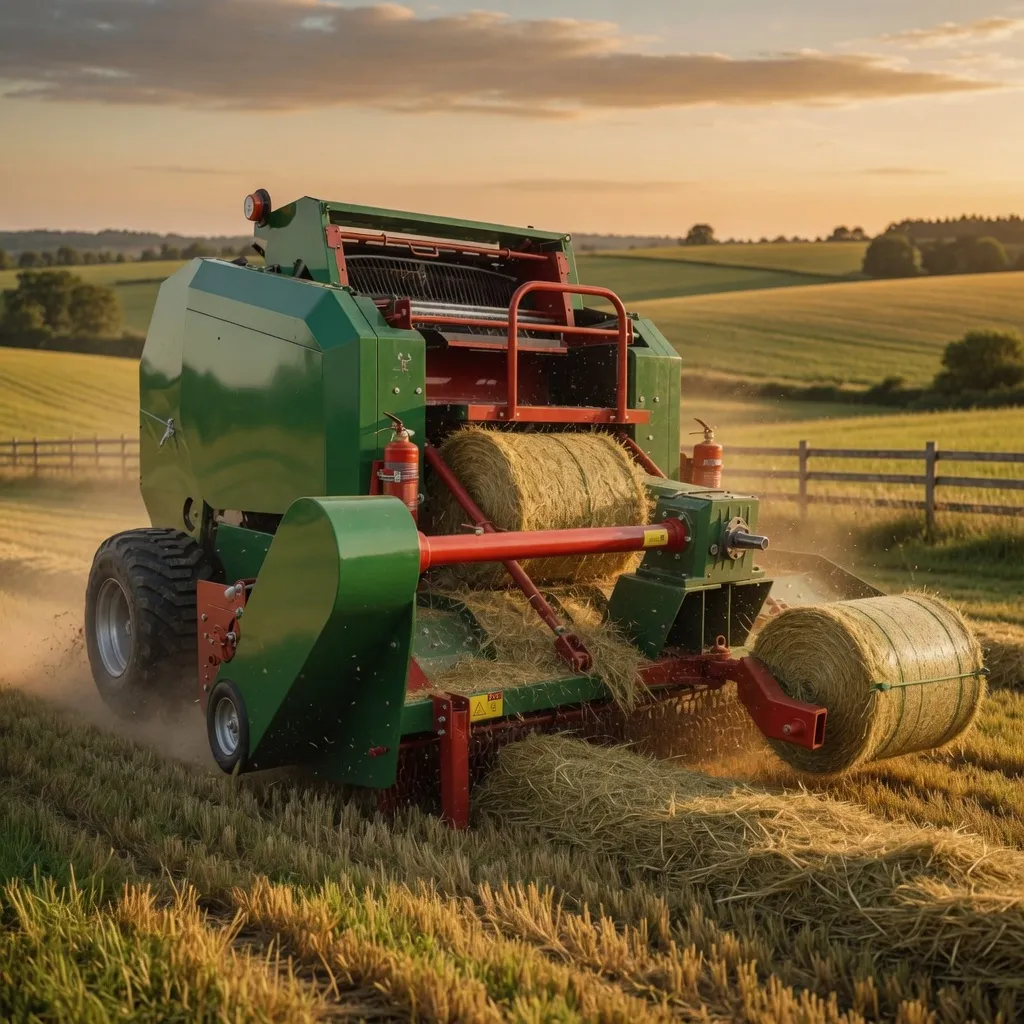
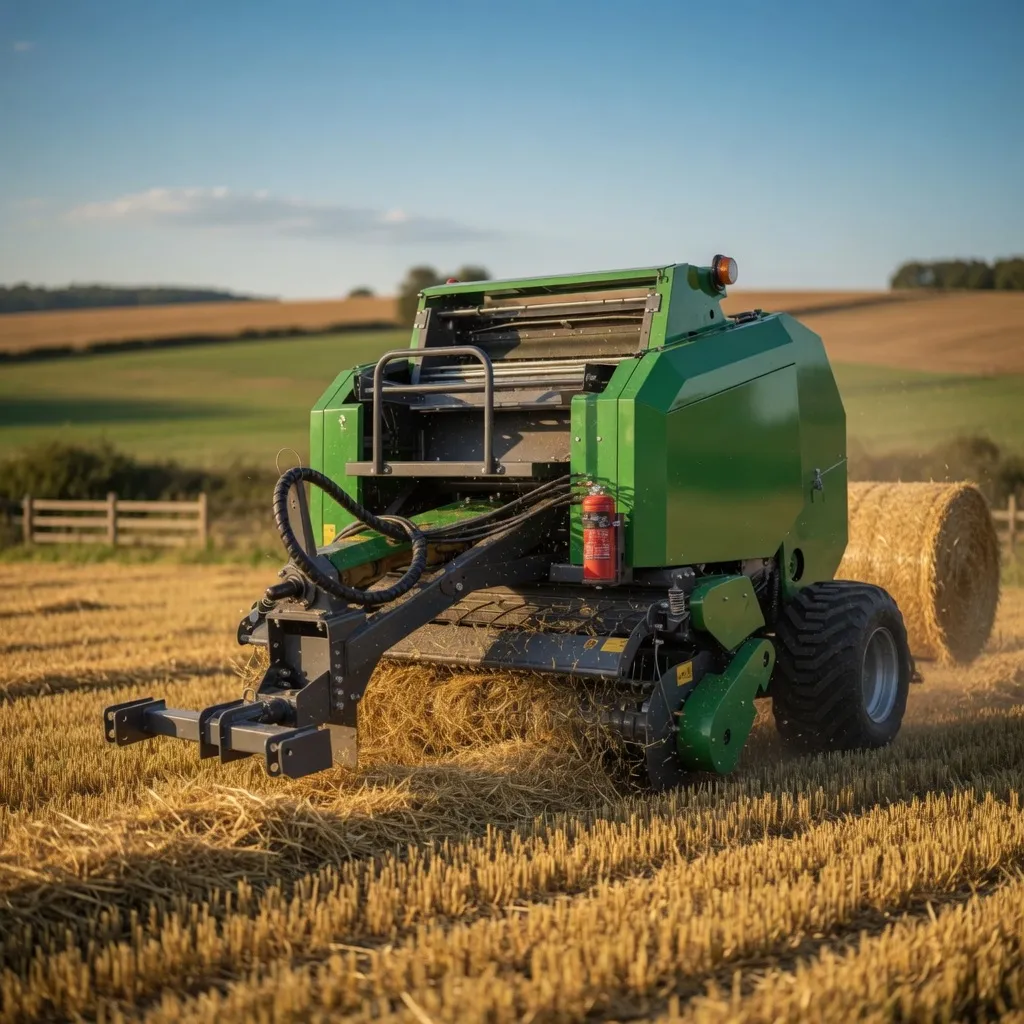
The minimum equipment configuration for a functioning reserve programme is: a round baler matched to the annual bale volume target and tractor fleet, a film wrapper (either standalone or combined), and a mower or mower-conditioner if the programme includes silage crops rather than opportunistic bale wrapping only. For most livestock enterprises in eastern Australia, the EverPower 9YG-1.0 or 9YG-1.25A represents the appropriate baler scale, and the 9YCM-850 or a combined baler-wrapper configuration serves the wrapping requirement.
The capital cost of this equipment needs to be assessed against the cost of a single drought event managed without a reserve. For a 300-head beef breeding operation in western NSW, a drought event requiring 16 weeks of supplementary feeding at market rates represents $60,000–$120,000 in direct feed cost and potentially much more in livestock value terms (if forced selling occurs at depressed prices). Against this risk, the capital cost of a mid-range EverPower baling package amortised over its 7–10 year working life represents a very favourable cost-benefit ratio as a drought insurance investment, even before the annual value of the silage produced outside drought years is counted.
Storage Infrastructure: Protecting the Investment
A well-made silage bale reserve is a significant farm capital asset. A 500-bale reserve of quality ryegrass or oaten silage, at replacement feed value of $180–$250 per bale equivalent, represents $90,000–$125,000 in drought insurance value. Protecting that asset through appropriate storage is not optional — it is asset management.
The fundamental storage requirements are: firm, well-drained ground to prevent base moisture damage; adequate UV protection (from UV-rated film on the bales, or from shade structures on high-solar-radiation sites); protection from the most common physical damage sources (vehicle contact, bird attack, fence-rubbing livestock); and a layout that allows FIFO rotation without disturbing the whole stack.
Concrete pads beneath storage rows are the gold standard and are justified for reserve programmes expected to be permanent farm assets. A 60-metre concrete strip 4 metres wide — accommodating a single row of approximately 60 bales — costs approximately $8,000–$12,000 depending on location and specification, and extends the base-protected storage life of bales on that site by several years compared with bare-earth storage. For operations storing 500+ bales long-term, the return on this infrastructure investment — in reduced spoilage losses and extended reliable storage life — is positive within two or three seasons.
Annual storage inspections — checking bale film integrity, looking for vermin entry points, checking base moisture levels, and identifying bales that have shifted in the row — are the maintenance discipline that protects the reserve between production and feedout. A one-person half-day inspection each season, with a roll of film repair tape and a marking system for bales that need priority feeding, costs very little against the reserve value it protects.
Managing the Reserve During Drought: When to Draw Down and When to Hold
The reserve exists to be used during drought — but using it effectively requires discipline about when to start drawing it down, at what rate, and how to make it last through the full drought duration without running out before the drought breaks. These decisions are more consequential than most producers realise at the point of drought onset.
The decision to start drought feeding from the reserve should not be triggered by emergency conditions — at that point, the pressure of the feeding requirement typically leads to wasteful, high-rate feeding that depletes the reserve faster than optimal. The trigger for drought feeding should be a defined pasture condition threshold — say, below 800 kg DM/ha of standing feed — at which the livestock are moved to a concentrated feeding area and silage is introduced as a supplementary ration at a controlled rate that extends the reserve over the anticipated drought duration.
Ration management during drought feeding is where silage quality data — from the pre-feedout laboratory test — becomes directly actionable. A bale tested at 10.5 MJ ME/kg DM requires a different ration quantity to maintain a dry breeding cow in BCS 2.5 than a bale testing at 9.0 MJ ME/kg DM from lower-quality native grass baleage. Without the test data, the producer is flying blind on ration adequacy — and the cost of an inadequate ration, in body condition loss that damages reproductive performance in the following season, is carried for two to three years after the drought has broken.
EverPower as the Partner in Reserve Building
EverPower Baling Machinery Australia Pty Ltd supports drought reserve building programmes at every scale — from a first-season 200-bale reserve on a 150-cow property using the 9YG-1.0, through to a multi-season 5,000-bale programme on a large pastoral station using the S9000 platform. The NSW-based team provides practical advice on reserve target calculation, equipment matching, crop strategy, and storage design that is grounded in Australian operating conditions rather than generic recommendations.
The most useful conversation to have with EverPower is the one before the first baling season begins — when the reserve target is being set, the crop strategy is being designed, and the equipment selection is being made. Getting these foundational decisions right from the start produces a reserve programme that actually works as a drought protection tool rather than one that is too small to make a difference or too expensive to maintain. EverPower’s team can walk through all three decisions based on specific property scale, herd composition, and drought risk profile.
EverPower Baling Machinery Australia Pty Ltd
27 Harley Crescent, Condell Park NSW 2200
+61 2 9708 3322
[email protected]
Frequently Asked Questions
27 Harley Crescent, Condell Park NSW 2200 | +61 2 9708 3322 | [email protected]
About Us | Contact Us