
Feedlot Pre-Condition: Using Silage in the Transition Yard
How silage buffers rumen adaptation in the 21-day transition from pasture to grain — the feeding programme that reduces acidosis risk and improves subsequent grain conversion.
The 21-Day Problem Every Feedlot Operator Knows
Cattle transitioning from pasture to grain-based feedlot diets go through the most physiologically stressful nutritional change in their production lives. The rumen microbiome — which has been tuned over weeks or months to process high-fibre, low-starch pasture — must adapt to the high-starch, low-fibre grain ration that drives feedlot weight gain. During this 21 to 28 day adaptation period, the risk of subacute ruminal acidosis (SARA) and clinical acidosis is highest, the voluntary intake is most variable, and daily weight gain is typically at its lowest of the entire lot placement.
The conventional industry response to transition risk is a step-up grain programme: starting at 20 to 30% grain DM in the ration and increasing by 5 to 10 percentage points every 3 to 5 days over 21 to 28 days until the target finishing ration is reached. This works — but it relies on the roughage component of the ration doing two things simultaneously: providing adequate effective fibre for rumen buffering, and being palatable enough for cattle that have been receiving nothing but pasture for months.
Silage as the transition roughage component — replacing the dry hay or straw that most Queensland and NSW feedlots use — improves both these functions. Well-made silage has higher digestibility than dry hay from equivalent crops, is more palatable for grazing-background cattle that are already accustomed to eating moist, aromatic forage, and provides a better rumen pH buffer through its fermentation acid content than dry roughage. This article covers how to incorporate silage into a feedlot transition programme effectively and what production system makes it viable for 200 to 1,000 head transition yards. For why cattle producers are increasingly investing in their own baling capability rather than purchasing hay, our article on why cattle farmers are switching to combined baler-wrapper machines covers the ownership economics.
Why Silage Works Better Than Dry Hay in the Transition Yard
Palatability — The First Week Matters Most
Cattle entering a transition yard after months on native or improved pasture have a feed intake profile dominated by high-moisture, aromatic, varied-texture pasture. Dry hay — particularly dry cereal hay at 12 to 15% moisture, with its dusty, low-palatability characteristics — is a foreign feed format that cattle eat reluctantly in the first 3 to 5 days of transition. This reluctance in the first week means the effective fibre intake is lower than the offered allocation, which is precisely when effective fibre is most needed as the rumen microbiome begins the adaptation process.
Silage’s higher moisture content (40 to 55% DM) and fermented aroma profile is closer to the wet, diverse pasture that transition cattle have been eating for months. Voluntary intake of silage in the first 3 to 5 days of transition is typically 15 to 30% higher than voluntary intake of equivalent dry hay — a meaningful difference when every kilogram of effective fibre consumed in the first week of transition reduces acidosis risk and improves first-week weight gain.
Effective Fibre and Rumen pH Buffering
The key metric for roughage in a transition ration is effective neutral detergent fibre (eNDF) — the fraction of NDF that contributes to the rumen mat and stimulates saliva production (the primary rumen pH buffer). Well-made grass or cereal silage at 50 to 60% NDF and 35 to 50 mm particle length provides comparable eNDF to dry hay from the same crop — and significantly higher eNDF than the ground or processed roughage components used in some total mixed ration (TMR) transition programmes.
| Roughage Source | NDF (DM) | eNDF Rating | Palatability (Transition Cattle) | Cost (AUD/tonne DM) |
|---|---|---|---|---|
| Dry cereal hay | 55–70% | High | Moderate — adjustment period | $180–$260 delivered |
| Cereal silage baleage | 50–65% | High | Good — closer to pasture | $90–$150 on-farm |
| Lucerne/grass silage | 40–55% | Medium-High | Very good | $100–$160 on-farm |
| Dry straw | 70–80% | Medium | Low — very unpalatable | $80–$140 delivered |
| Sorghum silage | 55–65% | High | Good — high starch aids transition | $75–$130 on-farm |
Designing the Transition Feeding Programme With Silage
A Practical 21-Day Transition Ration Schedule
| Days | Silage (% DM) | Grain (% DM) | Mineral/Buffer (% DM) | Key Management Note |
|---|---|---|---|---|
| 1–5 | 50–60% | 20–25% | 3–5% | Monitor bunk intake daily; ad-lib silage |
| 6–10 | 40–50% | 30–35% | 3–5% | Observe for bloat; increase grain only if intake >95% |
| 11–15 | 30–40% | 40–45% | 3–5% | Watch SARA signs — loose faeces, off-feed |
| 16–21 | 20–30% | 50–55% | 3–4% | Approaching finishing ration; maintain silage for fibre |
| 22+ | 10–20% | 60–65%+ | 2–3% | Standard finishing — silage as fibre buffer only |
Bunk Management When Feeding Silage in the Transition Yard
Silage in a feedlot transition bunk requires different management than dry hay in a rack. The primary concern is aerobic deterioration of the silage portion in the bunk when ambient temperatures are high — at 30 to 35°C (typical of Queensland and northern NSW feedlots in summer), silage exposed in a bunk begins visible heating within 4 to 6 hours of placement. For twice-daily feeding of silage-containing TMR, this is manageable: feed at morning and evening, push up feed at midday to expose fresh silage to cattle, and remove any heating or moulded material from the bunk before the afternoon feed.
Feedlots using partial TMR mixing — where silage is distributed from a loader alongside grain in the same bunk rather than mixed — should distribute silage across the full bunk length immediately before the grain ration to allow cattle to self-regulate the silage:grain ratio. Avoid placing silage and grain in separate sections of the bunk, which allows cattle to preferentially eat grain and ignore silage — exactly the intake pattern that drives SARA in the transition period.
Production System: Providing Silage for 200 to 1,000 Head Transition
Volume Requirements for a 200-Head Transition Yard
A 200-head transition yard feeding silage at 50% of ration DM for the first 10 days, then reducing: average over the 21-day period approximately 35% of ration DM as silage at 10 kg total DM per head per day. Silage DM per head per day: 3.5 kg DM. Total for 21-day programme: 200 × 3.5 × 21 = 14,700 kg DM silage. At 1.25 m bale with 45% DM content and 200 kg DM per bale: approximately 74 bales per 200-head lot.
For a feedlot turning through 4 to 6 lots of 200 head per year, the annual silage requirement is 290 to 440 bales. This is within the practical range of an owned baling system making 300 to 500 bales from dedicated sorghum or mixed cereal paddocks adjacent to the feedlot. At 400 bales per year from owned production at a total cost of AUD $140 per bale (film, consumables, amortised equipment), versus purchasing equivalent silage at AUD $250 to $350 per tonne DM equivalent, the annual saving from owned production is AUD $15,000 to $30,000.
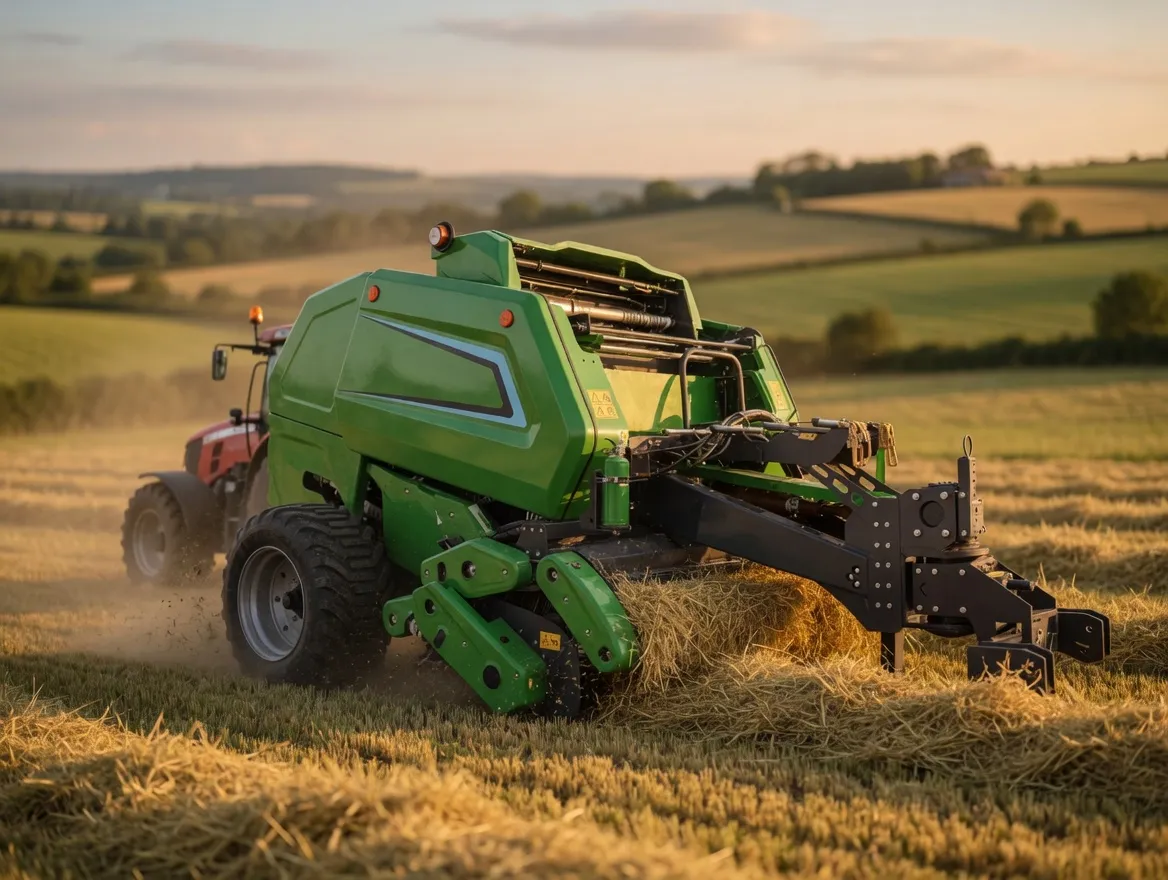
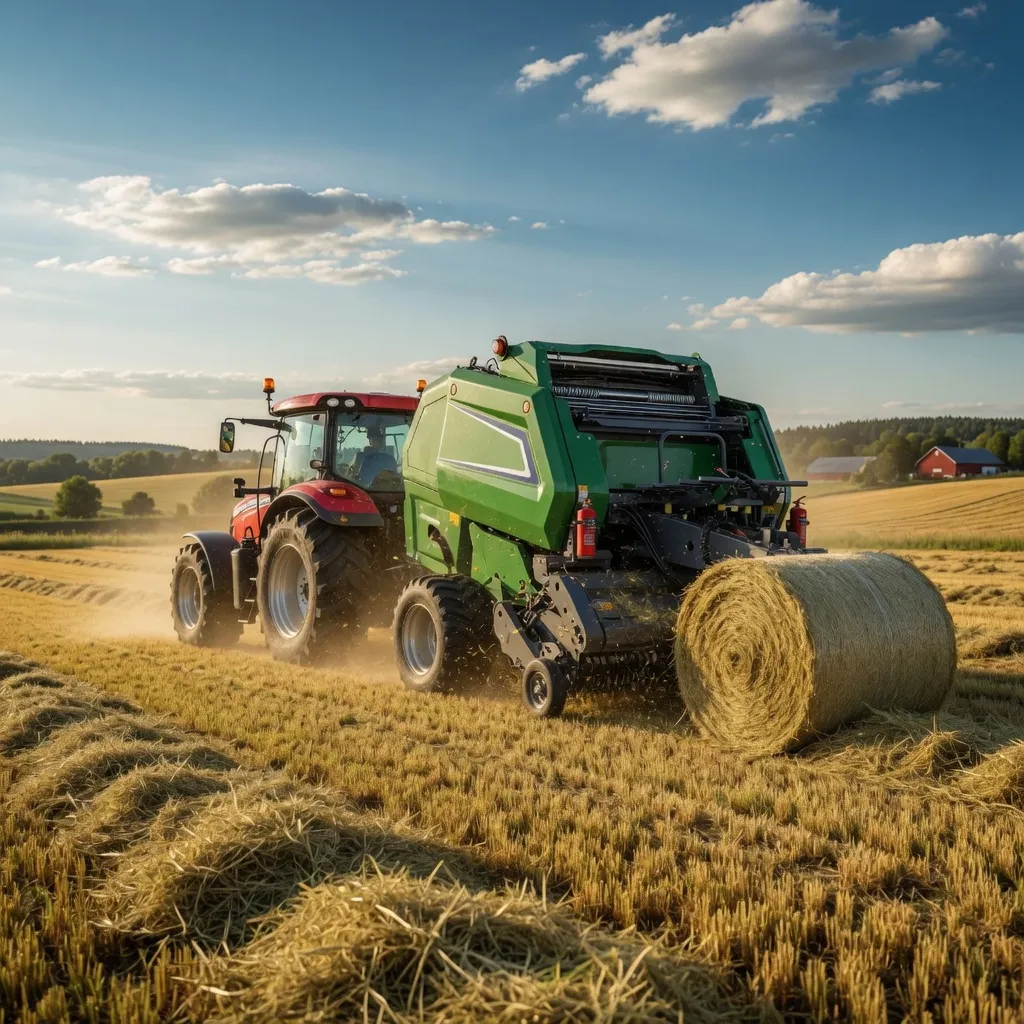
The 9YG-2.24D S9000 round baler is specified for the forage sorghum and mixed cereal silage crops that Queensland and NSW backgrounder operations grow for transition feeding — the higher chamber capacity and wider pickup handle the dense, chopped forage sorghum windrows that characterise the primary transition silage crop in these regions.
Common Transition Feeding Mistakes When Using Silage
Moving from a high-ME sorghum silage batch (9.5 MJ ME) to a lower-ME cereal straw silage batch (8.2 MJ ME) mid-way through the transition programme without adjusting ration allocations reduces energy intake below the step-up plan target. This commonly manifests as lower intake signals (cattle not cleaning up the bunk) that operators misinterpret as overcrowding or social stress rather than the actual cause — lower energy density roughage than the ration was designed around. Test each incoming silage batch and adjust ration accordingly.
Transition cattle offered silage at a set restricted allocation on day 1 eat what is available and then stand waiting at the bunk — a stress pattern that increases cortisol levels and suppresses rumen function in the first week. Provide ad-lib access to silage for the first 3 to 5 days (more than cattle will actually consume) and let voluntary intake establish before beginning restriction. The cost of ad-lib silage for 3 to 5 days per lot is minor relative to the transition performance improvement.
Running out of silage mid-transition and substituting dry hay abruptly is the highest-risk nutritional event in a feedlot’s transition programme — the change in roughage format from moist, aromatic silage to dry, dusty hay reduces voluntary roughage intake at precisely the point where grain inclusion is highest. Always carry 20 to 25% more silage inventory than the calculated programme requirement as a buffer for unexpected lot extension or intake variation.
Frequently Asked Questions
Discuss Your Feedlot Silage Programme
Tell us your annual lot volume, transition programme length, and available forage area — we’ll help calculate the baling system that covers your pre-conditioning silage requirement.