
Running out of feed mid-winter is expensive, stressful, and entirely avoidable. The difference between operations that panic-buy hay at peak prices and operations that cruise through the dry months is one simple calculation done before the baling season starts. This guide provides the formula, the livestock-specific intake figures, and the worked examples you need to determine exactly how many round bales per year your herd or flock requires — then shows how to add a safety buffer so you never come up short.
The Core Formula: Animals × Daily Intake × Feeding Days ÷ Bale Weight
Every bale calculation starts with four numbers. The first is how many animals you are feeding. Count breeding stock, replacement animals, and any animals you plan to carry through the feeding period but exclude animals you intend to sell before the feed-out season begins. The second number is the daily dry matter intake per animal, expressed in kilograms. The third is how many days you expect to feed conserved forage rather than relying on pasture. The fourth is the net usable weight of each bale after accounting for waste. Multiply the first three together, then divide by the fourth, and you have your bale requirement.
DM = Dry Matter (kg) | Usable Bale Weight = Total Weight − Waste
The formula looks simple, but each variable contains nuances that can shift your final number significantly. A ten per cent error in daily intake across a herd of 200 cattle fed for 120 days produces a shortfall of several dozen bales — easily five to ten thousand dollars of purchased feed. The following sections break each variable down in detail so your estimate is as accurate as possible.
Daily Dry Matter Intake by Livestock Type
Dry matter intake is the weight of feed an animal consumes once water content is removed. It is the standard unit in animal nutrition because it allows direct comparison between feeds of different moisture levels. A dairy cow eating 22 kilograms of dry matter per day from fresh pasture is consuming the same nutritional load as a dairy cow eating 22 kilograms of dry matter from hay, even though the fresh pasture weighs far more on a wet basis. All bale calculations should be done in dry matter to avoid confusion.
| Livestock Class | Live Weight (kg) | DM Intake (kg/day) | % of Body Weight |
|---|---|---|---|
| Lactating dairy cow | 550 – 650 | 18 – 24 | 3.0 – 4.0% |
| Dry cow / beef breeder | 450 – 600 | 9 – 13 | 2.0 – 2.5% |
| Beef steer (growing) | 350 – 500 | 8 – 12 | 2.2 – 2.8% |
| Ewe (dry, maintenance) | 55 – 75 | 1.0 – 1.5 | 1.8 – 2.2% |
| Ewe (late pregnancy / lactating) | 55 – 75 | 1.5 – 2.5 | 2.5 – 3.5% |
| Horse (500 kg, light work) | 450 – 550 | 8 – 11 | 1.5 – 2.0% |
These figures assume the baled forage is the sole or primary feed source during the feeding period. If you are supplementing with grain, pellets, or other concentrates, reduce the forage DM intake proportionally. A dairy cow receiving five kilograms of DM from grain needs only 15 to 19 kilograms of DM from silage or hay bales rather than the full 20 to 24. Always work with your nutritionist or adviser to match total ration requirements to your specific production targets.
Estimating Feeding Days for Your Region
Feeding days is the number of days per year that your animals rely on conserved forage rather than grazing fresh pasture. In the high-rainfall dairy regions of Gippsland and the south-west of Victoria, the typical feeding period is 90 to 120 days through late autumn and winter when pasture growth drops below herd demand. In the drier pastoral zones of western New South Wales and Queensland, the feeding period may extend to 150 or even 200 days in a drought year. Sheep operations in the cereal belt usually budget 60 to 100 days of supplementary feeding, depending on seasonal conditions and stocking rate.
The mistake most producers make is budgeting for an average year rather than a below-average year. If your average feeding period is 100 days but a bad season extends it to 140, you are 40 per cent short on feed unless you built a buffer. A sound approach is to calculate for your worst-case feeding period from the last ten years, then add 15 to 20 per cent on top of that figure. If the extra bales are not needed, they carry forward into the following year as drought insurance. Silage bales stored correctly will maintain nutritional quality for twelve months or longer, so the cost of over-producing is simply storage space, not feed waste.
Understanding Bale Weight and Usable Dry Matter
Not every kilogram of a bale ends up in the animal. Losses occur during storage, transport, and feeding. A standard 1.2-metre round bale of silage at 50 per cent moisture typically weighs 500 to 650 kilograms as-fed. The dry matter content of that bale is half the as-fed weight, so 250 to 325 kilograms of DM. A dry hay bale of the same diameter at 12 per cent moisture weighs 300 to 400 kilograms, with a dry matter content of approximately 265 to 350 kilograms. The numbers are similar in DM terms even though the silage bale is physically much heavier.
Feeding waste further reduces usable dry matter. Hay fed on the ground without a ring or cradle can lose 20 to 35 per cent of its weight through trampling, soiling, and wind scatter. Hay fed in a ring feeder typically loses 5 to 15 per cent. Wrapped silage has lower feeding waste because the material is denser and animals tend to consume it more completely, with typical losses of 3 to 8 per cent. Your bale calculation must use the net DM after storage and feeding losses, not the gross DM at the time of baling. If your bale contains 300 kilograms of DM but 15 per cent is lost to waste, you have 255 kilograms of usable DM per bale.
| Forage Type | As-Fed Weight | DM Content | Typical Waste | Usable DM/Bale |
|---|---|---|---|---|
| Wrapped silage (50% DM) | 550 – 650 kg | 275 – 325 kg | 5 – 8% | 255 – 305 kg |
| Dry hay (88% DM) | 300 – 400 kg | 265 – 350 kg | 10 – 20% | 215 – 315 kg |
| Baleage (45% DM) | 600 – 750 kg | 270 – 340 kg | 3 – 6% | 255 – 325 kg |
Worked Example: 200-Head Beef Breeder Herd
Consider a beef operation in central New South Wales running 200 breeders averaging 550 kilograms live weight. The cows are dry during the main feeding period, so daily DM intake is approximately 11 kilograms per head. The property typically feeds for 120 days, but the worst season in the last decade required 160 days. The operator bales wrapped silage with an estimated usable DM of 280 kilograms per bale.
200 head × 11 kg DM/day = 2,200 kg DM per day
2,200 kg/day × 160 days (worst case) = 352,000 kg DM
352,000 ÷ 280 kg usable DM/bale = 1,258 bales
1,258 × 1.15 = 1,447 bales (rounded to 1,450)
Worked Example: 1,500-Ewe Sheep Flock
A merino operation in the central tablelands runs 1,500 breeding ewes averaging 65 kilograms. Half the feeding period the ewes are dry (DM intake 1.2 kg/day) and half they are in late pregnancy (DM intake 2.0 kg/day). The weighted average daily intake is 1.6 kilograms per head. The property budgets for 100 feeding days in a normal year and 140 in a drought year. They produce dry hay bales fed in ring feeders with an estimated usable DM of 250 kilograms per bale.
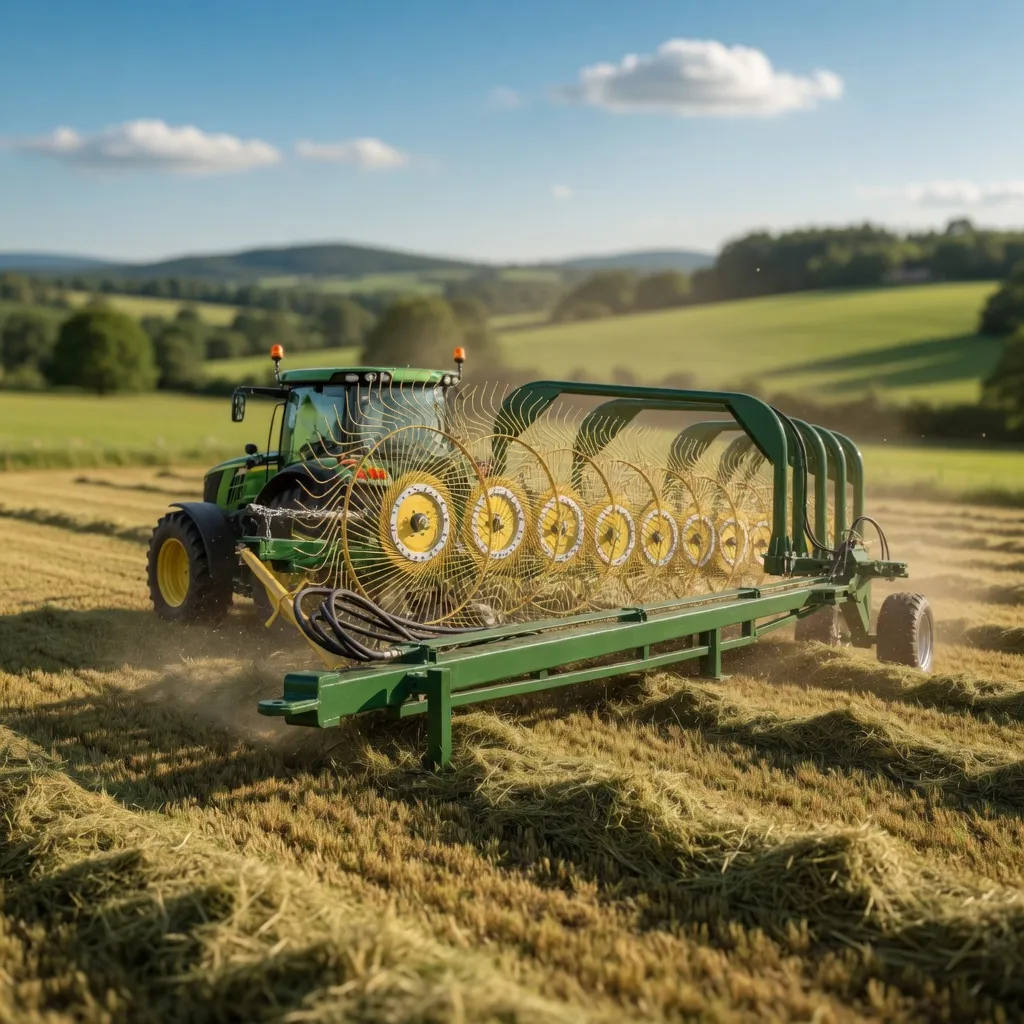
The calculation runs as follows. Total daily DM demand is 1,500 head multiplied by 1.6 kilograms, which equals 2,400 kilograms per day. Over 140 days that is 336,000 kilograms of DM. Divided by 250 kilograms of usable DM per bale, the requirement is 1,344 bales. Adding a 15 per cent buffer brings the target to approximately 1,546 bales. That is a substantial baling programme, and it illustrates why operations of this scale often invest in their own baling equipment rather than relying on a contractor whose availability cannot be guaranteed during peak season. For insight into minimising downtime on sheep properties, see our guide to minimising harvest downtime on sheep farms with a reliable round baler.
Converting Bale Targets into Paddock Area and Yield Requirements
Once you know how many bales you need, the next question is whether your property can produce them. A well-managed irrigated ryegrass paddock in southern Australia can yield 10 to 14 tonnes of dry matter per hectare per year across multiple cuts. A dryland pasture in the tablelands may yield 4 to 7 tonnes of DM per hectare in a good season. If each bale contains 280 kilograms of usable DM and you need 1,450 bales, your total DM requirement is 406,000 kilograms, or 406 tonnes. At a dryland yield of 5 tonnes per hectare, you need approximately 81 hectares of baling country to meet that target.
If your available baling area is smaller than the calculation suggests, you have three options: increase yield through fertiliser and pasture improvement, purchase the shortfall from neighbours or through a feed broker, or reduce livestock numbers to match your feed production capacity. Many producers find that the cost of fertilising an extra ten hectares of existing pasture to lift yield is far less than the cost of buying hay or silage at market prices during a tight season. The bale calculation gives you the numbers to make that comparison objectively.
Getting Bales from Paddock to Storage Efficiently
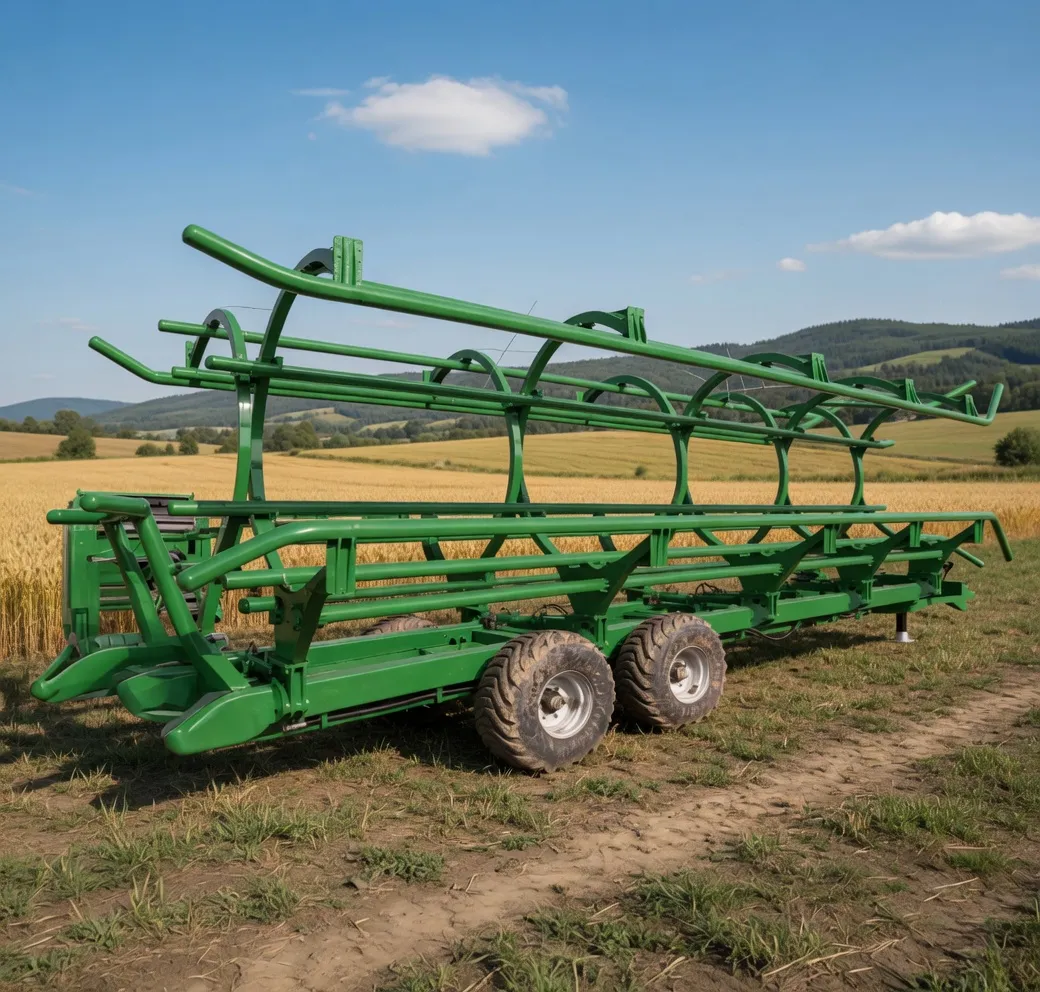
Producing 1,000 or more bales per season is only half the challenge. Moving them from the paddock to the storage site and stacking them correctly is the other half. A single operator with a tractor and front-end loader can move approximately 15 to 20 bales per hour over short distances, which means shifting 1,450 bales takes 70 to 100 hours of dedicated transport work. A bale accumulator or conveyor system attached to the baler dramatically reduces this labour by depositing bales in organised rows or transferring them directly to a trailer as they exit the chamber.
The EverPower Hay Baler Conveyor 9JYY-4.5 attaches to the rear of the baler and slides each finished bale onto a chute that deposits it gently onto the ground in a line or feeds it directly onto a following trailer. This eliminates the need for a second operator to collect bales immediately after baling, which means you can focus on baling during the optimal weather window and collect later. For a large-scale operation producing 1,000-plus bales per season, the time savings over the course of the baling programme can amount to several full working days, freeing labour for other critical tasks during the harvest period.

Building a Safety Margin: Why 15 to 20 Per Cent Extra Matters
The 15 to 20 per cent buffer recommended above is not arbitrary. It covers four specific risk factors that your base calculation cannot anticipate. First, individual bale weight varies. Not every bale from a season will weigh the same; the first bales of the morning may be lighter than afternoon bales because of moisture differences, and some paddocks produce denser forage than others. A ten per cent variation in average bale weight across the season is normal. Second, storage losses may exceed estimates. A damaged wrap, a bird puncture, or a rodent hole can render a bale partially or completely unusable. Losing five per cent of stored bales to damage is realistic.
Third, animal numbers may change. A neighbour who asks you to agist 30 head for two months, or a batch of weaners you decide to retain rather than sell, increases your feeding obligation unexpectedly. Fourth, the season itself is unpredictable. The autumn break may arrive three weeks late, extending your feeding period beyond even the worst-case estimate. Each of these risks alone might add only three to five per cent to your bale requirement, but they compound. A 15 per cent buffer covers any single risk factor comfortably and handles two simultaneous factors without crisis. A 20 per cent buffer handles three.
Frequently Asked Questions
27 Harley Crescent, Condell Park NSW 2200
Phone: +61 2 9708 3322 | Email: [email protected]
About Us | Contact Us