
Three Materials, Three Challenges — One Machine
Hay, straw, and corn stover are the three most common dry roughage inputs in Australian livestock feeding programmes. They look similar — dry, fibrous, brown — but behave very differently in a hammer-mill forage grinder. Hay is relatively soft and brittle when dry, grinding quickly and cleanly through most screen sizes. Wheat and barley straw is harder and more hollow-stemmed, requiring more impact energy per kilogram and producing more fines alongside coarse outliers if the machine is not set correctly. Corn stover is the most challenging: it combines hard dried cob fragments, tough stalk nodes, and soft leaf tissue in the same bale, which creates highly variable resistance across each rotor pass. Running all three materials on the same 9F-70 with the same settings produces different output quality from each. Understanding the adjustments needed for each material — screen size, feed rate, hammer condition threshold — is the practical knowledge that separates operations producing consistent, specification-quality ground feed from those producing a variable mix that undermines ration formulation.
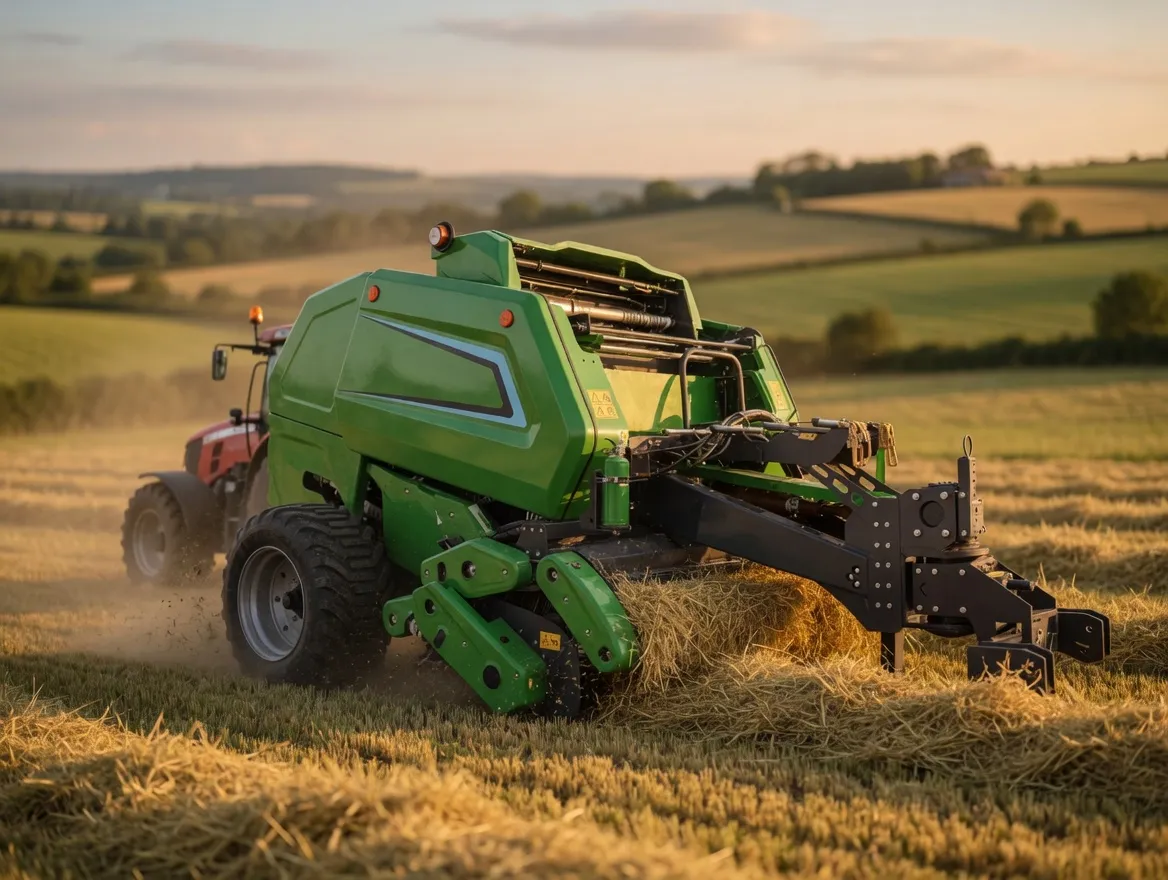
The quality of the bale entering the grinder — density, moisture, species composition — directly determines the consistency of the ground output. Well-made bales grind more uniformly than loose or uneven ones.
Grinding Dry Hay: Settings and Best Practice
Dry hay — ryegrass, lucerne, pasture mix, cereal hay — is the most forgiving material for a hammer-mill grinder. At 10–14% moisture, the stems fracture cleanly on hammer impact, pass the screen quickly, and produce a particle distribution close to the screen hole diameter with a narrow spread of fines. The 9F-70 at 8 mm screen produces 90%+ of particles in the 4–15 mm range from dry ryegrass hay under good conditions.
Optimal moisture range: 10–14%. Below 8%, hay becomes highly friable and produces an elevated fines fraction (below 2 mm) that falls through the 1.18 mm sieve — dusty output that cattle avoid. Above 16%, stems bend rather than fracture, increasing coarse outliers and reducing throughput by 15–25%. If hay is above 16% on delivery, stack it for 3–4 weeks before grinding to allow further drying, or factor the wider particle distribution into your ration formulation.
Screen recommendation: 6 mm for dairy TMR roughage fraction; 8 mm for beef feedlot and backgrounding; 10 mm for dry cow supplementation. Lucerne hay, which has softer, leafier tissue than ryegrass, can be run on a screen one size finer than the equivalent ryegrass setting without significant throughput penalty.
Feed rate: Steady and consistent. Overfeeding a hay grinder produces a surge of material that temporarily overwhelms the screen, allowing partly-reduced particles to pass at angles — widening the size distribution. Feed in controlled flakes of 3–5 kg at 10–15 second intervals rather than dumping a full flake every 30–40 seconds.
Grinding Wheat and Barley Straw: Adjustments Required
Cereal straw is significantly harder and more abrasive than hay. The hollow internodes of wheat and barley stalks require the hammer tip to fracture the wall of the stem rather than simply breaking a solid fibre bundle. This demands more kinetic energy per strike and wears hammer edges faster. On straw, plan hammer flips at 80 hours (versus 100 hours for hay) and replacements at 160 hours.
Screen recommendation: Use one screen size larger than you would for equivalent hay. If you use an 8 mm screen for beef hay, use a 10 mm screen for straw in the same ration role. Straw’s hollow, hard walls produce more coarse outliers at any given screen size than hay, and a larger screen allows the straw internodes to pass without excessive recirculation that overloads the motor.
Throughput expectation: 400–550 kg/hour on dry wheat straw with fresh hammers and a 10 mm screen. This is 30–40% lower than the equivalent hay figure. Plan grinding time accordingly. If your operation needs 600 kg of ground straw per day and you have a 2-hour grinding window, the 9F-70 can meet this requirement with a 10 mm screen and a consistent feed rate — you will be running at roughly 300 kg/hour effective throughput to account for feed loading time and minor pauses.
Screen blockage management: Straw, especially oat straw with its finer, more tangled fibre structure, has a higher tendency to bridge across screen holes at the 6–8 mm size range. If throughput drops progressively over a grinding session, shut down and clean the screen — a straw-blocked screen can reduce open area by 40–60%, effectively halving throughput while doubling motor load. A 5-minute screen clean every 90 minutes is faster than grinding at half-speed for the full session.
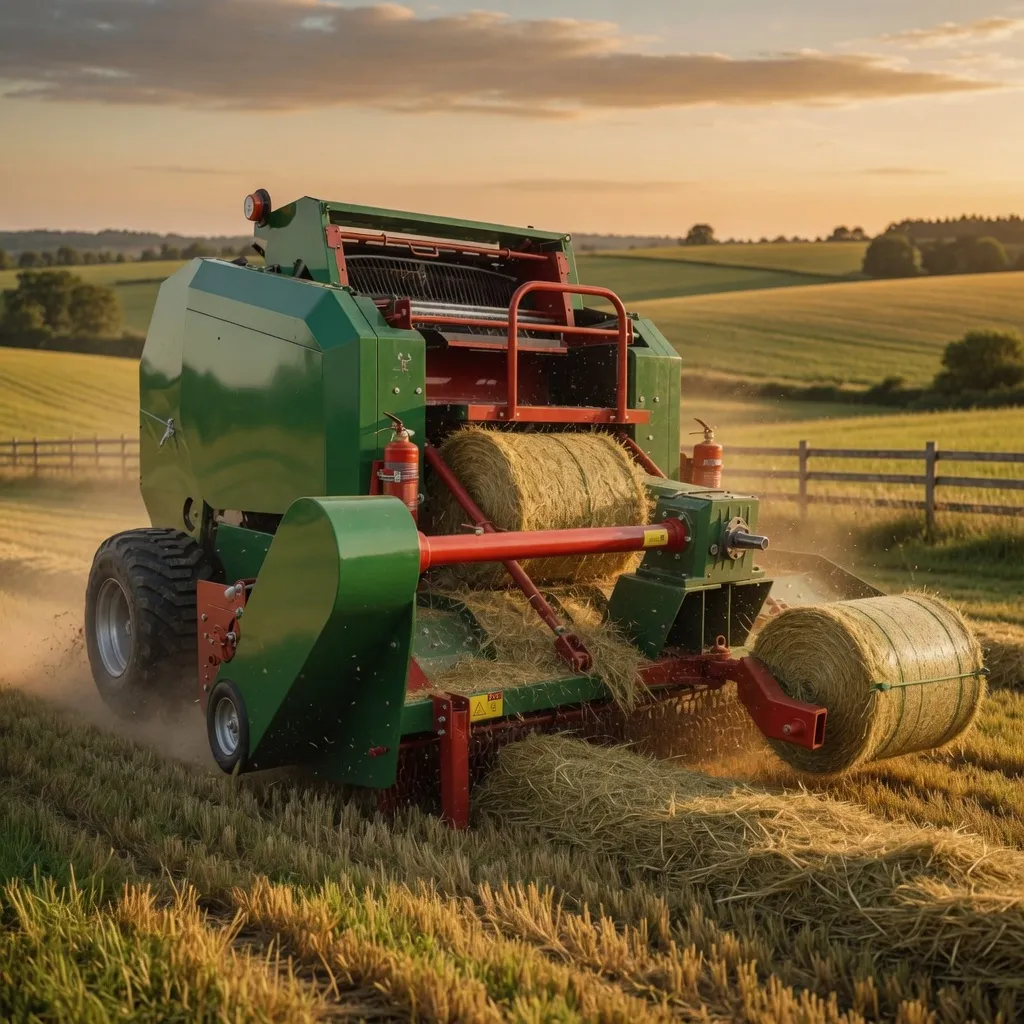
Straw bales from cereal harvest are a major roughage source in Australian feedlot rations — consistent grinding of this material requires adjusted screen size and more frequent hammer maintenance than softer hay.
Grinding Corn Stover: The Most Demanding Material
Corn stover — the stalk, leaf, husk, and cob fragments remaining after grain harvest — is the most mechanically challenging material for a hammer-mill grinder. A single bale of corn stover contains at least three distinct material types with very different fracture resistance: dry leaf tissue (soft, low density, fractures easily at low impact energy), dried stalk (hollow but with hard nodes every 100–200 mm that resist fracture), and cob fragments (extremely hard, dense, and abrasive). A hammer striking soft leaf tissue transfers almost no energy into size reduction; the same hammer striking a dry cob fragment at the same velocity receives maximum resistance and wears the tip rapidly.
Screen recommendation: 10 mm minimum for corn stover in beef rations. A 8 mm screen on stover can work but produces a throughput of 280–380 kg/hour and wears the screen edge faster due to the abrasive cob fragments. If particle size target allows 10 mm, the throughput increase to 380–480 kg/hour and the reduction in screen wear justify the coarser setting.
Hammer wear rate: Corn stover accelerates hammer wear to approximately 60–80% of the rate experienced on hay — plan flips at 65 hours and replacements at 130 hours. Cob fragments are the primary wear driver; if your stover bales have a high proportion of cob material (from early-header passes that include more cob), reduce service intervals further.
Moisture considerations: Corn stover harvested at below 14% moisture is ideal for hammer-mill grinding. Above 18%, the leaf fraction mats and the stalk nodes do not fracture cleanly, producing long twisted fibre bundles that pass the screen by folding rather than being reduced to the target particle size. If stover moisture is above 18%, allow additional air-drying time before grinding.
Pre-screening for stones: Corn paddocks, particularly those with furrow irrigation, often have stones incorporated into the bale along with stover. A single stone above 30 mm in a hammer-mill chamber can crack a hammer, deform the screen, and cause rotor imbalance. Visually inspect bales from known stony paddocks before feeding into the grinder, and brief the tractor operator to feed slowly for the first 30–60 seconds of each new bale to detect any stone impact by sound before the full bale weight is committed to the chamber.
Quick-Reference Settings Table
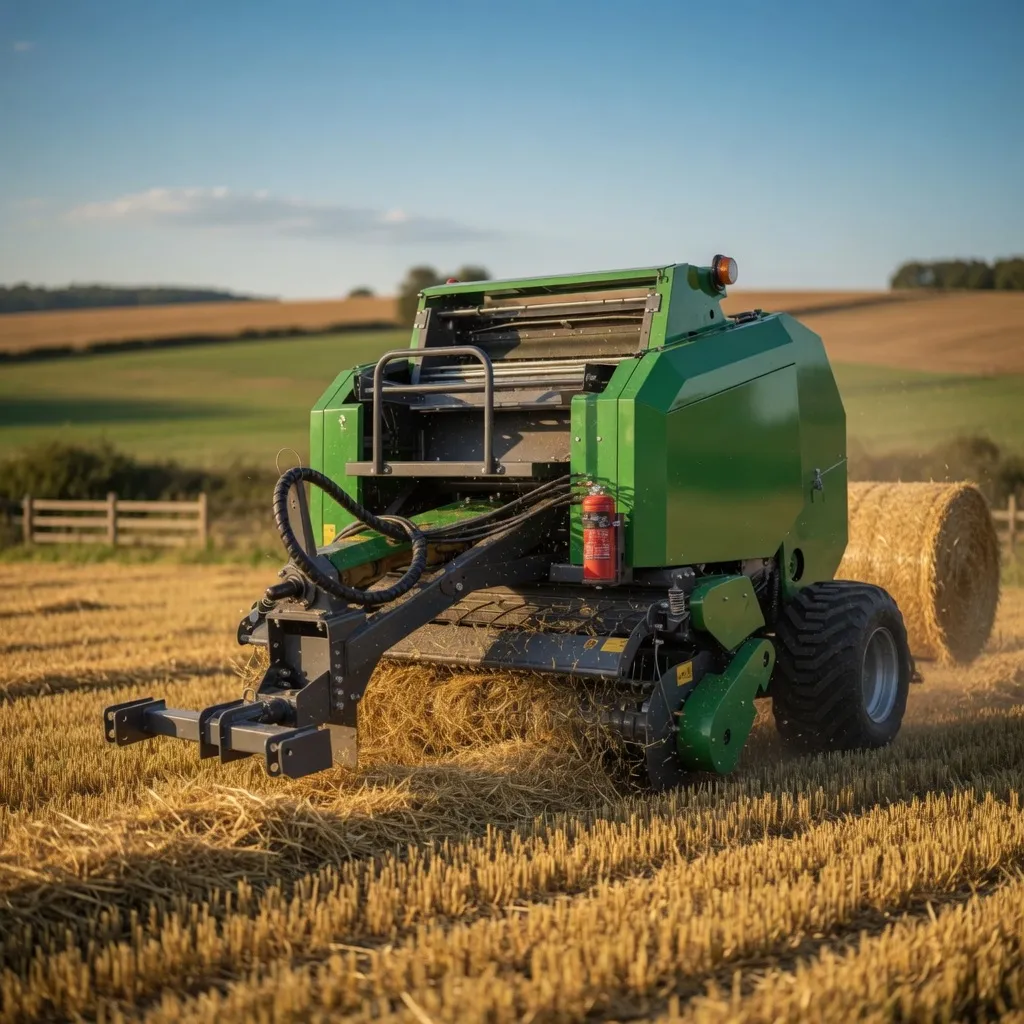
Small and mid-size operations often grind multiple roughage types across a season — keeping a settings log for each material avoids the trial-and-error adjustment period each time a new bale type enters the grinder.
Keeping a Grinding Log: The Simplest Consistency Tool
Inconsistency in ground feed quality across a season is often traced to an absence of documentation rather than a machine problem. When a new operator takes over grinding, or when the same operator switches between materials after a long gap, the settings that produced good output last month are not always remembered accurately. A simple grinding log — kept in the shed near the machine — records the date, material type, moisture estimate, screen used, feed rate (slow/medium/fast), Penn State sieve result if checked, and any issues noted. This log takes 2 minutes to complete after each grinding session and creates an operational reference that removes guesswork when switching materials or after machine maintenance.
The log also serves as the hammer and screen service record. Record operating hours at each session, note when hammers were flipped or replaced, and note when screens were cleaned or changed. A machine with a complete service log history has demonstrably higher resale value than an equivalent machine with no service records — a practical benefit if the 9F-70 is eventually traded or sold as the operation scales up.
Recommended Product: 9F-70 Animal Feed Grass Grinder
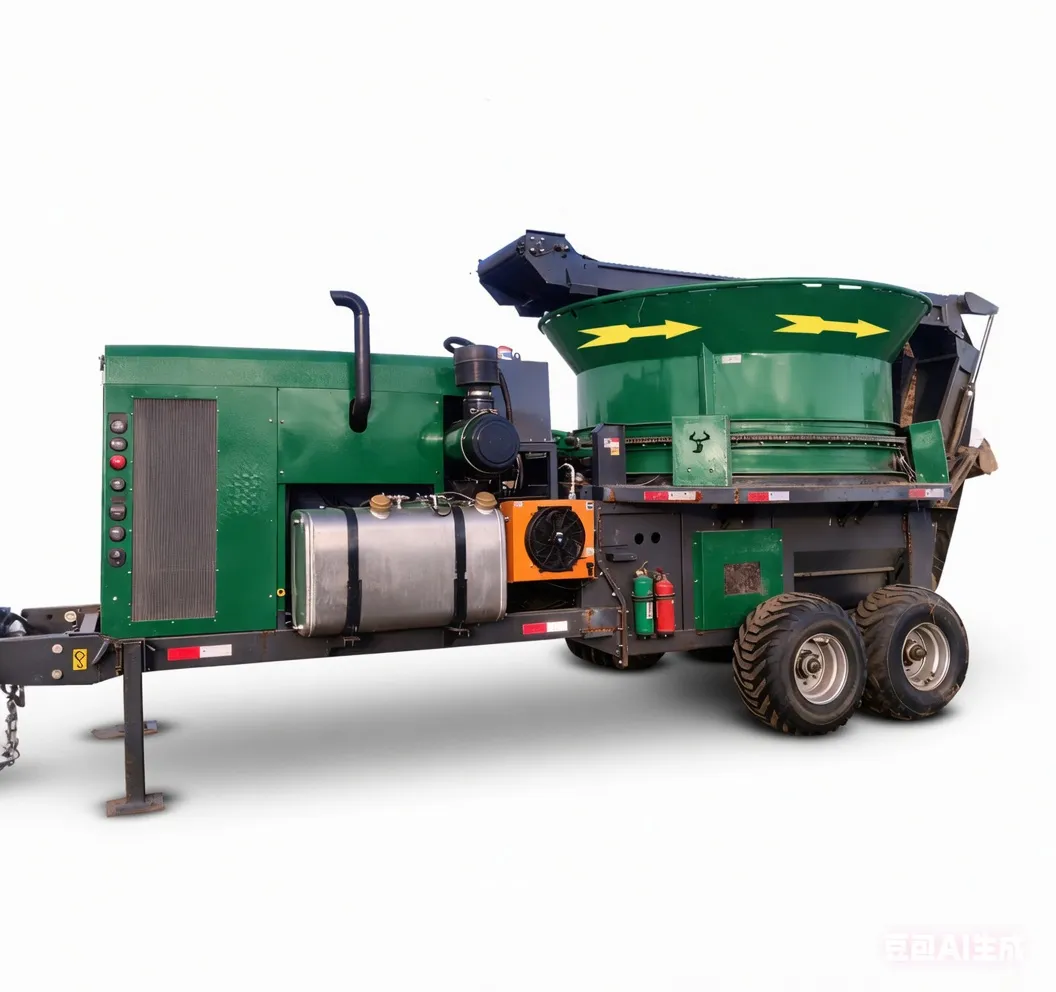
Handles hay, straw, and corn stover with interchangeable CNC-punched screens in 4 mm, 6 mm, 8 mm, and 10 mm sizes. Through-hardened reversible manganese steel hammers rated 150–250 hours on hay; suitable for the heavier wear of straw and stover with adjusted service intervals. 500–800 kg/hour on dry hay; 300–550 kg/hour on straw and stover. All screens and hammer sets stocked at EverPower’s Condell Park NSW warehouse.
Frequently Asked Questions
Grind Any Roughage. Hit Your Particle Size Every Time.
EverPower can advise on screen and hammer settings for your specific mix of hay, straw, and stover — before you buy and throughout the life of the machine.
EverPower Baling Machinery Australia Pty Ltd | 27 Harley Crescent, Condell Park NSW 2200
📞 +61 2 9708 3322 | ✉️ [email protected]