
A round baler that is maintained on schedule will produce consistent bale quality season after season for 15 to 25 years. A baler that is neglected will fail at the worst possible moment — mid-paddock, mid-season, when every hour of downtime costs forage quality and the contractor next door is booked solid. This guide organises every maintenance task into three phases: before the season starts, during the season, and after the last bale is wrapped.
Pre-Season Service: 4 to 6 Weeks Before First Bale
The pre-season service is the most important maintenance event of the year. It identifies wear, damage, and impending failures while there is still time to order parts and make repairs before the baling window opens. Allocate a full day for the pre-season service on a commercial round baler. The following checklist covers every system that must be inspected and serviced.
☐ Check belt tension with tensioner in operating position
☐ Inspect belt lacing and joints for separation
☐ Check roller condition and spin freely by hand
☐ Inspect chamber floor for debris, corrosion, damage
☐ Check pickup cam track and bearings
☐ Verify pickup height adjustment mechanism
☐ Lubricate pickup shaft bearings
☐ Inspect pickup guards and shields
☐ Check spreader arm alignment and tension
☐ Verify net brake tension
☐ Test net feed and cutting cycle
☐ Confirm correct wrap count setting
☐ Grease ALL grease points (refer to manual for count)
☐ Check gearbox oil level, replace if due
☐ Inspect chains for stretch, lubricate
☐ Check all shear bolts — carry full set of spares
☐ Check hydraulic cylinder seals
☐ Test all electrical connections and indicators
☐ Verify tailgate open/close cycle
☐ Check wiring harness for rodent damage
☐ Inspect wheel bearings for play
☐ Check hitch and drawbar for cracks
☐ Inspect safety chains and lights
☐ Touch up paint on any bare metal (corrosion prevention)
Daily In-Season Maintenance
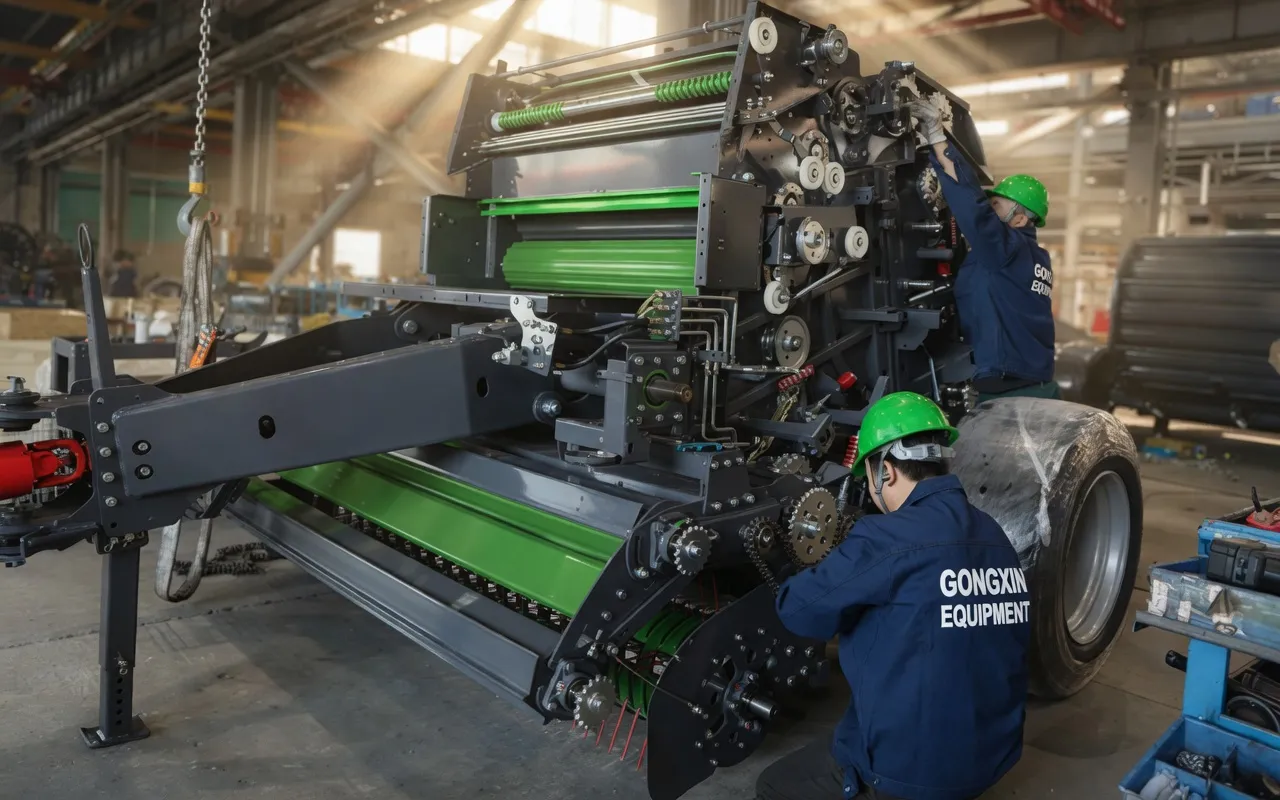
During the baling season, the baler operates under sustained load in dusty, abrasive conditions. Daily maintenance takes 15 to 20 minutes and prevents the gradual accumulation of wear and debris that leads to blockages and component failure. At the start of each day before the first bale: grease all daily grease points (pickup bearings, roller bearings, tailgate hinges — the operator manual identifies which points require daily attention); inspect the pickup for wrapped material on the shaft and remove it; check belt condition visually for any deterioration that appeared during the previous day’s run; verify net wrap supply and knife condition; inspect the PTO driveline guard and coupling; and walk around the machine checking for loose bolts, hydraulic leaks, and any damage from the previous day’s operation.
Weekly In-Season Checks
Weekly checks address the slower-wearing components that daily inspection may not catch. Once per week during active baling: measure belt tension and adjust if necessary; check chain tension and lubricate; inspect hydraulic hose routing (hoses can shift during operation and begin chafing against the frame); check tyre pressures; verify the electronic bale counter and monitor functions; and clean accumulated crop residue from the chamber interior, particularly around roller bearings and the net wrap mechanism. Crop residue holds moisture against metal surfaces and accelerates corrosion if left in contact for extended periods.
Post-Season Service: Preparing for Storage
The post-season service is equally important to the pre-season service but is frequently skipped because the operator is tired after the season and the baler is not needed again for months. Skipping the post-season service allows corrosion to develop, rodents to nest in wiring and belts, and seized components to set during the off-season. After the last bale of the season: clean the entire machine thoroughly with compressed air and water (not high-pressure, which forces water into bearings); grease every grease point to displace moisture and protect bearing surfaces; release belt tension to prevent belt stretch and flat spots during storage; drain any accumulated water from low points in the frame; check for and repair any damage discovered during the season; store the baler under cover if possible, or at minimum on a level, drained surface away from trees (bird droppings are corrosive). A machine stored clean, greased, and under cover starts the next pre-season service in far better condition than one left in the weather with crop residue in every crevice.
Belt Replacement: When and How
Belts are the highest-cost consumable item on a variable chamber round baler. A full belt set replacement typically costs AUD 2,000 to 4,000 depending on the model and belt specification. Belts should be replaced as a complete set when any of the following conditions are observed: visible cracking across the belt width, surface glazing that reduces grip on the forage (the belt surface should feel rough, not smooth), exposed reinforcement cords, edge fraying that has progressed more than 10mm into the belt width, or when the tensioner has reached maximum travel and the belts are still slack at operating pressure. Most belt sets last 5 to 15 years or 5,000 to 15,000 bales depending on crop conditions, moisture, and how consistently the belts are tensioned and maintained.
Spare Parts to Keep on Hand
Mid-season failures that require parts can cost days of downtime waiting for delivery. The cost of carrying a small inventory of critical spares is negligible compared to the cost of a baling window lost. The minimum paddock-ready spare kit includes: a full set of shear bolts (these are designed to fail to protect the driveline — carry at least 10), a complete set of replacement pickup tines, a spare net wrap knife blade, a selection of bearings for the pickup and chamber rollers (identify the 2 to 3 bearings most prone to failure on your model from the parts manual), spare hydraulic hose fittings and a length of bulk hose, grease cartridges, and a roll of belt repair tape for emergency field repairs to belts that can be permanently repaired later.
Recommended Product: EverPower 9YG-1.25A Round Baler
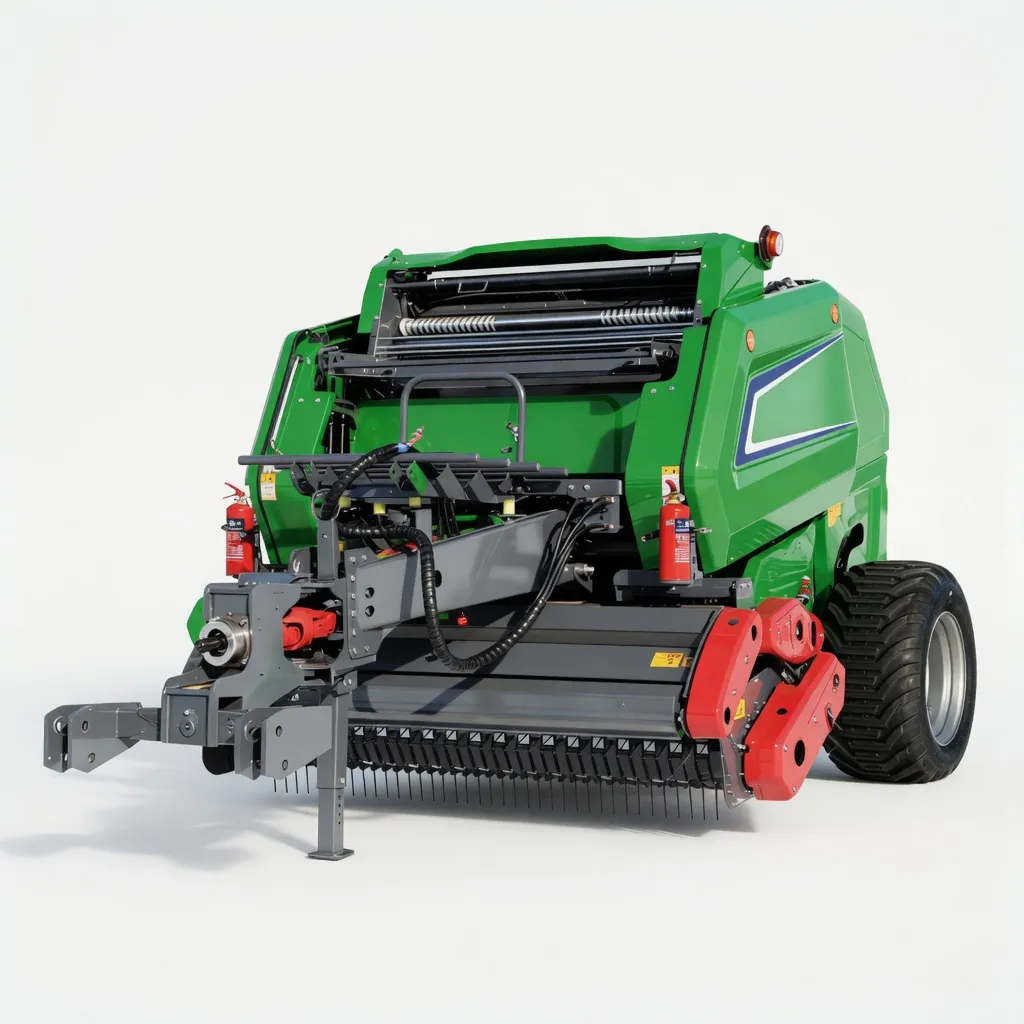
The EverPower 9YG-1.25A Round Baler is designed with maintenance efficiency as a core engineering principle. The chamber opens fully for belt and roller access, the pickup lifts clear for tine replacement and cam track inspection, and the net wrap mechanism is mounted for tool-free knife changes. For operators who perform their own maintenance, the accessible layout reduces service time and encourages the consistent maintenance discipline that extends machine life.
Related reading: Find out where to source spare parts quickly in Australia: Where to Buy Silage Baler Spare Parts in Australia.
EverPower Baling Machinery Australia Pty Ltd
27 Harley Crescent, Condell Park NSW 2200
+61 2 9708 3322
[email protected]
Frequently Asked Questions
27 Harley Crescent, Condell Park NSW 2200 | +61 2 9708 3322 | [email protected]
About Us | Contact Us