
Sheep and wool enterprises operate in one of Australian agriculture’s most demanding feed management environments. Merino and crossbred ewes cycling through joining, pregnancy, and lactation have precisely timed nutritional requirements that must be met within tight margins — fail to hit condition score targets at joining and conception rates drop; underfeed in late pregnancy and lamb survival suffers. Yet the pastures these sheep depend on are among the most seasonally variable in Australian farming — responding to erratic rainfall with either overwhelming flush growth or extended dry months that strip paddocks bare. Round balers have become an essential tool for sheep and wool producers who want to capture that flush growth, convert it into shelf-stable feed, and deploy it precisely when the flock’s nutritional requirements peak.
Understanding Feed Demand Across the Sheep Production Calendar
The nutritional demands of a Merino or composite ewe flock are not uniform across the year — they peak sharply at specific production events and drop to maintenance levels in between. Managing feed supply to match these peaks is the central challenge of sheep enterprise nutrition, and it’s the problem that on-farm baling is uniquely well-positioned to address.
Flushing — lifting ewe condition from BCS 2.5 to 3.0+ — increases ovulation rate and conception. Silage bales of medium-high quality (10–11 MJ ME/kg DM) fed during this period deliver measurable improvements in scanning percentage. This is the highest-value feeding event in the sheep calendar.
Twin-bearing ewes require 130–140% of maintenance ME — the highest per-head demand in the system. Inadequate late-pregnancy nutrition causes pregnancy toxaemia (twin lamb disease), low-birth-weight lambs, and poor ewe milk production. Quality silage fed as a supplement or sole ration during this period is one of the most cost-effective nutritional interventions available.
Ewe milk production peaks in weeks 2–4 and is the primary determinant of lamb weaning weights. Ewes drawing on body reserves to support milk production at this stage often fail to recover condition before the next joining. Good silage — ideally 10.5+ MJ ME — reduces the need for ewes to mobilise body fat and shortens the recovery period post-weaning.
Wether mobs, dry ewes, and store lambs in drought conditions require maintenance rations only. Lower-quality native pasture baleage (8.5–9.5 MJ ME/kg DM) is perfectly adequate here — which means that the full-quality silage reserve can be targeted at the high-demand periods above, stretching the feed budget further.
Bale Size Selection for Sheep Farm Feedout Logistics
On sheep farms, the choice of bale size is governed by feedout logistics as much as harvest efficiency. Unlike beef cattle or dairy operations where large mobs consume significant daily DM, sheep mobs are often smaller and their daily DM requirements per head are much lower — a 60kg Merino ewe at maintenance eats approximately 1.4–1.8 kg DM per day, compared with 8–10 kg DM for a beef cow. This means that bale size must be matched to mob size to avoid aerobic spoilage in opened bales that aren’t consumed quickly enough.
1.0m Bales for Small to Medium Flocks
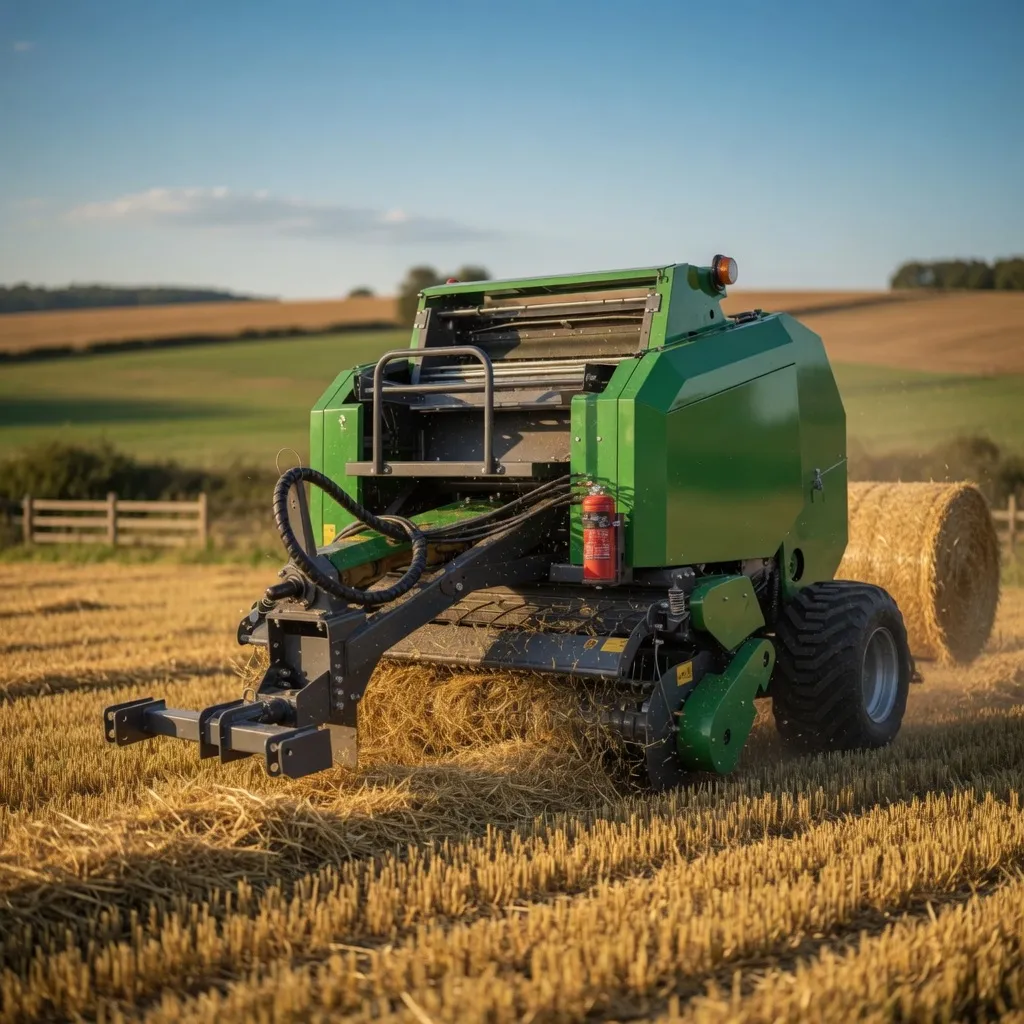
A 1.0m silage bale contains approximately 180–220 kg DM — the right quantity for a mob of 100–150 Merino ewes for a 1–2 day feed allowance. This matches the 48-hour aerobic stability window nicely, ensuring opened bales are consumed before significant spoilage begins. The EverPower 9YG-1.0 is a compact, straightforward machine that suits the tractor fleet typical of mid-sized sheep properties and produces bales specifically dimensioned to sheep farm feedout requirements. Its simple design also reduces maintenance complexity on farms where the wool harvesting, shearing, and fencing calendar leaves limited time for machinery servicing.
1.25m Bales for Larger Flocks or Mixed Enterprises
Operations running 500+ breeding ewes, or mixed sheep-and-cattle enterprises, find the 1.25m bale (400kg DM) more appropriate — a mob of 300 ewes will consume a 1.25m bale over 2 days at a normal feeding allowance, keeping spoilage within the acceptable window. The EverPower 9YG-1.25 series handles the broader range of crops that mixed sheep-and-cattle farms typically produce — annual ryegrass, phalaris, oaten hay, clover, and vetch — with consistent density and reliable pickup performance across varying sward heights and moisture levels.
Best Crops for Sheep Silage and Hay Baling
Sheep farms typically produce a broader range of annual and perennial pasture species than dairy farms, and the round baler needs to handle this diversity reliably. The most commonly baled crops on Australian sheep properties span both silage and dry hay applications, and understanding the specific handling requirements of each helps operators produce consistently good-quality bales across the year.
| Crop | Best As | Typical ME (MJ/kg DM) | Key Handling Note |
|---|---|---|---|
| Annual ryegrass | Silage or hay | 10.5–12.0 | Excellent WSC — fast fermentation. Wilt to 55–65% DM. |
| Oaten hay / oaten silage | Hay or silage | 9.0–10.5 | Silage: cut at stem elongation. Hay: cut at head emergence. |
| Phalaris pasture | Silage | 10.0–11.5 | High-yielding summer-active. Mow before heading for best quality. |
| Sub clover / vetch | Silage | 10.5–12.5 | High protein; low WSC — use inoculant. Bale at early-mid flowering. |
| Cereal straw (oat/wheat) | Hay (dry) | 6.5–7.5 | Maintenance ration only. Bale after grain harvest. No wrapping needed. |
Matching the Mower to Sheep Farm Pasture Types
Sheep farms frequently carry a wider diversity of pasture sward types than dairy operations — native grasses, annual clovers, perennial temperate grasses, and annual cereals may all coexist on the same property, each requiring a slightly different mowing approach. The mower choice should account for both the range of crops grown and the terrain of the paddocks being cut.
For sheep farms cutting medium-height swards of annual ryegrass, clover, and cereal crops on relatively flat paddock layouts, the EverPower 9GL-2.5/2.9 Traction Mower-Windrower is a highly practical combination unit — cutting and windrowing in a single pass and leaving material in a pickup-ready row without a separate raking step. This efficiency suits smaller sheep property operations where the mowing, raking, and baling is typically done by one person across several days.
For sheep properties in hillier country or those managing native grass swards and variable terrain, the EverPower 9GD-2.5 Single Blade Mower provides a more robust, lower-maintenance cutting option that handles rough ground better than precision disc mower-conditioners optimised for intensive flat-land dairy pastures. On native pasture silage crops — where achieving maximum nutritional quality is less critical than simply capturing biomass efficiently — this pragmatic, durable cutting approach is the right fit.
Raking Strategy on Sheep Farm Pastures
Raking on sheep farms demands particular attention to leaf loss, because clover and legume-rich swards — which are common on improved sheep pastures — are extremely susceptible to leaf shatter when raked dry or at high speeds. Clover leaf is the highest-protein, highest-ME component of the plant, and losing it at the rake can reduce the final silage ME by 0.5–1.0 MJ/kg DM even on otherwise well-managed material.
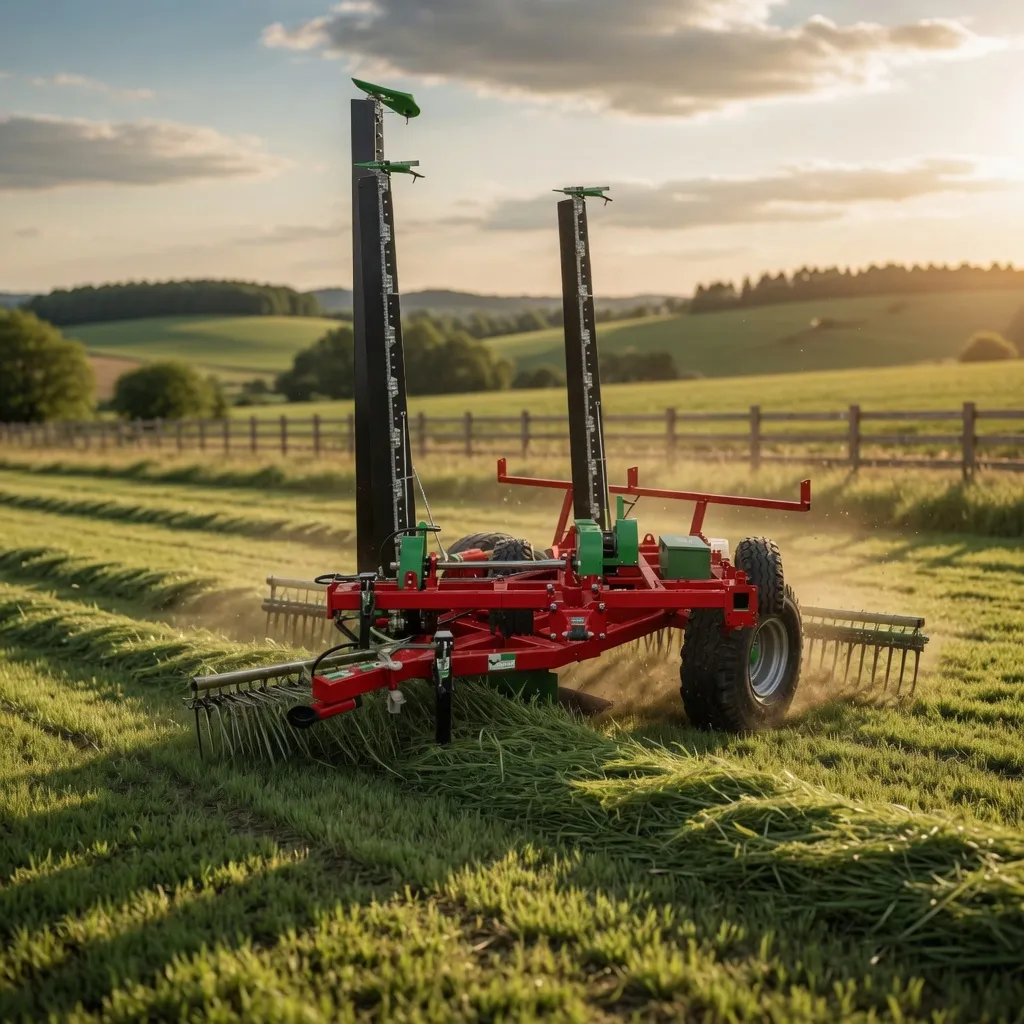
The EverPower 9LZY-9.0 Finger Wheel Rake is well-suited to sheep farm clover and ryegrass/clover pasture mixes. Its gentle tine action moves material into the windrow without the aggressive fluffing action of heavier raking systems, reducing leaf shatter on legume components while still producing a clean, consistent windrow suited to standard 1.0–1.25m baler pickup widths. For sheep farms on flatter, higher-yield pasture where the primary need is consolidating wide swaths from a mower-windrower into a tighter pickup row, a simple single rake pass is all that’s needed and the 9LZY-9.0 completes it efficiently at low tractor power demand.
Silage vs Hay: The Right Format for Different Sheep Farm Contexts
Unlike dairy operations where silage is almost universally the preferred format, sheep farms often produce and store both silage and hay — using each for different purposes within the annual feed program. Understanding which format suits each application helps operators make better use of both the pasture available and the equipment they own.
Silage is the right format for high-quality early-spring cuts of annual ryegrass and clover where high ME is the priority — feeding to ewes at joining, flushing, and pre-lambing. Silage preserves the nutritional peak of the crop far more effectively than dry hay, which suffers bleaching losses and respiration losses during field drying. Silage is also the right choice in humid coastal zones where getting material dry enough for safe hay storage is a regular weather-dependent challenge.
Hay remains the practical format for later cuts of annual cereals, straw after grain harvest, and crops in reliable-dry continental climates where the field drying window is dependable. Hay has lower production cost (no film, no wrapping step) and can be fed in open paddocks to large mobs without the aerobic spoilage urgency that silage creates. For a sheep enterprise maintaining a wether mob or store lamb mob on a maintenance ration over summer, good quality oaten hay is a cost-effective and manageable solution.
Baling Oaten Hay on Sheep Farms: Getting It Right
Oaten hay is the most widely produced and fed supplementary roughage on Australian sheep farms, and baling it properly requires attention to moisture content and bale density in ways that are different from silage work. Hay baled above 16–18% moisture (below 82–84% DM) risks heating in the bale — a process driven by yeast and bacterial activity in residual moisture that can cause mould, dry matter loss, and in severe cases, spontaneous combustion in stacked hay sheds.
The reliable field test for oat hay readiness is the stem crush test: twist a handful of stems sharply — if moisture can be squeezed from the stem, the crop is too wet to bale safely. In the absence of a portable moisture meter, this test is a useful practical guide for experienced operators. Under southern Australian autumn-break conditions, oaten hay at the right heading-to-milky-dough growth stage typically requires 3–5 days of field drying after cutting to reach safe baling moisture. Conditioning at mowing accelerates this to 2–3 days in good drying weather.
Bale density for dry oaten hay should be set lower than for silage — a looser bale allows residual moisture to migrate outward and dissipate during the first days after baling, reducing the risk of heat damage in the centre of the bale. Net wrap or twine both work adequately for dry hay, though net wrap produces a more stable bale shape that handles and stores better. The EverPower 9YG-1.25 series’ adjustable density setting makes it straightforward to dial down from silage density to hay density without any mechanical adjustment beyond the operator interface.
Wool Quality Considerations When Feeding Silage
Wool producers have a specific concern that beef and dairy farmers don’t share: the nutritional plane of the ewe during wool growth directly affects the wool’s physical properties, most notably fibre diameter and tender (break) strength. A nutritional stress event — inadequate feed for 10 or more days — creates a localised weak point in the wool staple that can result in tender wool downgrading at shearing. Managing nutrition across the wool-growing year is therefore not just a production efficiency question but a wool clip value question.
Silage bales used as a supplementary feed source during dry periods help sheep producers maintain a more consistent nutritional plane than relying on pasture alone. The ability to feed a measured quantity of known-quality silage alongside whatever pasture is available smooths the nutritional curve that pasture variability alone would create. Wool producers in Southern NSW and Victoria who use silage as a buffer supplement during summer-autumn dry periods consistently report lower incidence of tender wool at the subsequent shearing compared with years when no supplementary feed was available.
One practical note on silage feeding and fleece contamination: silage should not be fed in areas where ewes can walk through spilled material and contaminate their fleece with fermented silage residue. Feed pads, purpose-built sheep silage feeders, or on-ground roll-out management that is cleaned up daily prevents the type of wet-matter fleece contamination that can cause significant processing problems at the wool mill. This is a management discipline that costs nothing but attention.
Calculating Annual Feed Requirements for a Sheep Enterprise
Sheep enterprises that build an annual silage program alongside their pasture management need to work backwards from the flock’s total annual DM requirement to determine how many bales to produce. The calculation takes the total DSE (dry sheep equivalent) load, the number of days per year when silage will substitute for or supplement pasture, and the daily DM allocation per DSE.
| Flock Size & Class | Silage Days/Yr | Daily DM/Head | 1.0m Bales Needed | 1.25m Bales Needed |
|---|---|---|---|---|
| 300 ewes + lambs | 90 | 1.6 kg | ~125 | ~45 |
| 800 ewes + lambs | 90 | 1.8 kg | ~365 | ~130 |
| 1,500 ewes + lambs | 120 | 2.0 kg | ~1,025 | ~365 |
EverPower Support for Sheep and Wool Producers
EverPower Baling Machinery Australia Pty Ltd’s product range covers the full equipment needs of sheep and wool farm baling programs — from compact 1.0m balers suited to smaller Merino properties through to mid-scale 1.25m machines for larger enterprises, alongside mowers, rakes, and wrapping equipment to complete the silage chain. The NSW-based team understands the sheep farming calendar and the specific equipment demands that come with it — and can recommend configurations that match the labour and tractor resources typical of owner-operated sheep properties across southern and inland Australia.
27 Harley Crescent, Condell Park NSW 2200 ·
+61 2 9708 3322 ·
[email protected]
Frequently Asked Questions
27 Harley Crescent, Condell Park NSW 2200 | +61 2 9708 3322 | [email protected]
About Us | Contact Us