
The decision between a round baler and a square baler is one of the first choices any farmer or contractor faces when assembling a baling system. Both machines compress forage into transportable units; but the geometry of the bale they produce leads to fundamentally different handling, storage, wrapping, and cost-of-ownership characteristics. Choosing the wrong format for the operation’s actual requirements means living with those differences for a decade or more of machine life. This article works through each distinguishing factor in enough detail to make the decision on evidence rather than convention.
How Round Balers and Square Balers Form Their Bales
A round baler picks up crop from the windrow and feeds it into a chamber where belts or rollers rotate the accumulating mass into a cylinder. Compression increases from the centre outward as material is added, producing a bale that is densest at its periphery. The finished cylinder is bound with net wrap, the tailgate opens hydraulically, and the bale rolls onto the ground. The entire cycle takes 60 to 90 seconds at commercial forward speed in good windrow conditions.
A square baler uses a reciprocating plunger to compress crop into a rectangular channel. The plunger strokes back and forth as the machine moves forward, packing material into a dense rectangular cross-section and binding the finished bale with twine or wire at regular length intervals. Small square balers produce bales weighing 20 to 35 kg that can be handled manually; large square balers produce bales weighing 400 to 600 kg that require mechanical handling. The plunger mechanism operates continuously as the machine moves, producing bales at regular intervals determined by the bale length setting.
Bale Shape and Its Practical Consequences
The cylindrical geometry of a round bale sheds water naturally from its curved upper surface when stored outdoors. Rain and condensation run off the rounded profile rather than pooling, which is the primary reason round bales tolerate outdoor paddock storage far better than rectangular bales. For farms that store bales at exposed outdoor sites, and that describes the majority of Australian silage and hay operations, this geometry is a genuine structural advantage that protects feed value without requiring purpose-built shed infrastructure.
The rectangular geometry of a square bale stacks flat on flat surfaces, maximising transport density and storage volume efficiency. A trailer or shipping container packed with rectangular bales uses approximately 85 to 90 percent of the available volume. The same trailer packed with round bales uses approximately 60 to 65 percent, with the remaining space lost to the circular void between adjacent cylinders. For operations that transport bales over long distances, or that export hay and straw by container, the rectangular format delivers a measurable economic advantage in freight cost per tonne of feed delivered.
Silage Suitability: Where Round Balers Dominate
The silage application is where the round baler’s advantages are most decisive. Cylindrical bales present a uniform curved surface to the stretch film wrapping system. The bale wrapper machine rotates the bale on a turntable while the film carriage orbits around it, depositing overlapping layers that conform naturally to the cylinder’s surface without creases, folds, or air gaps. The result is a consistently airtight seal around the entire bale, which is the foundational requirement for reliable anaerobic fermentation.
Square bales present a different wrapping challenge. The flat faces and sharp corners of a rectangular bale create stress concentration points in the stretch film, where the film is stretched further around the corners than across the flat surfaces. These stress points are the most common failure locations for film integrity: the film thins at the corner, micro-tears develop during handling, and oxygen enters the bale at precisely the locations where wrapping was supposed to exclude it. Large-square-bale silage systems exist and operate commercially, particularly in high-volume pit-replacement applications, but they require specialised wrapping equipment and higher film consumption to achieve the same seal quality that a round baler and standard wrapper achieve by default. For the majority of Australian farm-scale silage programmes, the round baler and wrapper combination is the practical standard.
The Full Comparison: Round Baler vs Square Baler
| Factor | Round Baler | Square Baler |
|---|---|---|
| Bale geometry | Cylindrical | Rectangular |
| Typical bale weight | 400 to 800 kg | 20 to 600 kg (varies by format) |
| Silage suitability | Excellent (wraps uniformly) | Possible but more complex |
| Outdoor storage tolerance | High (sheds water naturally) | Low (flat top pools water) |
| Transport stacking efficiency | ~60 to 65% of volume | ~85 to 90% of volume |
| Handling equipment needed | Spear or grab on loader | Forks or squeeze clamp |
| Initial purchase cost | Lower to mid-range | Higher (large square format) |
| PTO requirement | 60 to 160 hp (varies by model) | 80 to 200+ hp (large square) |
| Best suited for | Silage, on-farm hay, mixed use | Export hay, commercial straw |
Cost of Ownership: What Each System Actually Costs to Run
The purchase price of a round baler is typically lower than that of a comparable large-format square baler. The mechanical simplicity of the belt-and-roller chamber, compared with the reciprocating plunger and knotting system of a square baler, means fewer precision components, lower manufacturing cost, and less complex field repair requirements. A mid-range round baler suitable for 500 to 1,500 bale silage seasons costs 40 to 60 percent of what a comparable-capacity large square baler costs, and requires a smaller tractor to operate effectively.
Running costs reinforce this difference. The primary consumables on a round baler are net wrap, stretch film, and the mechanical wear items (pickup tines, belt joints, and the net wrap knife assembly). On a square baler, the consumable list is longer: twine or wire, the knotting mechanism (which requires regular maintenance and eventually replacement of knotters, billhooks, and knife components), and the plunger drive components that absorb significant mechanical stress through each cycle. The total annual maintenance budget for a round baler in commercial silage use is measurably lower than the equivalent for a large square baler at the same annual throughput.
The exception to this cost comparison is the small square baler category: the compact machines that produce 20 to 35 kg bales for manual handling. These are relatively inexpensive to purchase and operate, but their throughput is dramatically lower than either a round baler or a large square baler. They occupy a specific niche, typically on small properties, horse operations, or farms that sell individual bales to retail customers, and they are not comparable in function or output to either of the larger formats.
Which Farm Types Suit Each Baler Format?
Round Baler: The Silage and Mixed-Use Standard
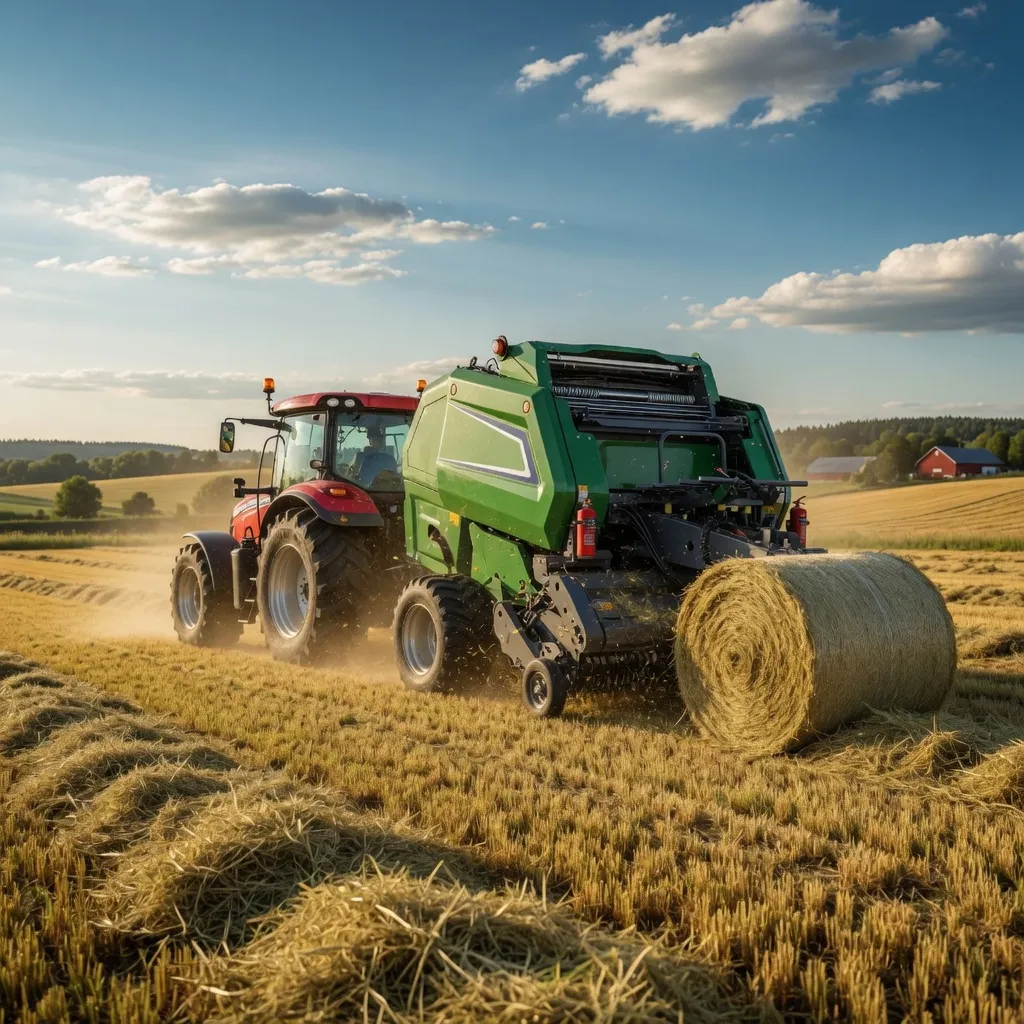
For dairy farms, beef cattle operations, sheep properties, and hay-and-silage contractors, the round baler is the dominant format across Australia. It handles the full range of silage and hay applications with a single machine, stores outdoors without shedding, and integrates with standard wrapping equipment for silage preservation. The capital cost is accessible for mid-scale operations, and the maintenance requirements are manageable for owner-operators without dedicated workshop facilities. If a farm makes silage, or expects to in the future, the round baler is the correct default choice.
Square Baler: Export, Commercial Straw, and Specialist Applications
The large square baler earns its place on operations where transport economics dominate. Export hay producers shipping containers of oaten or lucerne hay overseas need the stacking density that only rectangular bales deliver. Straw contractors supplying mushroom farms, poultry houses, and industrial mulching operations prefer square bales for the same reason: they pack tight, they stack stable, and they maximise the tonnage per truckload. The higher purchase cost, higher tractor requirement, and more complex maintenance profile are justified by the freight savings on operations that move thousands of tonnes per year across long distances.
Handling and Feedout Considerations
Round bales are handled with a spear or bale grab mounted on a front-end loader or telehandler. A single operator can move, stack, and position round bales without leaving the tractor cabin. Feedout is accomplished by unrolling the bale along a feed face, by processing through a bale feeder, or by placing whole bales in ring feeders for livestock self-service. The cylindrical shape is compatible with all three methods and does not require the bale to be oriented in any particular direction for feeding access.
Small square bales are the only format that allows manual handling without machinery. A 25 kg hay bale can be carried by a single person and placed by hand in a feed rack or manger, which suits small properties, horse owners, and lifestyle farms that do not have loader equipment. Large square bales require the same category of mechanical handling as round bales but use fork or squeeze attachments rather than spear attachments. The distinction is relevant at the property level: farms that already have a front-end loader with a spear are set up for round bales, while operations that already own fork handling equipment for other purposes may find the square format integrates more smoothly into their existing material flow.
Recommended Product: EverPower 9YG-1.25A Round Baler
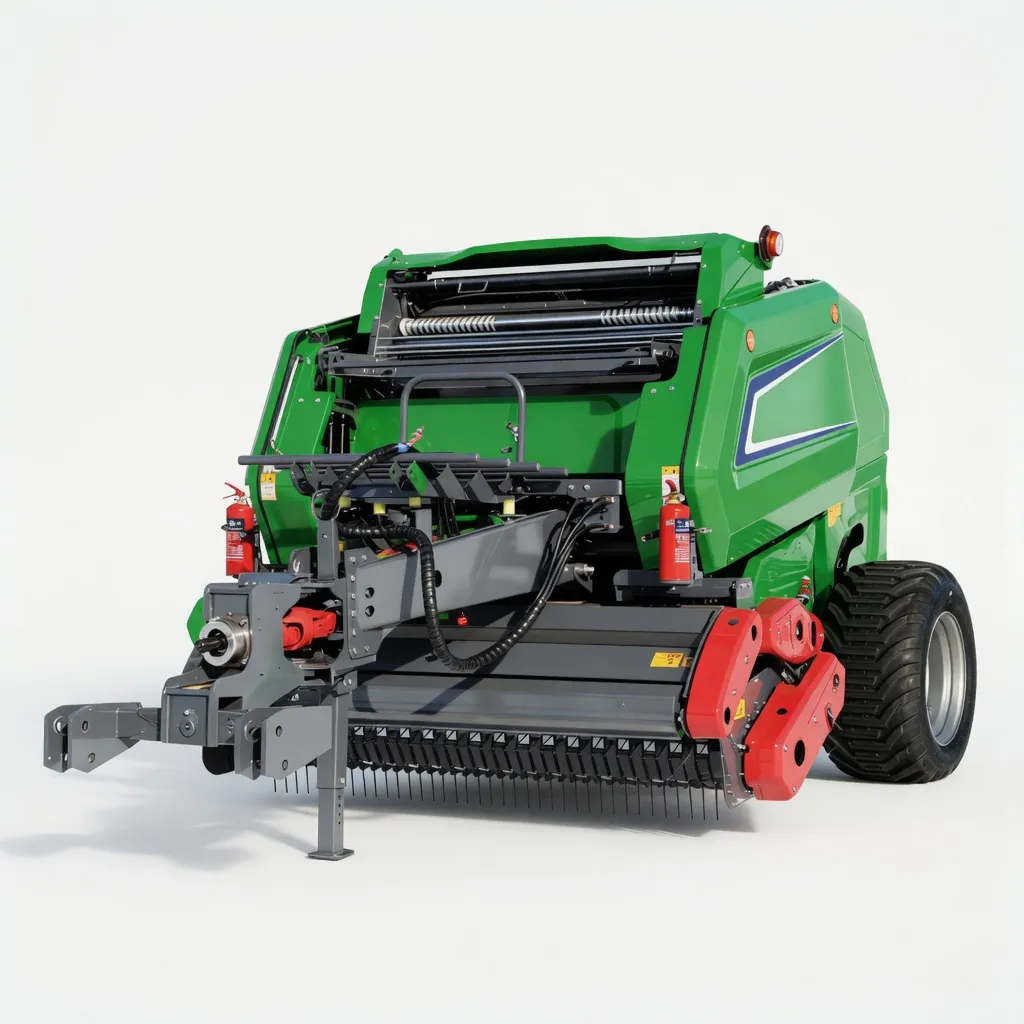
For farms that have concluded the round baler is the right format for their operation, the EverPower 9YG-1.25A is a mid-range variable chamber machine built for both silage and hay applications on Australian farms. The 1.25m bale diameter suits the standard feeding and handling equipment that most dairy, beef, and sheep operations already use. The variable chamber accommodates the density and moisture range that both silage and dry hay demand without mechanical reconfiguration between crop types. It pairs with 75 to 110 PTO hp tractors and integrates with EverPower’s NSW-based spare parts support for season-long operational reliability.
Related reading: See how round balers perform across different crop types in our application guide: Which Silage Baler Works Best for Ryegrass, Lucerne and Oats.
EverPower Baling Machinery Australia Pty Ltd
27 Harley Crescent, Condell Park NSW 2200
+61 2 9708 3322
[email protected]