Two Mounting Styles, Two Different Farming Realities
Every forage mower sold in Australia falls into one of two fundamental categories: towed (also called trailed or pull-type) and three-point-hitch mounted (also called rear-mounted or linkage-mounted). The mechanical difference is simple — a towed mower rolls on its own wheels behind the tractor, connected by a drawbar, while a mounted mower attaches directly to the tractor’s three-point linkage and is lifted hydraulically during transport. But that simple distinction creates significant differences in cutting performance, terrain handling, tractor compatibility, transport convenience, and long-term operating cost that affect every hectare mowed across a season. Neither type is universally superior. The right choice depends on paddock size, terrain, tractor fleet, and the balance of hay versus silage in your operation. This article compares towed and mounted mowers across every factor that matters for Australian forage producers, using the 9GD-2.5 traction (towed) single-blade mower as the benchmark for the towed category.
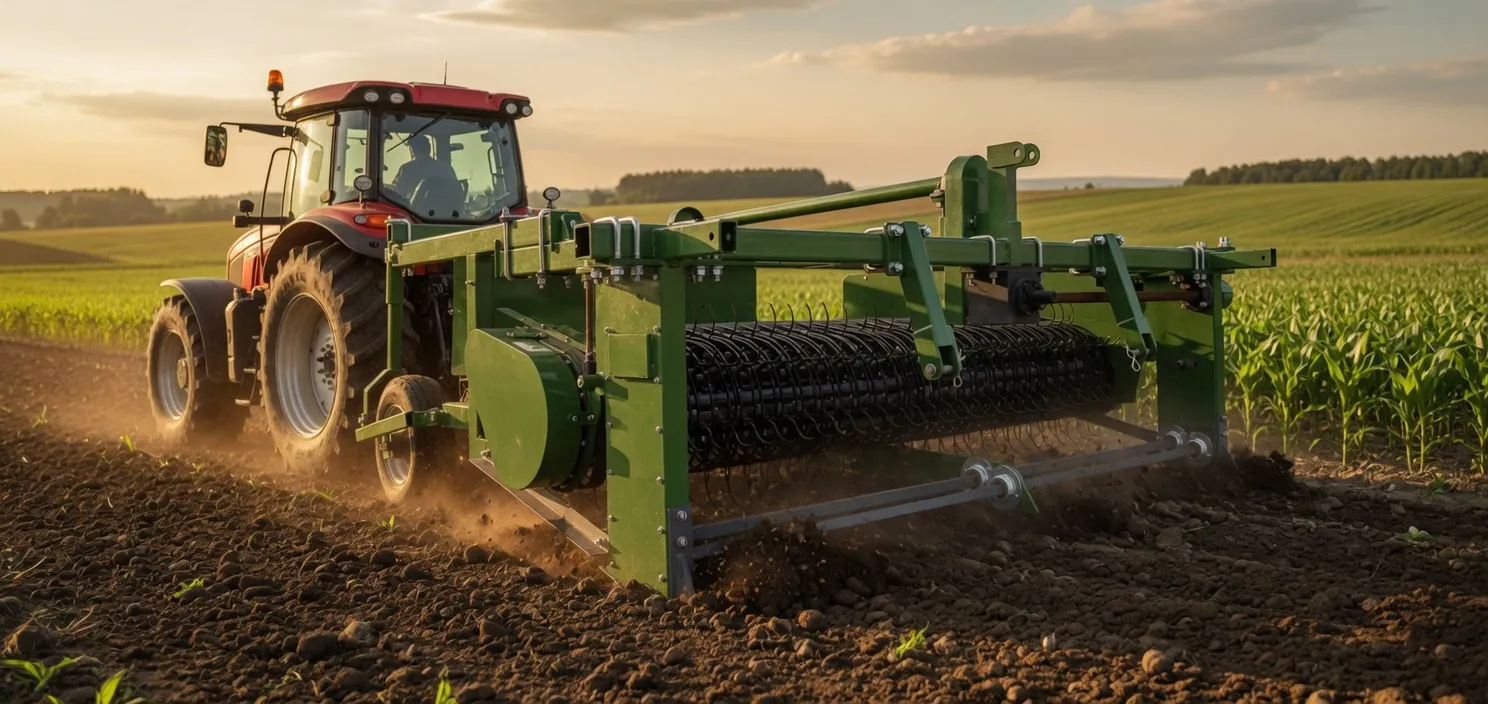
Equipment configuration — towed versus mounted — affects everything from daily output to long-term tractor wear.
How Each Type Connects to the Tractor
Understanding the connection method explains most of the performance differences that follow.
Towed (Trailed) Mowers
A towed mower like the 9GD-2.5 connects to the tractor’s drawbar or clevis hitch at a single pivot point. It rides on its own wheels — typically two pneumatic tyres — and carries its own weight independently of the tractor. The PTO driveshaft transmits power from the tractor’s rear PTO stub to the mower’s gearbox. During transport, the cutter bar is raised hydraulically or mechanically and the mower simply trails behind. The tractor’s three-point linkage remains free for other implements if needed. Because the mower’s weight sits on its own axle, the tractor bears only the tongue weight (typically 50–100 kg on a 2.5 m machine) plus the draft force needed to pull it forward.
Three-Point-Hitch Mounted Mowers
A mounted mower bolts directly to the tractor’s Category I or II three-point linkage. The tractor lifts the mower’s full weight — typically 180–350 kg for a 2.0–2.5 m sickle-bar unit — via the hydraulic lift arms. In work position, the mower hangs from the linkage and the cutter bar rests on the ground through skid shoes or a gauge wheel. During transport, the entire mower is lifted clear of the ground and carried on the tractor. This means the tractor must have sufficient hydraulic lift capacity and rear-axle weight rating to support the implement both in work and in transport. The PTO connection is shorter and more direct than on a towed machine, which simplifies the driveline but limits the mower’s ability to float independently of the tractor’s movements.
Ground Following and Cut Consistency on Uneven Terrain
This is where the two types diverge most dramatically in real-world performance. Australian paddocks are rarely pool-table flat — undulations, old irrigation channels, gilgai formations, and rocky outcrops are common across every hay-producing region from the Hunter Valley to the Western Districts. The mower’s ability to follow ground contours without scalping the soil or leaving tall patches directly determines cut consistency and, ultimately, hay grade.
A towed mower rides on its own wheels and pivots freely around the drawbar hitch. This allows the cutter bar to roll, pitch, and yaw independently of the tractor. When the tractor crosses a hump, the mower does not immediately follow — the trailing distance and independent suspension absorb the contour change, keeping the cutter bar closer to a constant height above the soil. The 9GD-2.5’s independent wheel suspension enhances this further, allowing each wheel to track the ground surface independently. On rolling country in regions like the Southern Tablelands or Gippsland, this translates to measurably more consistent stubble height — typically ±10 mm variation — compared to a mounted mower on the same terrain.
A mounted mower, by contrast, is rigidly connected to the tractor’s linkage. Every pitch and roll movement of the tractor transfers directly to the cutter bar. When the tractor’s rear wheels crest a rise, the mounted mower lifts with it; when the tractor drops into a hollow, the mower plunges down. Some mounted mowers incorporate a floating linkage mechanism or breakaway feature to partially decouple the bar from the tractor, but the range of independent movement is inherently less than a fully towed machine on its own wheels. On flat, well-prepared paddocks, this difference is negligible. On undulating or rough country, it becomes the dominant quality factor.
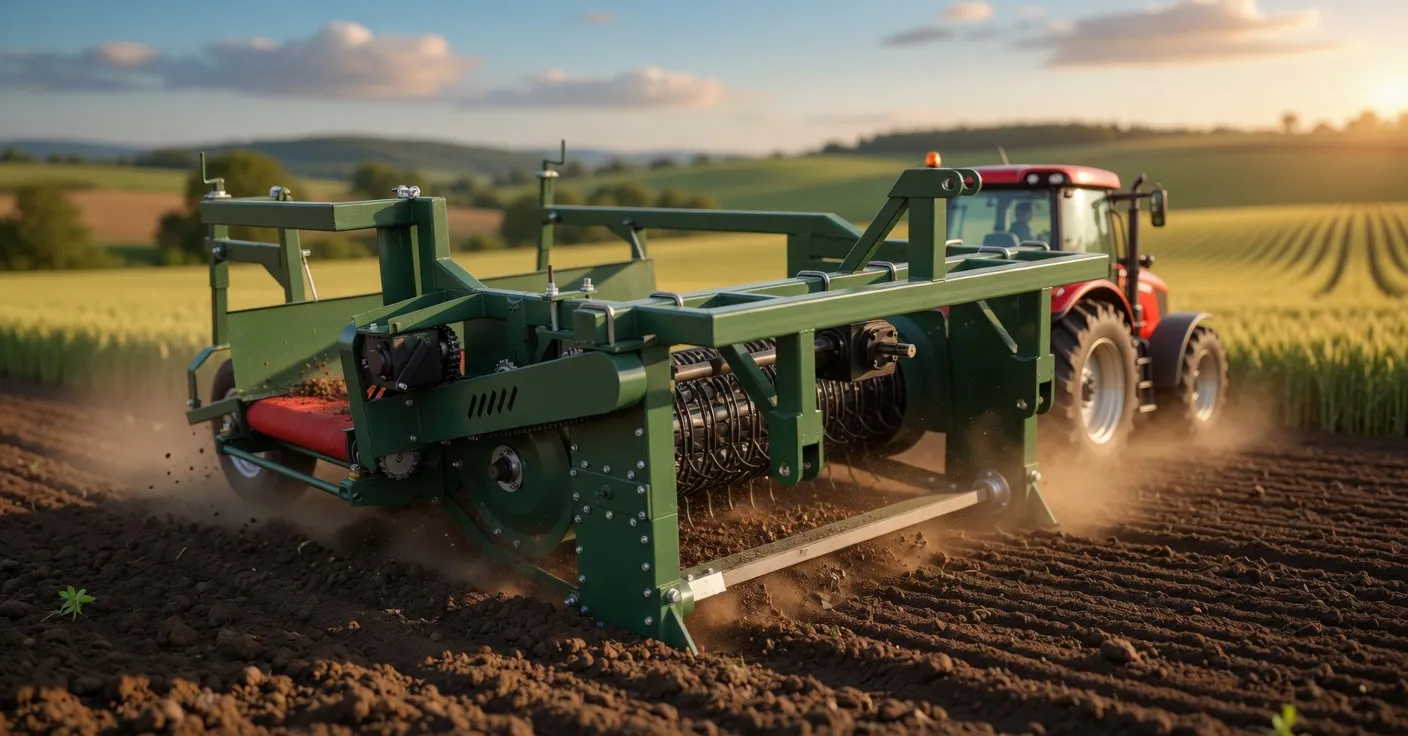
Implement mounting style determines how well the cutter bar tracks ground contours — critical for consistent cut quality.
Side-by-Side Comparison: 10 Factors That Matter
The following comparison covers every major decision factor. Both columns assume a 2.5-metre sickle-bar mower on a 65–75 hp utility tractor — the most common setup for mid-scale Australian hay and silage operations.
When a Towed Mower Is the Better Choice
The towed configuration earns its advantage in specific operating conditions that are common across Australian broadacre farming. If your operation matches two or more of the following profiles, a towed mower like the 9GD-2.5 is likely the stronger investment.
Rolling or undulating paddocks
The independent wheel suspension tracks ground contours that a mounted mower cannot follow. Stubble consistency is visibly better on anything beyond gently rolling terrain.
Large paddock areas (50+ ha per session)
Towed mowers run for hours without fatiguing the tractor’s hydraulic lift. No three-point linkage strain means lower maintenance cost on the tractor itself over a 300–600 ha season.
Multiple tractors or shared equipment
A towed mower connects via drawbar and PTO — universal fittings found on every tractor. No need to match Cat I vs Cat II linkage pin spacing across different tractor brands.
Export-quality hay or dairy silage
Where hay grade and silage quality are premium-driven, the towed mower’s superior ground following delivers measurably more consistent cutting height — directly impacting bale uniformity and feed value.
When a Mounted Mower Makes More Sense
Mounted mowers are not inferior — they excel in situations where compactness, headland agility, and lower capital cost are priorities.
Small, flat paddocks with tight headlands
On paddocks under 20 hectares with fences, dams, or tree lines close to the mowing area, the mounted mower’s ability to lift and turn sharply saves time at every headland pass. A towed mower needs a wider arc to avoid jackknifing.
Short road transport between paddocks
Mounted mowers lift onto the tractor and travel as a single unit — no trailing implement to manage on narrow farm tracks or through gates. Faster and safer for frequent paddock-to-paddock moves.
Budget-constrained operations
Mounted sickle-bar mowers typically cost AUD $1,000–$1,500 less than an equivalent-width towed model. For operations mowing under 150 hectares per season on flat ground, the mounted option delivers adequate performance at lower capital outlay.
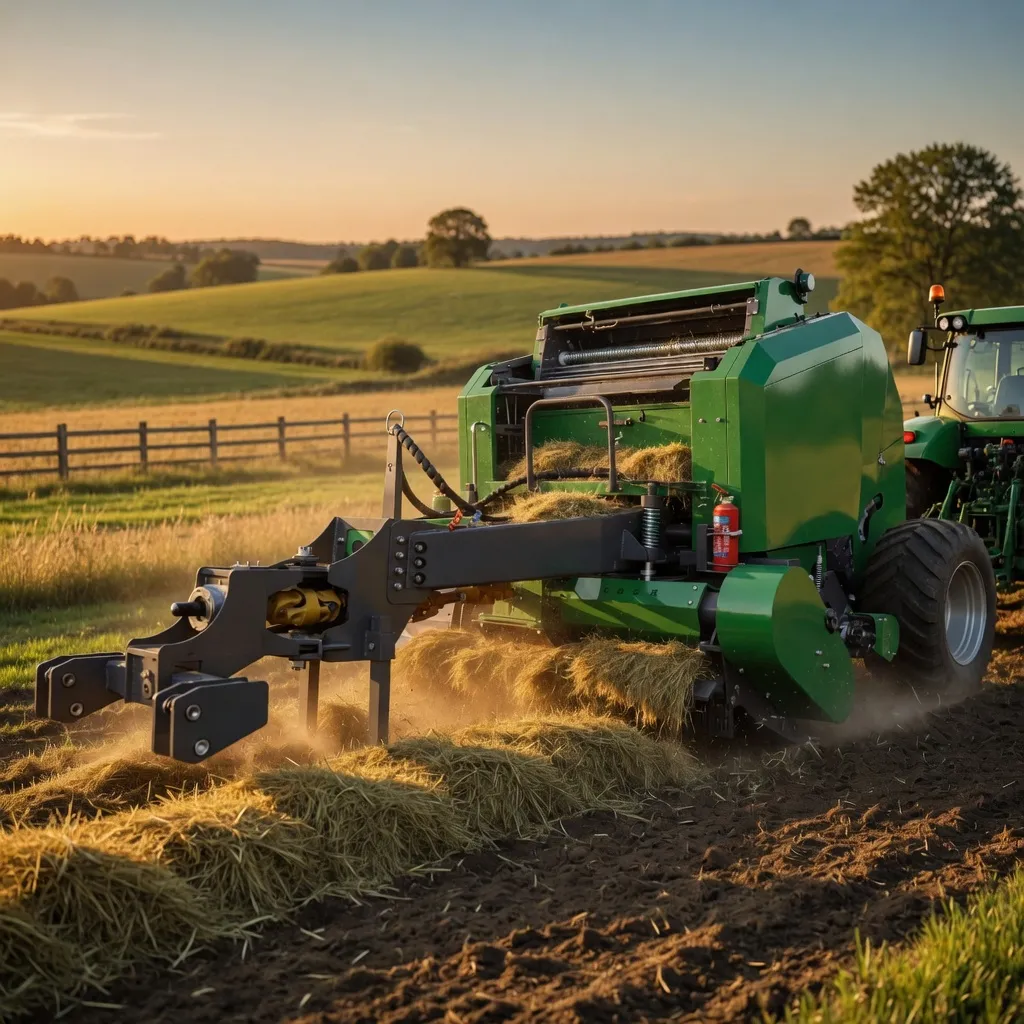
Whether towed or mounted, the mower must deliver a clean, even swath for efficient baling downstream.
Safety Considerations: Towed vs Mounted on Slopes
Safety is a non-negotiable factor in the comparison, and it strongly favours towed mowers on sloping terrain. A mounted mower adds 180–350 kg to the tractor’s rear overhang. On a slope, that additional weight raises the tractor’s centre of gravity rearward, increasing the rollover risk — particularly on cross-slope traverses. The heavier the mounted implement, the narrower the safe operating envelope becomes. Towed mowers, by contrast, carry their weight on their own axle. The tractor bears only the tongue weight, and the mower’s mass does not significantly affect the tractor’s centre of gravity. On hilly country with slopes exceeding 10–15%, this difference is the single most important safety factor in mower selection. WorkSafe Victoria and SafeWork NSW both recommend assessing rear-mounted implement weight as part of any tractor rollover risk assessment before operating on slopes. If your paddocks include significant gradient, a towed mower is the safer configuration — and the 9GD-2.5 is specifically designed for towed operation with independent wheel suspension for slope stability.
Long-Term Cost of Ownership
The purchase price difference of AUD $1,000–$1,500 between mounted and towed mowers narrows considerably when total cost of ownership is calculated over a 5–7 year life. A mounted mower places continuous load on the tractor’s three-point linkage hydraulics, lift arms, and rear-axle bearings — components that were designed for intermittent use (lifting implements at headlands), not sustained support during hours of continuous mowing. Over a 400 ha season, this sustained loading accelerates wear on the lift cylinder seals, top-link pins, and lower-link ball joints, adding AUD $200–$500 per season in tractor maintenance costs that would not exist with a towed mower. A towed mower’s own wheel bearings, tyres, and drawbar hitch are simpler and cheaper to maintain — typically AUD $50–$100 per season. When factored over five years, the mounted mower’s lower purchase price is often offset by higher tractor maintenance costs, making the total ownership cost roughly equivalent — with the towed mower delivering superior cut quality on anything other than perfectly flat ground.
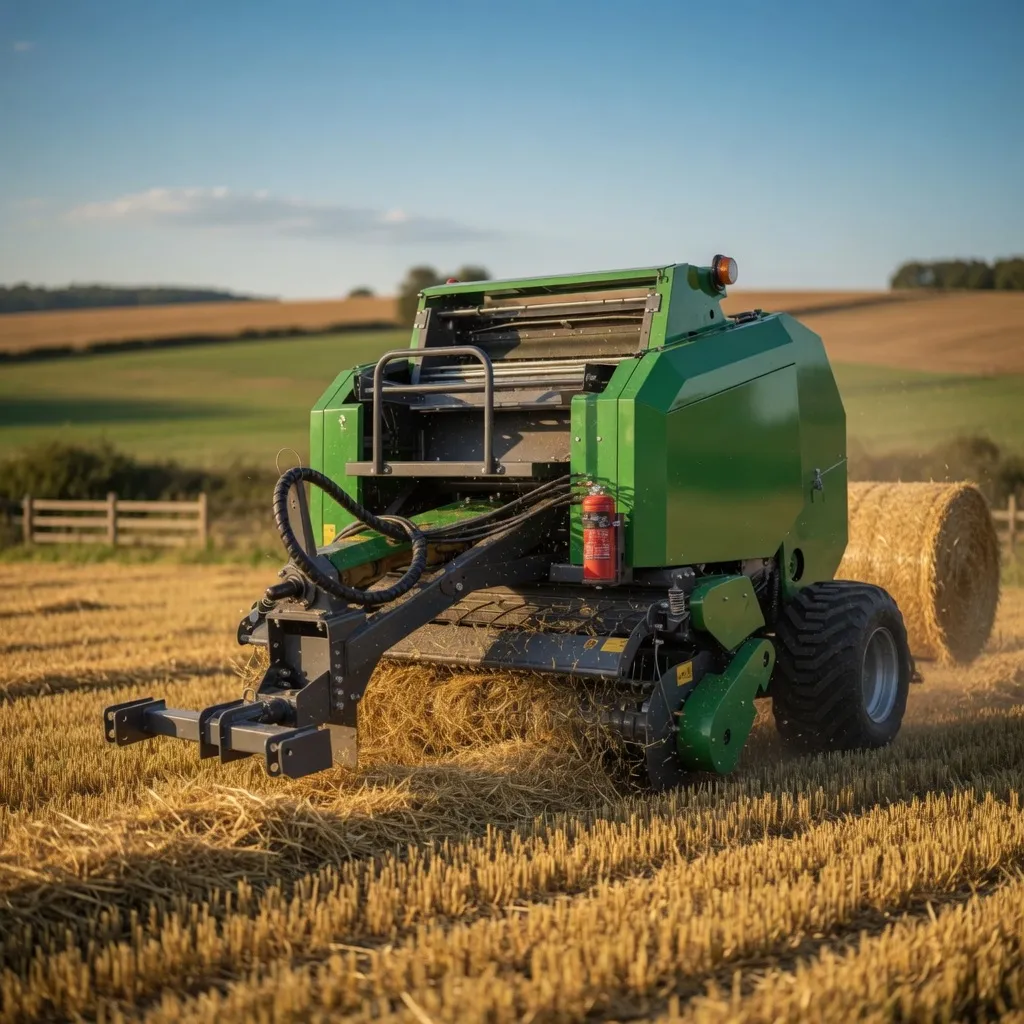
Choosing the right mower type ensures long-term compatibility with every downstream implement in the forage chain.
EverPower’s Recommendation: Match the Mower to Your Country
EverPower Baling Machinery Australia supplies the 9GD-2.5 traction (towed) single-blade mower as its recommended configuration for producers mowing 200+ hectares per season on any terrain that is not exclusively flat. For operators with smaller, flat-country setups who prefer a mounted option, EverPower can advise on compatible alternatives. The team at 27 Harley Crescent, Condell Park NSW 2200, provides free pre-purchase consultation — including a terrain and paddock-size assessment to confirm whether towed or mounted is the right fit for your specific operation. Call +61 2 9708 3322 or email [email protected] with your paddock details and tractor model.

EverPower’s technical team helps match mower configuration to your terrain, tractor, and seasonal workload.
Recommended Product: 9GD-2.5 Traction Single-Blade Mower
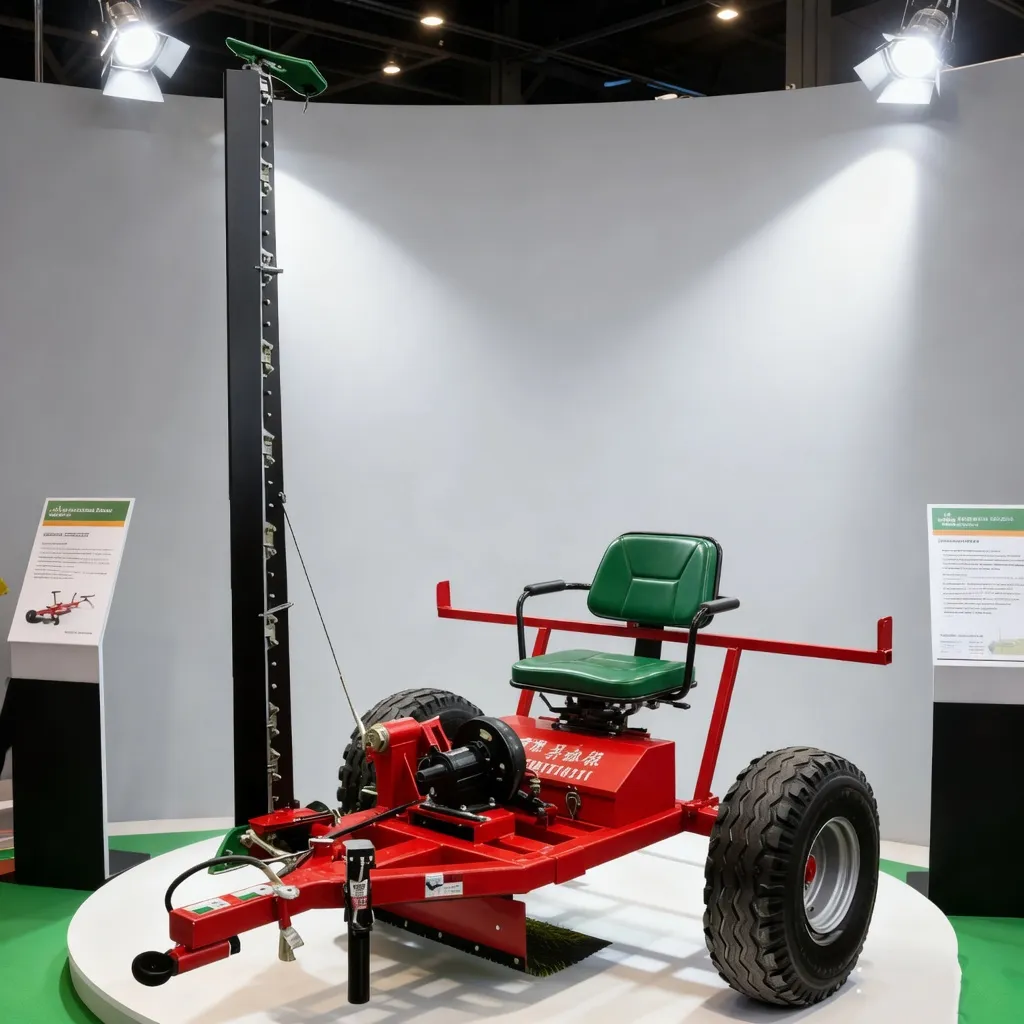
The 9GD-2.5 is a towed (traction) single-blade mower with independent wheel suspension for superior ground following on undulating terrain. 2.5-metre cutting width, 540 rpm PTO, adjustable cutting height. Connects via standard drawbar hitch — compatible with any tractor in the 60–80 engine hp range. Full spare-parts stock and technical support from EverPower’s Sydney warehouse.
Frequently Asked Questions
Not Sure Which Configuration Fits Your Farm?
Send your paddock details and tractor model to EverPower. The team will recommend towed or mounted — based on your terrain, not a sales quota.
EverPower Baling Machinery Australia Pty Ltd | 27 Harley Crescent, Condell Park NSW 2200
📞 +61 2 9708 3322 | ✉️ [email protected]