
Baling machinery covers a broader range of equipment than most buyers initially expect. The term encompasses everything from a compact 25 hp round baler on a hobby farm to a high-output combined baler-wrapper running 150 bales per day on a contractor operation. Understanding the categories before making a purchasing decision prevents the expensive mistake of buying a machine optimised for a use case that does not match the farm’s actual requirements. This guide organises the full baler landscape into clear categories, explains what each one does and does not do well, and identifies the farm types where each category delivers the strongest return.
Variable Chamber Round Balers
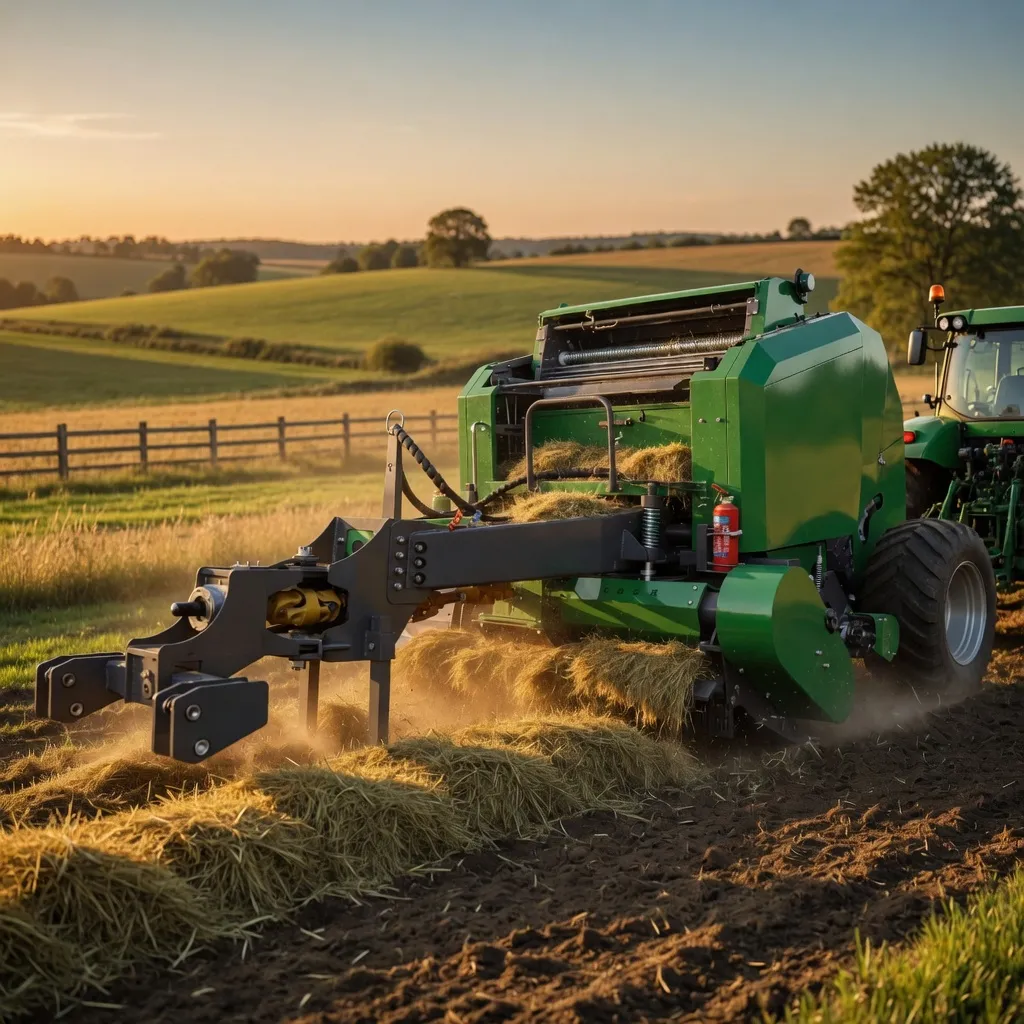
The variable chamber round baler is the most versatile category and the dominant format in Australian silage and mixed-use operations. It uses a system of belts or chains that expand outward as the bale grows, allowing the operator to produce bales of different diameters by adjusting the pressure and size settings. The variable chamber accommodates the natural density variation that occurs between crop types, moisture levels, and windrow conditions without requiring the operator to physically reconfigure the machine between paddocks or between hay and silage applications.
A typical variable chamber round baler produces bales ranging from 0.8m to 1.8m in diameter depending on the model, at weights ranging from 350 kg for dry hay to 800 kg for high-moisture silage. The adjustable chamber makes this category the right choice for farms that produce both silage and hay through the same season, for mixed-cropping operations that bale different species at different moisture targets, and for contractors who move between properties with varying crop and terrain conditions. EverPower’s 9YG-1.25 and 9YG-1.25A models sit in this category and represent the mid-range capacity point that suits the majority of Australian dairy, beef, and sheep operations.
Fixed Chamber Round Balers
A fixed chamber round baler uses rigid rollers arranged in a circle to define a constant bale diameter. Crop enters the chamber and is rolled into a cylinder of predetermined size; the operator has no ability to adjust the bale diameter without physically changing roller positions, which is not a field operation. The result is complete bale uniformity: every bale from a fixed chamber machine is identical in diameter, which simplifies stacking, wrapping calibration, and feedout planning.
Fixed chamber machines are generally simpler in construction than variable chamber machines, which translates to lower maintenance complexity and, in some cases, lower purchase cost. Their limitation is the inability to adjust bale size to match changing conditions. For operations that bale a single crop type at consistent moisture year after year, the fixed chamber format is a practical and economical choice. For operations that switch between crops, between hay and silage, or that serve multiple properties with different requirements, the variable chamber provides the flexibility that a fixed design cannot.
Small Square Balers
Small square balers produce rectangular bales weighing 20 to 35 kg that can be lifted, carried, and stacked by hand. They operate at relatively low PTO requirements (25 to 50 hp), produce bales at rates of 200 to 400 bales per day in good conditions, and use twine binding. Their primary applications are horse hay production, retail hay sales, small property feed programmes, and specialist markets where manual bale handling is expected or required by the end customer. Small square balers are not suited to commercial silage production because the rectangular geometry wraps poorly, the small bale size makes individual bale wrapping uneconomical, and the throughput is insufficient for operations that need to process significant paddock areas within the seasonal weather window.
Large Square Balers
Large square balers produce rectangular bales weighing 400 to 600 kg, measuring approximately 1.2m wide by 0.9m high by 2.4m long in the most common Australian format. They use a high-frequency reciprocating plunger mechanism that compresses crop with significant force, producing extremely dense bales bound with heavy-gauge twine or wire. The plunger design requires substantially more PTO power than a round baler of comparable throughput, typically 120 to 200+ hp, and the knotting mechanism that ties the bale requires regular skilled maintenance.
The large square baler earns its place in operations where transport stacking efficiency and pallet-like stability are critical: export hay, commercial straw, and high-volume feed yard supply. The rectangular bales stack flat on flat, maximising the usable volume of a trailer or container at 85 to 90 percent fill. For operations that do not transport bales long distances and whose primary use case is on-farm feeding, the capital and operating cost premium of a large square baler over a round baler is difficult to justify.
Combined Baler Wrappers
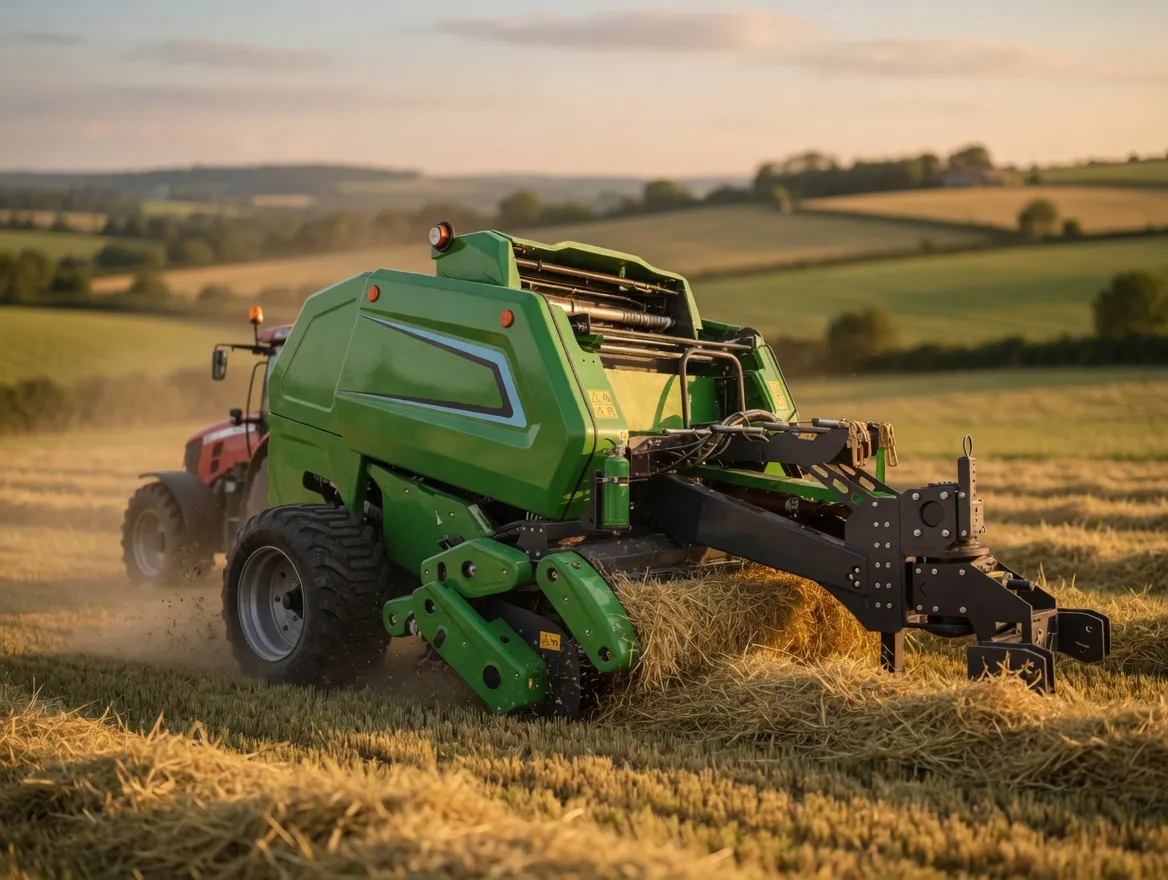
The combined baler wrapper is a single machine that integrates a round baling chamber and a stretch film wrapping system on the same chassis. The bale exits the chamber, transfers to the wrapping station, and is fully sealed with stretch film before the next bale cycle begins. The entire sequence occurs without the operator leaving the tractor seat, and the time between bale ejection and film sealing is measured in seconds rather than the hours that separate baling and wrapping in a two-machine system.
The combined format eliminates the operational risk that degrades silage quality most frequently: the delay between baling and wrapping that allows oxygen exposure to initiate aerobic spoilage at the bale surface. For contractors who charge per bale and whose revenue scales with daily output, the combined machine also eliminates the second tractor, second operator, and second fuel cost that a separate baler-and-wrapper system requires. The higher capital cost of the combined unit is offset by lower seasonal operating cost and consistently higher silage quality — both of which are quantifiable at the end of each season.
Compact and Mini Round Balers
Compact round balers produce bales in the 0.5m to 1.0m diameter range and operate at PTO requirements as low as 25 to 40 hp. Their market is small farms, lifestyle blocks, horse properties, and operations where the tractor fleet is limited to compact utility tractors that cannot power a full-size baler. The EverPower 9YG-1.0 and 9YG-1.0C models occupy this segment of the range, producing 1.0m bales that are light enough for small loaders to handle while still dense enough for effective silage fermentation when wrapped. For farms whose annual production is below 300 bales and whose tractor fleet tops out at 80 hp, the compact round baler is the format that makes baling economically feasible without requiring an equipment upgrade at the tractor end.
Standalone Bale Wrappers
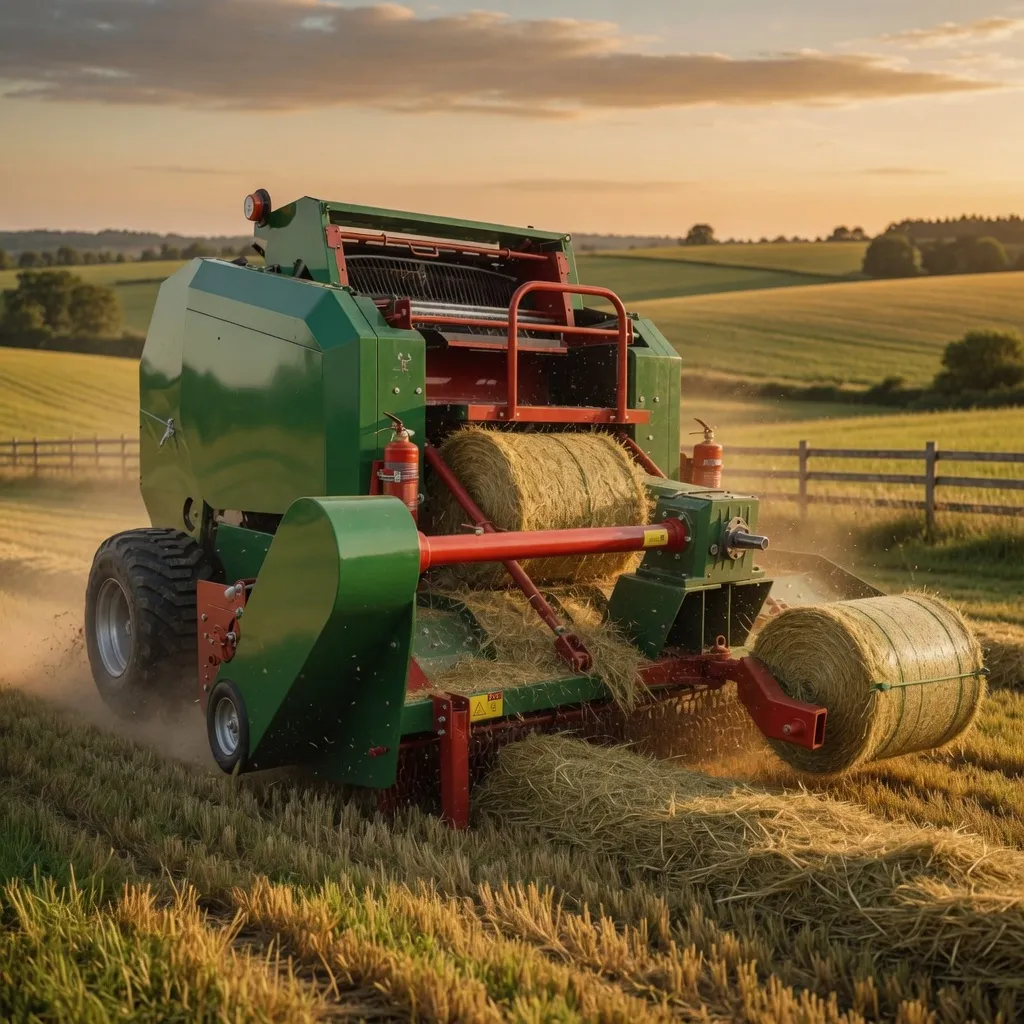
A standalone bale wrapper machine is not a baler but is so closely paired with the baling operation in silage systems that it belongs in any guide to baling machinery. The wrapper receives finished bales from the paddock, rotates them on a turntable or cradle, and applies 4 to 6 layers of stretch film under controlled pre-stretch tension. The EverPower 9YCM-850 is a turntable-type wrapper that handles bales up to 1.8m diameter and 850 kg weight, calibrated for both 500mm and 750mm film widths. For farms that already own a standalone round baler and produce fewer than 500 bales per season, the standalone wrapper is the most cost-effective route to film-sealed silage. Above 500 bales per season, the daily throughput advantage and quality consistency of a combined baler-wrapper typically justifies the higher capital investment.
Summary Comparison: All Baler Types at a Glance
| Type | Bale Shape | Weight Range | PTO hp | Silage? | Best Fit |
|---|---|---|---|---|---|
| Variable chamber round | Cylinder | 350-800 kg | 60-160 | Excellent | Mixed silage/hay farms, contractors |
| Fixed chamber round | Cylinder | 350-700 kg | 55-120 | Good | Single-crop farms, predictable conditions |
| Combined baler wrapper | Cylinder + wrapped | 400-800 kg | 90-180 | Best | Contractors, high-volume silage farms |
| Compact round | Cylinder | 150-450 kg | 25-80 | Good | Small farms, horse properties |
| Small square | Rectangle | 20-35 kg | 25-50 | Poor | Horse hay, retail sales, manual handling |
| Large square | Rectangle | 400-600 kg | 120-200+ | Limited | Export hay, commercial straw, feed yards |
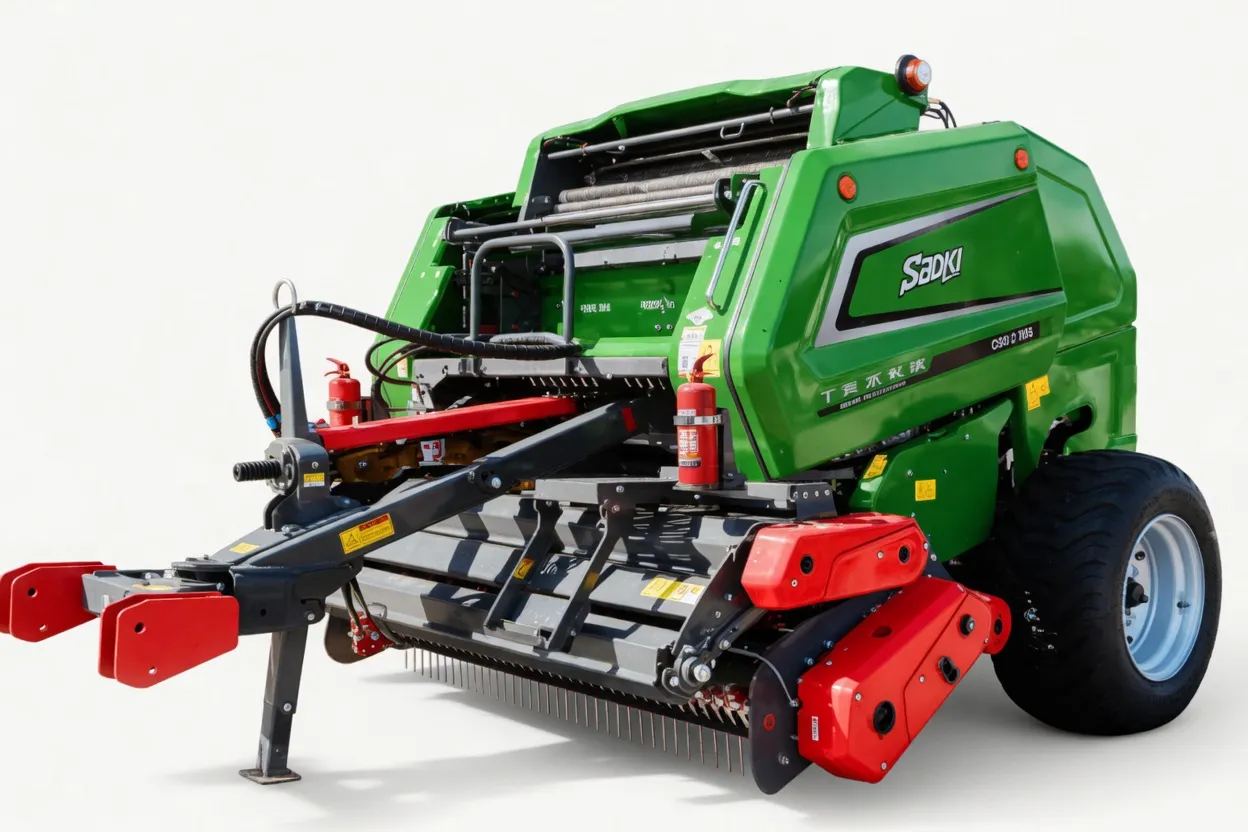
Recommended Product: EverPower 9YG-2.24D S9000 Round Baler
Related reading: See how baler selection integrates with high-volume dairy silage systems in our application guide: The Best Silage Baler Setup for High-Volume Dairy Operations.
EverPower Baling Machinery Australia Pty Ltd
27 Harley Crescent, Condell Park NSW 2200
+61 2 9708 3322
[email protected]