
Rural Labour Is the Scarcest Resource in Australian Hay Production
Ask any Australian hay producer what their biggest operational challenge is, and labour will rank near the top — not machinery, not weather, not market price, but the difficulty of finding and retaining reliable people to work the hay days when the crop is ready. Seasonal hay work is physically demanding, intermittent, and competed for by multiple farms in the same region during the same narrow window. A property that requires 4–5 people to stack hay effectively is competing for the same small pool of seasonal workers as every other hay operation within driving range. Reducing that requirement to 2 people — or to a single operator for smaller deliveries — does not just save labour cost, it removes the scheduling dependency that can delay getting hay under cover when the paddock is ready. The 9JYY-4.5 Hay Baler Conveyor is fundamentally a labour-reduction tool. This article quantifies the labour savings in detail, calculates the financial return, and identifies the operation sizes where the investment is most strongly justified.
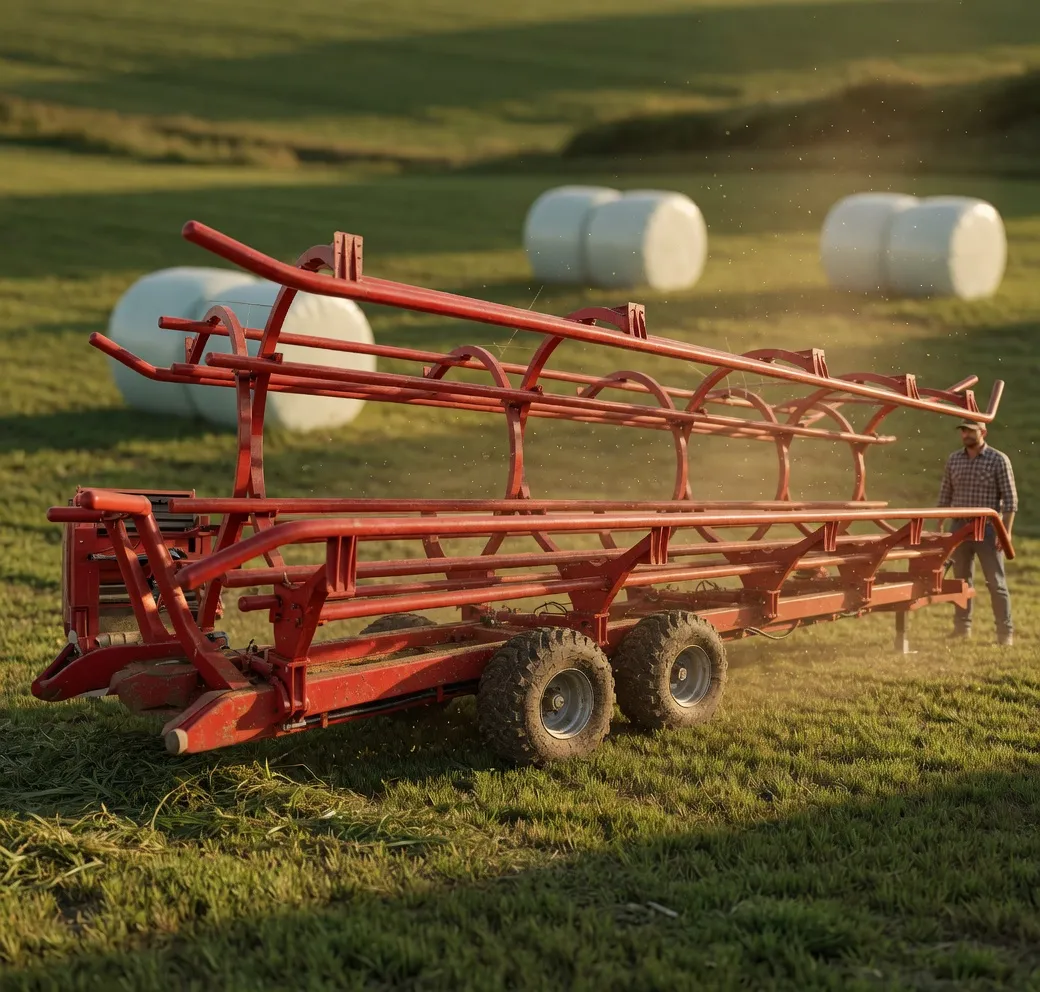
The 9JYY-4.5 reduces the stacking crew from 4–5 people to 2 while maintaining — or increasing — daily bale throughput, directly addressing the rural labour shortage that constrains most Australian hay operations during peak season.
How Many People Does Manual Hay Stacking Actually Need?
The labour requirement for manual small square bale stacking is determined by the distance between the bale source and the stack, and the height of the stack. For a typical Australian hay shed scenario — bales arriving from a truck parked at the shed entrance, stack height 2.5 metres — the manual relay chain requires one person per 3–4 metres of carry distance plus one stacker. For a 12-metre carry (truck to stack face), this means 3–4 people in the chain plus one stacker: 4–5 people total. All of them must be present simultaneously for the chain to work — one absence breaks the chain and forces either a longer carry for each remaining person or a slower throughput that mismatches with the baler.
The 9JYY-4.5 replaces the carry chain entirely. The conveyor bridges the distance from the bale source to the stack face mechanically — one feeder at the bottom, one stacker at the top, zero people in between. The carry distance problem disappears because the belt handles it regardless of distance within the 4.5-metre working length. The height problem disappears because the belt carries the bale to stack height and delivers it at a position where the stacker pushes rather than lifts.
The Financial Arithmetic of Labour Saving
The labour cost saving from switching from a 4-person chain to a 2-person conveyor operation is straightforward to calculate. At AUD $28–$35 per hour for casual farm labour (current rural casual rates in most of Australia), a 4-person day costs AUD $224–$280 per hour in labour — or AUD $1,792–$2,240 for an 8-hour day. A 2-person day costs AUD $112–$140 per hour — or AUD $896–$1,120 per day. The saving per day is AUD $896–$1,120. An operation with 20 hay days per season saves AUD $17,920–$22,400 per year in labour cost alone.
The 9JYY-4.5 purchase price is a one-time cost that is fully recouped within the first season on any operation running 10 or more stacking days per year at current labour rates. From year 2 onward, the full labour saving flows to the operation’s bottom line.
This calculation does not include the value of the additional throughput gained — a 2-person conveyor operation completing 640 bales per day versus a 4-person manual chain completing 480 bales per day generates additional revenue from the extra 160 bales stacked per day, or reduces the number of days required to complete the season’s stacking by approximately 25%.
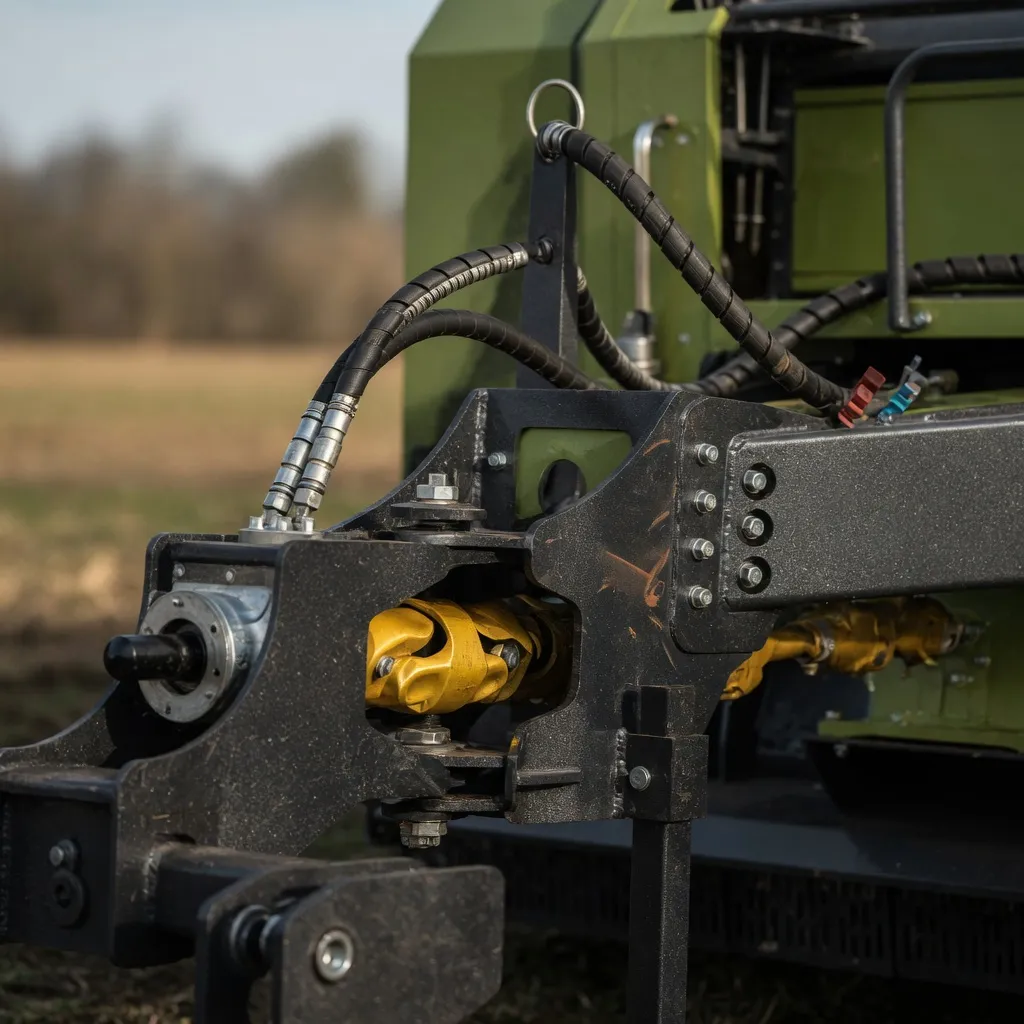
Matching a high-output baler with a 9JYY-4.5 conveyor and a 2-person crew creates a hay production system that is competitive with larger operations relying on multiple workers — a significant advantage for family farms with limited reliable labour.
Labour Saving Beyond Direct Cost: The Scheduling Value
The financial saving from reduced crew size is the most visible labour benefit of the 9JYY-4.5, but the scheduling value is equally important in practice. Manual stacking requires 4–5 people to be available on the same day, at the right time, for an unpredictable number of hours determined by the hay’s readiness and the weather forecast. This is the scheduling problem that delays hay operations most often — not machinery failure, not lack of crop, but the inability to assemble the required crew when the paddock is actually ready.
A 2-person conveyor operation requires only the operator and one assistant — most commonly a family member on a family farm, or a single contracted worker on a larger operation. This level of requirement is vastly easier to schedule reliably than a 4–5 person crew. The result is that hay gets stacked when it is ready rather than when the crew can be assembled, which directly reduces weather-exposure losses and improves average hay quality.
Who Benefits Most? Matching the 9JYY-4.5 to Operation Size
WorkCover and Manual Handling: The Hidden Cost of Manual Stacking
Hay stacking is one of the highest manual-handling injury risk activities in Australian agriculture. The combination of repetitive lifting (25–35 kg bales at rates of 60–100 per hour), overhead placement at full reach, lateral twisting while carrying, and sustained physical effort over 8+ hours creates a risk profile for musculoskeletal injury — back strain, shoulder injury, wrist tendinopathy — that is well documented in Australian SafeWork reports on agricultural manual handling.
A single WorkCover claim from a hay stacking injury typically costs AUD $15,000–$80,000 in direct costs (medical, rehabilitation, lost wages, legal), and significantly more in indirect costs (crew disruption, training replacement workers, management time, potential premium increases). The 9JYY-4.5 reduces the injury risk profile of the stacking operation substantially by eliminating the overhead lift — the highest-risk single movement in manual hay stacking. Operations that have adopted conveyors have consistently reported reductions in injury frequency and severity claims over subsequent seasons.
Recommended Product: 9JYY-4.5 Hay Baler Conveyor
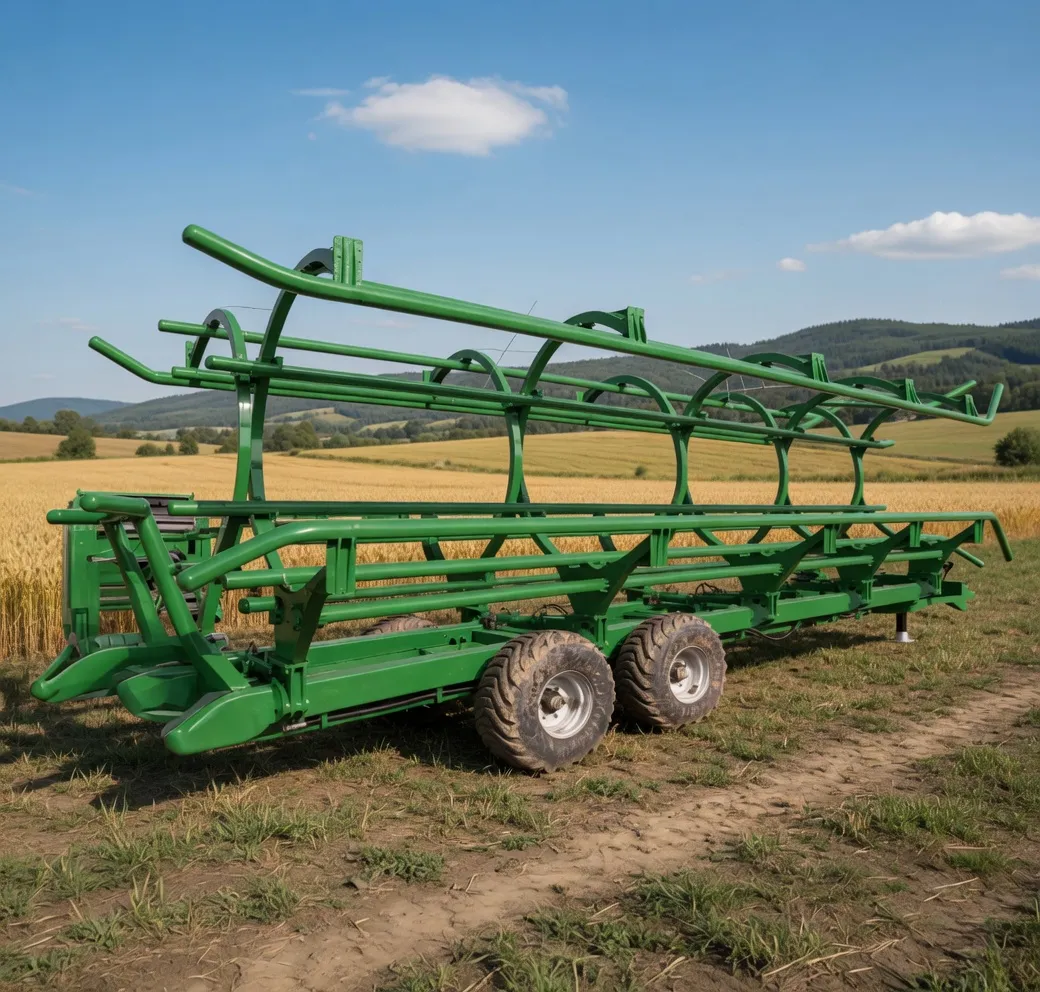
Reduces stacking crew from 4–5 to 2 people. Annual labour saving of AUD $9,000–$22,000 on a 10–25 stacking day operation at current casual rates. Payback in less than one season for most operations. Eliminates overhead lift — reducing manual handling injury risk. 240 V single-phase, no special power infrastructure. Stocked at EverPower’s Condell Park NSW warehouse, Australia-wide delivery.
Frequently Asked Questions
Two People. More Bales. Lower Cost. Less Injury Risk.
EverPower can confirm the 9JYY-4.5 suits your operation and provide current pricing delivered to your location.
EverPower Baling Machinery Australia Pty Ltd | 27 Harley Crescent, Condell Park NSW 2200
📞 +61 2 9708 3322 | ✉️ [email protected]