
A round baler that produces loose, misshapen, or inconsistent bales is telling you something. Every bale formation problem has a mechanical or operational cause, and most of those causes can be diagnosed in the paddock without workshop equipment. The key is knowing which symptom points to which cause, because the wrong fix wastes the time you cannot afford to lose during the baling window.
Cause 1: Pickup Blockage or Damage
The pickup is the entry point for all material entering the bale chamber. If the pickup is partially blocked, has broken or missing tines, or is set at the wrong height relative to the ground, the forage enters the chamber unevenly. An uneven feed creates a bale that is denser on one side than the other, producing a characteristic barrel shape or a cone shape where one end is visibly larger than the other.
Diagnostic check: Stop the baler and inspect the pickup from the front. Look for material wrapped around the pickup shaft, broken or bent tines that are not engaging the windrow fully, and debris lodged between the tines and the pickup housing. Check the pickup height setting — if the tines are set too high, they skim over the top of the windrow and deliver an incomplete feed. If they are set too low, they dig into the soil surface and carry dirt and stones into the chamber, creating dense spots and damaging the chamber rollers. The correct setting positions the tine tips approximately 25 to 40 mm above ground level on flat terrain.
Cause 2: Belt Wear or Incorrect Tension
In belt-type variable chamber balers, the belts are responsible for gripping the forage, rotating it into a cylinder, and applying the compression that produces a dense, well-formed bale. Worn belts lose their surface grip and allow the forage to slip rather than rotate, producing a bale that is soft, loosely formed, and underweight relative to its diameter. Uneven belt wear — where some belts are more worn than others — produces a bale that is tighter on one side than the other.
Diagnostic check: Open the chamber and inspect each belt individually. Check for surface glazing (smooth, shiny patches where grip texture has worn away), cracking across the belt width, edge fraying, and exposed reinforcement cords. Measure belt tension with the tensioner in the operating position — if the tensioner is at maximum travel and the belts are still slack, the belts have stretched beyond the adjustment range and need replacement. All belts should be replaced as a complete set to restore uniform chamber performance.
Cause 3: Incorrect PTO Speed
Round balers are designed to operate at a specific PTO speed — typically 540 rpm for most models in the EverPower range. Running the PTO below the specified speed reduces the rotational velocity of the pickup, the chamber rollers or belts, and the net wrap mechanism. The pickup cannot gather material efficiently, the chamber cannot rotate the bale core at the speed needed for uniform compression, and the net wrap does not apply correctly. The result is a loosely formed bale with uneven density and potential net wrap failure. Check the tractor’s PTO speed with a tachometer and confirm it matches the baler’s specification plate — this is one of the most common and most easily corrected causes of poor bale formation, especially when a different tractor has been paired with the baler.
Cause 4: Windrow Size and Consistency
The baler needs a consistent, centred windrow to produce a uniform bale. A windrow that is too narrow feeds material to only part of the pickup width, creating a bale that is denser in the centre than at the edges. A windrow that is too wide overloads the pickup and causes material to spill outside the tine path, reducing the volume entering the chamber. A windrow that wanders from side to side relative to the tractor path produces a bale with alternating dense and loose sections.
Diagnostic check: The windrow should be approximately 60 to 80 percent of the pickup width, centred on the baler’s intake path. If the windrow is too narrow, consider merging two passes with a rake or using a wider mower setting. If it wanders, the raking or mowing setup needs adjustment. The baler’s forward speed also affects feed consistency: too fast overloads the pickup, causing blockages; too slow starves the chamber, producing a loose core that the outer layers cannot compress fully.
Cause 5: Chamber Pressure Setting
Variable chamber balers allow the operator to set the target chamber pressure, which controls how tightly the belts compress the bale. If the pressure setting is too low, the baler ejects the bale before it reaches the density needed for shape retention and effective wrapping. If the pressure setting is too high for the crop type, the baler struggles to reach the target, cycle times increase, and the PTO load may exceed the tractor’s capacity, causing stalling or shear bolt failure. The correct pressure setting varies by crop type and moisture content — wet silage crops generally require moderate pressure to avoid effluent expression, while dry hay benefits from higher pressure for transport stability. Consult the operator’s manual for the recommended pressure range for each crop condition, and adjust in small increments during the first few bales of each new paddock or crop type.
Cause 6: Net Wrap Failures
A bale that forms correctly in the chamber but loses shape during or after ejection has a net wrap problem, not a chamber problem. Common net wrap failures include: incomplete coverage (the net did not rotate enough times around the bale), poor adhesion (the net did not grip the bale surface), and cutting failures (the net knife did not cut cleanly, leaving a trailing tail that wraps around the mechanism).
Diagnostic check: Inspect the net wrap mechanism for knife sharpness, spreader arm alignment, net brake tension, and cradle condition. Verify that the net roll is loaded correctly with the feed direction matching the mechanism’s rotation. Check the wrap count setting — most silage baler operations require 2.5 to 3.5 net rotations per bale for secure coverage. If the net consistently fails to grip, the bale surface may be too wet or too smooth (common with certain grass species); increasing the wrap count by 0.5 rotations usually resolves the adhesion issue.
| Symptom | Most Likely Cause | First Check |
|---|---|---|
| Cone-shaped bale | Uneven pickup feed | Windrow centring, broken tines |
| Soft, underweight bale | Belt wear or low pressure | Belt surface + tension, pressure setting |
| Bale loose at one end | Uneven belt wear | Individual belt inspection |
| Bale unravels after ejection | Net wrap failure | Knife, spreader arms, wrap count |
| Frequent blockages | PTO under-speed or wet crop | Tachometer check, forward speed |
| Inconsistent density | Irregular windrow | Windrow width, raking pattern |
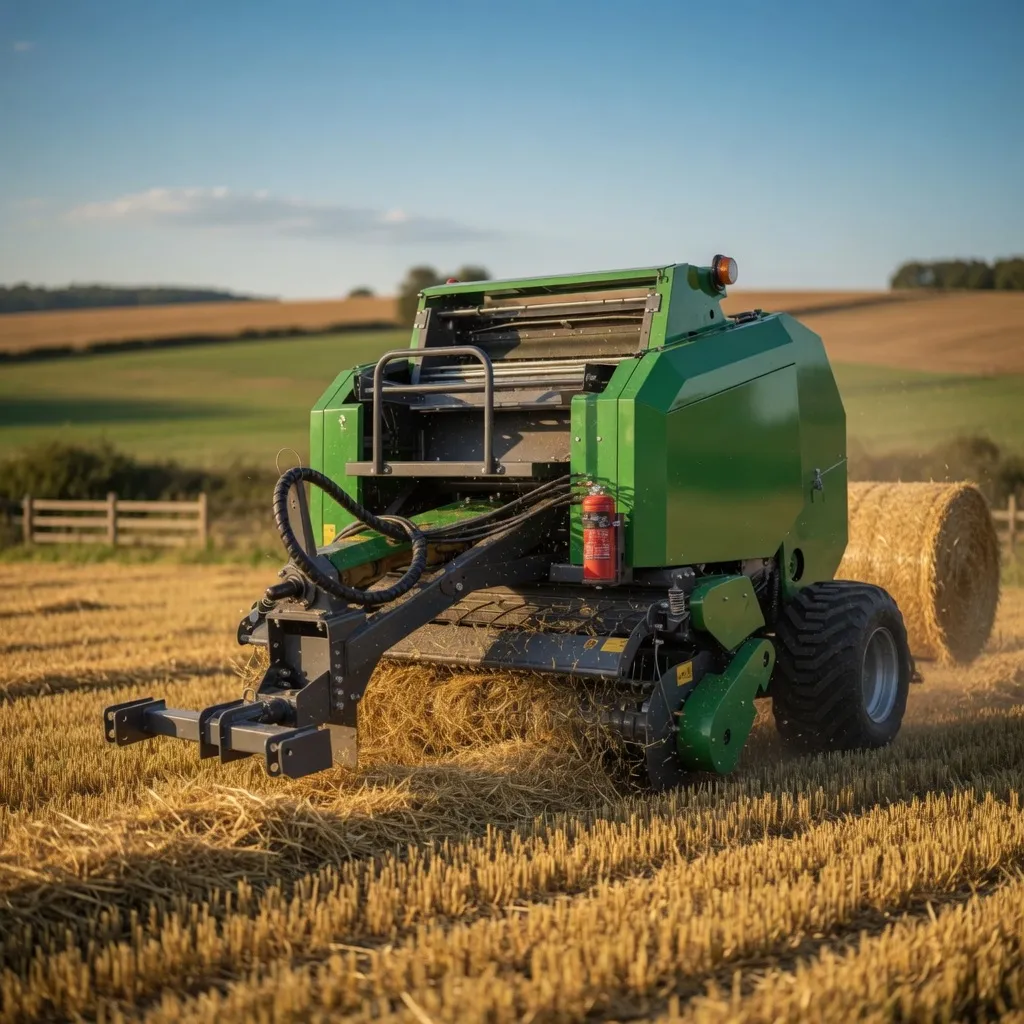 EverPower 9YG-1.25A — full-access chamber design for quick visual inspection and diagnostic checks without requiring workshop tools
Recommended Product: EverPower 9YG-1.25A Round Baler
The EverPower 9YG-1.25A Round Baler is engineered with diagnostic accessibility as a design priority. The chamber opens fully for hands-on belt and roller inspection, the pickup lifts clear for tine access, and the net wrap mechanism is mounted for easy knife replacement and spreader arm adjustment. For operators troubleshooting bale formation issues in the paddock, the accessible layout means diagnosis and correction happen faster — getting the baler back to full production without the delay of returning to the workshop.
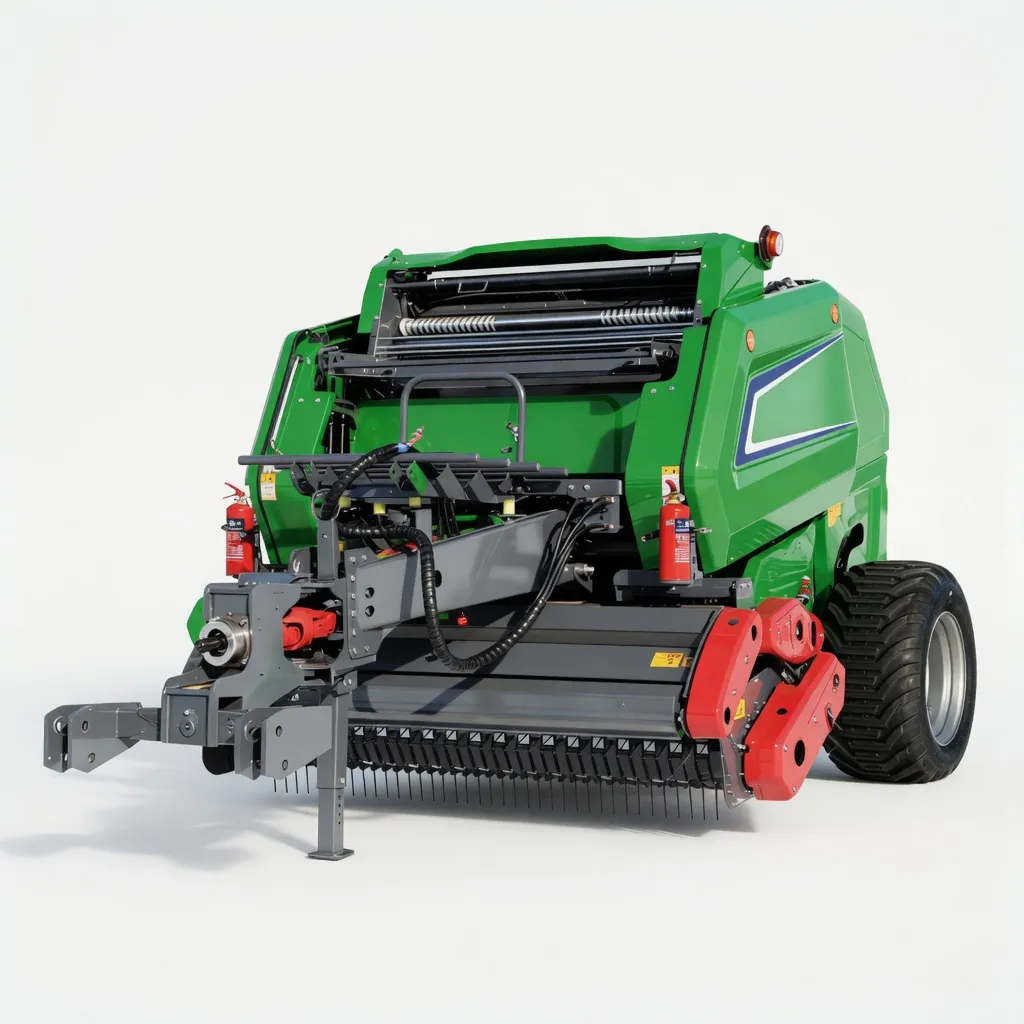
Related reading: See why cattle farmers are switching to combined baler-wrapper machines for more consistent bale quality: Why Cattle Farmers Are Switching to Combined Baler Wrapper Machines.
EverPower Baling Machinery Australia Pty Ltd
27 Harley Crescent, Condell Park NSW 2200
+61 2 9708 3322
[email protected]
Frequently Asked Questions
27 Harley Crescent, Condell Park NSW 2200 | +61 2 9708 3322 | [email protected]
About Us | Contact Us