
Wrapping is not a packaging step. It is the preservation step. Without the airtight envelope that stretch film provides, a bale of freshly cut forage is simply a pile of wet vegetation exposed to atmospheric oxygen — and within hours, the aerobic microorganisms on the plant surface begin consuming the nutrients that were meant to feed livestock months later. Understanding why wrapping works, how it works, and what happens when it fails transforms wrapping from a routine chore into the single most quality-critical operation in the entire bale silage production chain.
The Biology of Silage Preservation
Silage preservation is a controlled microbial fermentation. The process relies on lactic acid bacteria (LAB) — naturally present on every forage plant surface — converting the water-soluble carbohydrates (sugars) in the plant tissue into lactic acid under anaerobic (oxygen-free) conditions. As lactic acid accumulates, the pH of the forage drops from its initial level of approximately 6.0 to 6.5 down to a stable preservation pH of 3.8 to 4.5. At this low pH, virtually all microbial activity ceases: the spoilage organisms that cause mould, rot, and nutritional degradation cannot function, and the forage is preserved in a stable, palatable state for 12 to 18 months or longer.
The entire process hinges on one condition: the absence of oxygen. Lactic acid bacteria are facultative anaerobes — they function in both the presence and absence of oxygen, but they only dominate the microbial population when oxygen is excluded. In the presence of oxygen, aerobic spoilage organisms (moulds, yeasts, and aerobic bacteria) outcompete LAB because aerobic metabolism is more energy-efficient. Wrapping the bale in stretch film is the mechanical action that creates the anaerobic environment. Without wrapping, there is no anaerobic environment, no LAB dominance, no lactic acid production, and no preservation.
What Happens to an Unwrapped Bale
An unwrapped bale of forage at silage moisture (45 to 65 percent) is fully exposed to atmospheric oxygen. Aerobic spoilage organisms on the plant surface immediately begin consuming the sugars and proteins in the forage. The bale heats as aerobic metabolism generates thermal energy — internal temperatures can exceed 50°C within 24 hours, killing the beneficial lactic acid bacteria that would have driven preservation if oxygen had been excluded.
Within 48 to 72 hours, visible mould colonies establish on the bale surface and begin penetrating inward. The forage loses dry matter (the plant’s energy and protein content is literally being consumed by micro-organisms), develops off-odours that make it unpalatable to livestock, and begins to produce mycotoxins — fungal metabolites that can cause reproductive problems, liver damage, and immune suppression in cattle and sheep. An unwrapped bale at silage moisture is not preserved feed; it is a spoilage event in progress, and the nutritional and financial value declines by the hour.

How Many Layers of Film Are Needed?
The number of stretch film layers applied during wrapping directly affects the oxygen permeability of the seal and, therefore, the quality of the fermentation. Each layer of standard 25-micron silage film reduces oxygen transmission through the film wall. Research from European and Australasian forage science institutions consistently demonstrates that increasing layer count from 2 to 4 to 6 layers produces measurable improvements in fermentation quality, reduced surface spoilage, and lower dry matter losses during storage.
| Film Layers | Oxygen Barrier | Surface Spoilage | DM Loss | Recommended Use |
|---|---|---|---|---|
| 2 layers | Minimal | 15–25% | 8–12% | Not recommended for silage |
| 4 layers | Good | 5–10% | 4–6% | Standard for 3–9 month storage |
| 6 layers | Excellent | 2–4% | 2–3% | Drought reserves, 12+ month storage |
The practical recommendation for most Australian operations is 4 layers minimum for standard seasonal silage (consumed within 6 to 9 months) and 6 layers for long-term drought reserves (stored for 12 months or more). The additional film cost of moving from 4 to 6 layers is approximately AUD 2 to 4 per bale, which is trivial relative to the value of the feed preserved and the cost of the dry matter losses that additional layers prevent.
Pre-Stretch: Why Film Tension Matters
Modern bale wrapper machines apply film under controlled pre-stretch tension — the film is stretched 55 to 70 percent before contacting the bale surface. Pre-stretching serves three purposes: it reduces film consumption per bale (because the stretched film covers more surface area per roll), it improves the oxygen barrier (because stretched film has a more uniform molecular structure with fewer micro-channels), and it creates a tighter, more conforming wrap that follows the contours of the bale surface and eliminates air pockets between the film and the forage. Incorrect pre-stretch — either too low (baggy, wrinkled wrap with air channels) or too high (film tears during application) — compromises both preservation quality and film economy. The pre-stretch ratio is set on the wrapper’s pre-stretch rollers and should be verified at the beginning of each baling session and whenever a new batch of film is loaded.
The 4-Hour Wrapping Deadline
The time between bale ejection from the round baler and the completion of wrapping is the quality-critical window. During this period, the bale is exposed to atmospheric oxygen, and the aerobic phase of the fermentation proceeds unchecked. Forage science research establishes that bales wrapped within 2 hours of baling consistently produce higher-quality silage (lower pH, higher lactic acid, less surface spoilage) than bales wrapped at 4 hours, and bales wrapped beyond 6 hours show measurable quality decline regardless of how well the rest of the process was managed.
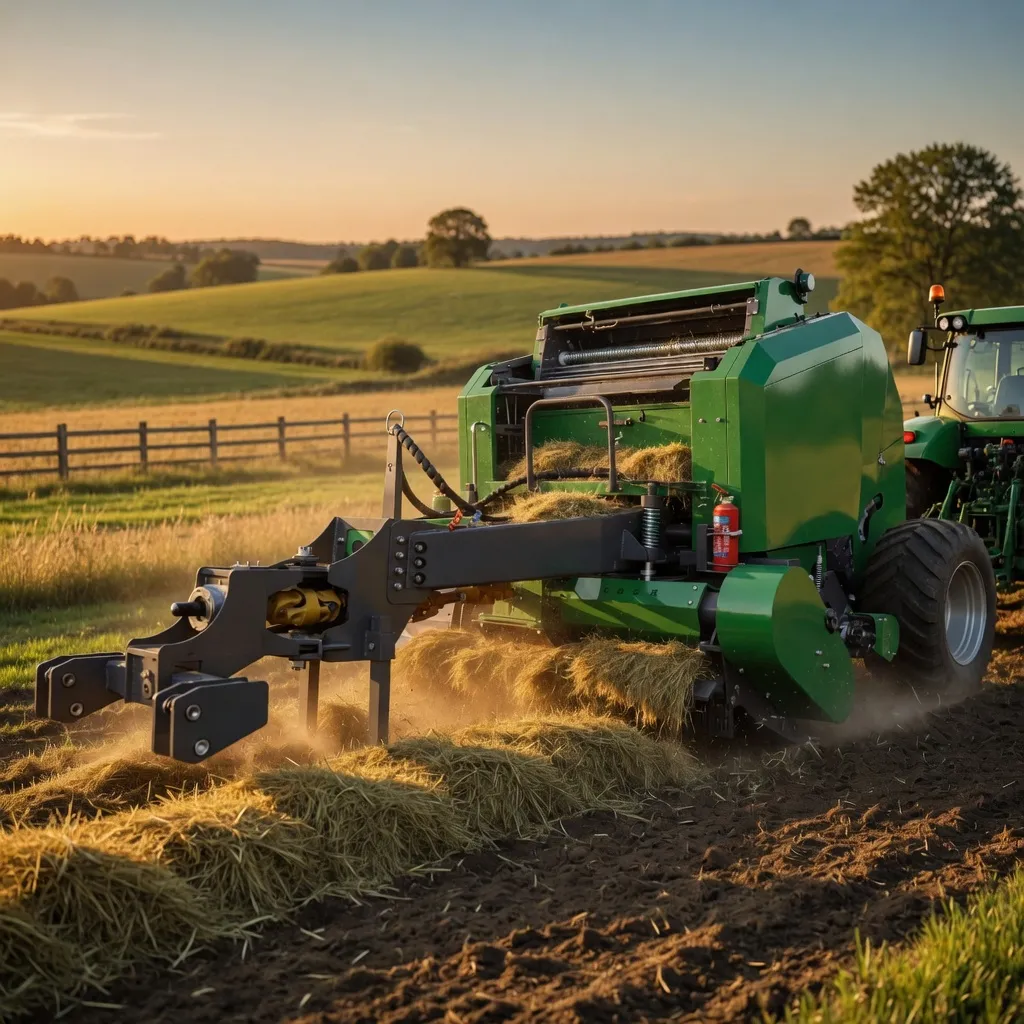
The practical implication is that the wrapping operation must keep pace with the baling operation. For standalone baler and wrapper systems, this means either running the wrapper in close pursuit of the baler (using a second tractor and operator) or limiting the baler’s forward progress to a volume that the wrapper can process within the 4-hour deadline. A combined baler wrapper eliminates this coordination challenge entirely: every bale is wrapped within seconds of chamber ejection, placing the entire production within the optimal 0-to-2-hour quality window automatically.
Film Colour: Does It Make a Difference?
Stretch film for silage wrapping is available in black, white, green, and occasionally other colours. The colour choice has a measurable effect on bale temperature during storage. Black film absorbs solar radiation and raises the bale surface temperature, which can promote secondary fermentation and surface spoilage in hot climates. White film reflects solar radiation and maintains lower bale temperatures, which is advantageous for Australian conditions where bales may be stored in full sun through summer. Green film falls between the two. For most Australian applications, white or light-coloured film is recommended because it minimises heat absorption during the extended summer storage period. The oxygen barrier properties of the film are identical regardless of colour — the colour affects only the thermal behaviour at the bale surface.
Recommended Product: EverPower 9YCM-850 Bale Wrapper
The EverPower 9YCM-850 Bundling Film Wrapping Machine delivers the precision wrapping that the preservation science demands. Adjustable layer count from 2 to 8 layers per bale, controlled pre-stretch ratio, and compatibility with both 500mm and 750mm film widths allow the operator to configure the wrapping profile for each job — 4 layers for standard seasonal silage, 6 layers for drought reserves, and 8 layers for premium export-quality baleage. The turntable handles bales up to 1.8m diameter and 850 kg, covering the full size range produced by the EverPower round baler series.
Related reading: See how dairy farms reduce dry matter loss through proper baler-wrapper integration: Reducing Dry Matter Loss on Dairy Farms with a Combined Baler Wrapper.
EverPower Baling Machinery Australia Pty Ltd
27 Harley Crescent, Condell Park NSW 2200
+61 2 9708 3322
[email protected]
Frequently Asked Questions
27 Harley Crescent, Condell Park NSW 2200 | +61 2 9708 3322 | [email protected]
About Us | Contact Us