Description
Product Specifications
| No. | Parameter | Unit | Specification |
|---|---|---|---|
| 1 | Model Name | — | 9F-70 Forage Grinder |
| 2 | Structural Form | — | Fixed Operation |
| 3 | Drive Mode | — | Fixed Power |
| 4 | Power Form | — | Diesel Engine |
| 5 | Rated Power | kW | 191 |
| 6 | Housing Construction | — | Welded Type |
| 7 | Rotor Structure | — | Hammer Type |
| 8 | Number of Hammers | pcs | 64 |
| 9 | Rotor Disc Diameter | mm | 450 |
| 10 | Rotor Working Diameter | mm | 700 |
| 11 | Grinding Chamber Width | mm | 1,100 |
| 12 | Overall Dimensions (L×W×H) | mm | 7700×2600×2900 |
| 13 | PTO Shaft Speed | r/min | 1,800 |
| 14 | Wheel Track | mm | 2,200 |
| 15 | Productivity | t/h | 5–20 |
| 16 | Structural Weight | kg | 5,500 |
| 17 | Feeding Method | — | Cylindrical Feeding System |
Product Overview
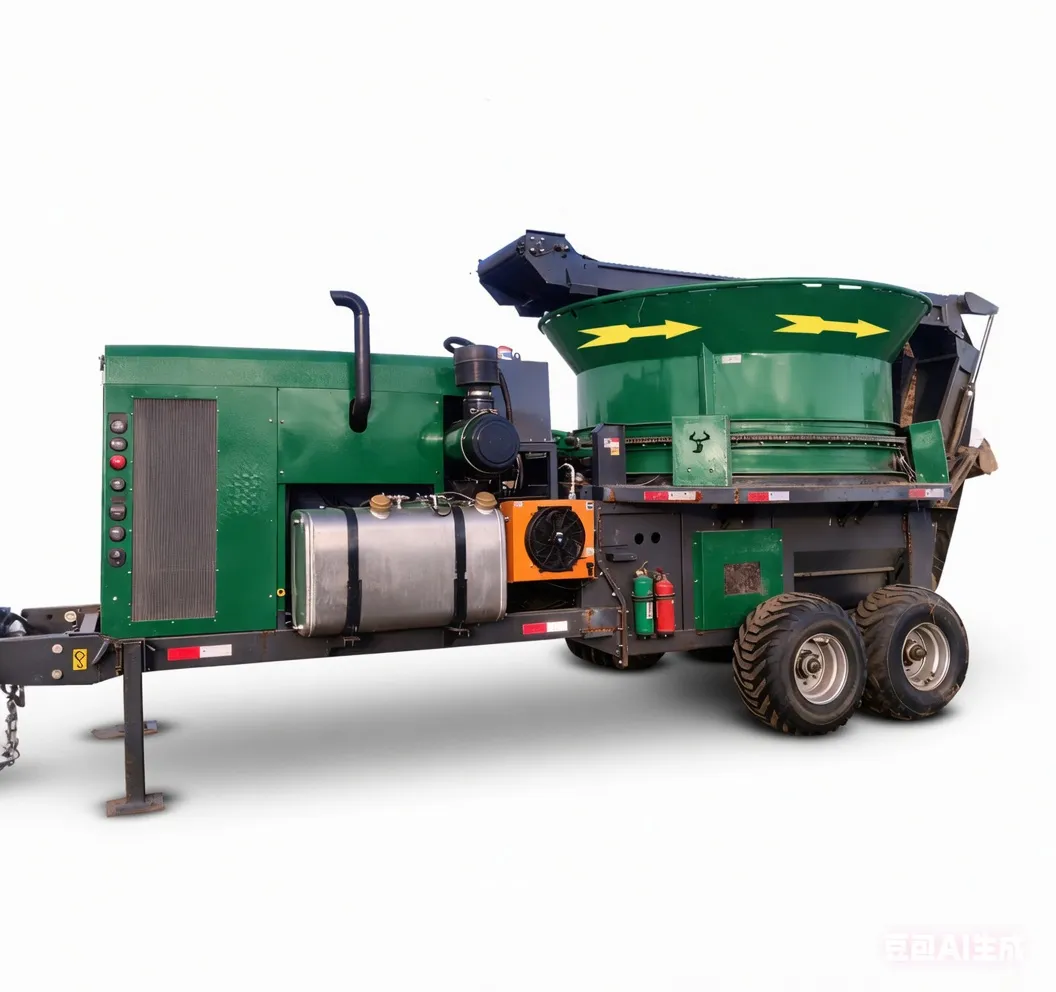
Grinding forage into a consistent particle size is not a task that benefits from under-powered equipment. Uneven particle size in total mixed rations (TMR) allows selective feeding — cattle and sheep sort the ration to eat preferred components and leave the rest, defeating the purpose of a balanced diet and wasting expensive feed. The 9F-70 addresses the particle-size problem with a 191 kW diesel-powered hammer mill fitted with 64 hardened hammers on a Φ700 mm rotor working across a 1,100 mm grinding chamber. That combination produces consistent output whether the feed stock is dry hay bales, straw, corn stover, dried silage residue, or any mixed forage.
The 5–20 tonne per hour throughput range covers everything from a small-scale on-farm processing operation (5–8 t/h) through to a commercial feed mill or large beef feedlot running the machine on extended daily shifts (15–20 t/h). At 5,500 kg structural weight and 7,700 × 2,600 × 2,900 mm overall dimensions, the 9F-70 is a fixed-installation machine rather than a mobile field unit — it sits at the feed preparation site and processes material delivered to it, rather than moving through the paddock.
The cylindrical feeding system is the detail that distinguishes the 9F-70 from flat-belt-fed alternatives. A cylindrical feeder maintains a consistent, even feed rate to the hammer chamber regardless of how material is loaded — whether by front-end loader bucket, bale spike, or manual loading. That evenness in the feed rate is what allows the hammer mill to maintain consistent particle-size output rather than grinding coarse when underfed and clogging when overfed.
Technical Features — Engineering Behind the Output
191 kW Diesel Engine — Power for Heavy Feed Stock
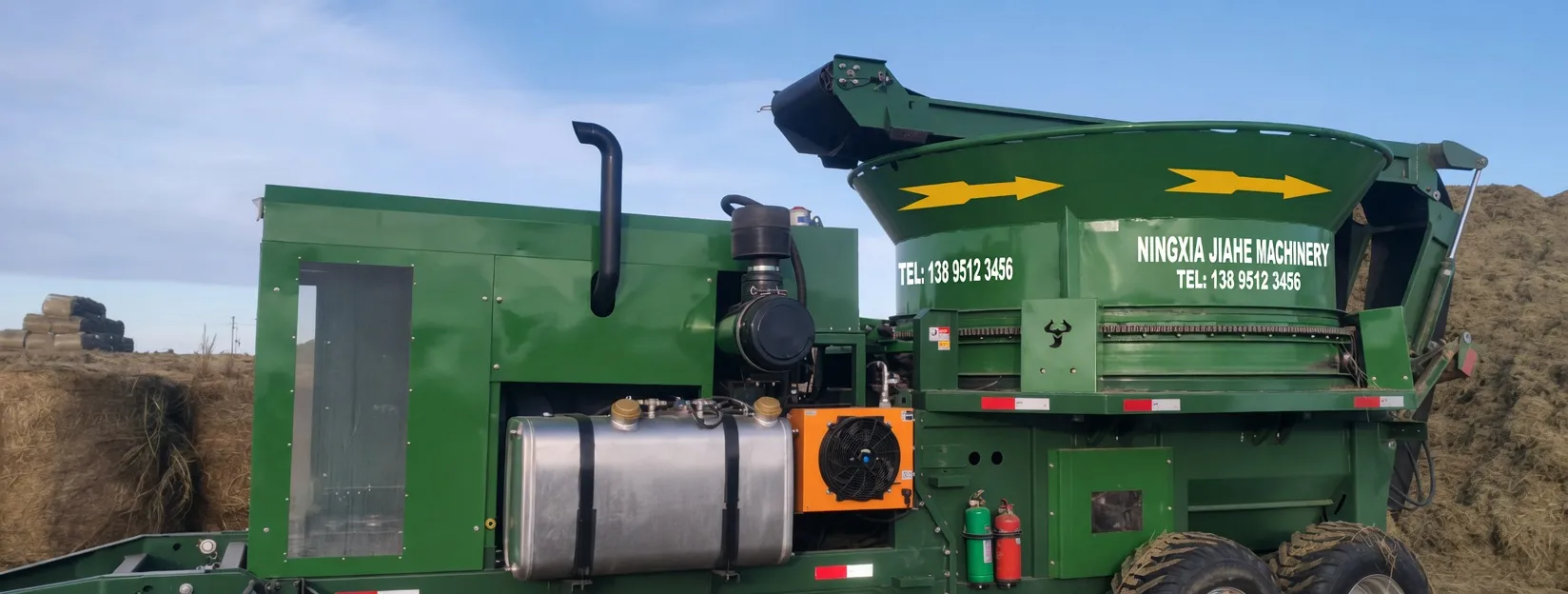
At 191 kW, the 9F-70 has meaningful reserve power when processing dense, high-moisture, or fibrous material that would stall or slow a lower-rated machine. The diesel drivetrain is self-contained — no external power connection required, which is important for on-farm installations in locations without three-phase electricity. Fuel consumption at full load runs approximately 35–45 litres per hour depending on material density and throughput rate. At 10 t/h processing rate, that equates to roughly 4 litres of fuel per tonne processed, which is competitive with belt-driven electric alternatives when electricity cost is factored in.
64-Hammer Rotor — Consistent Particle Size
The 64 hardened hammers on the Φ450 mm disc work across the full 1,100 mm grinding chamber width, striking material repeatedly as it passes through. The hammer count — 64 rather than the 32–48 typical on lighter machines — increases the frequency of hammer strikes per unit of material, which is what determines particle-size consistency. The Φ700 mm working diameter generates sufficient tip speed (approximately 75 m/s at 1,800 rpm) to shatter hay stems and straw nodes cleanly rather than bending or compressing them, which is the difference between a true particle-size reduction and a compaction that looks like grinding but produces unacceptable ration texture.
Cylindrical Feeding System — Even Throughput, No Surges
The cylindrical feeder is the operational detail that separates the 9F-70 from gravity-fed alternatives. Material loaded into the cylindrical hopper is metered into the hammer chamber at a controlled rate — the operator controls feed speed, and the machine maintains that rate regardless of bulk-density variation in the loaded material. This means the hammer chamber operates consistently near its rated throughput rather than alternating between starved and overloaded states, which is the primary cause of particle-size variation on simpler designs.
Welded Steel Housing — Built for Continuous Operation
The welded housing construction rather than cast assembly means the 9F-70 can be repaired by any competent steel fabricator in a rural area — no specialist foundry components, no long lead times for cast replacement parts. The welded design also allows the housing to flex slightly under the impact loading of the hammer system rather than cracking under concentrated stress, which is the failure mode that limits the service life of cast-housing alternatives in continuous heavy-use applications.
5–20 t/h Throughput Range
The broad 5–20 t/h range reflects the machine’s ability to run at reduced throughput for small operations processing hay residue and mixed forages, and at maximum throughput for commercial operations processing high volumes of a single material. Throughput is controlled by feed rate at the cylindrical feeder — lower feed rate produces finer, more consistent particles; higher feed rate increases volume at the cost of some particle-size consistency. The operator adjusts based on ration requirements rather than being locked into a single processing rate.
Operational Workflow
Hay bales, straw, or mixed forage are loaded into the cylindrical hopper via front-end loader bucket or bale spike. No pre-processing or size reduction required — the machine handles full bales directly.
The cylindrical feeder delivers material to the hammer chamber at the operator-set rate. Even feed rate regardless of bulk-density variation in the loaded material — no surges, no starvation.
64 hammers on the Φ700 mm rotor strike material at approximately 75 m/s tip speed. Multiple strikes per unit of material produce consistent particle-size reduction across the full 1,100 mm chamber width.
Processed material exits through the screen aperture (operator-selectable) into a collection conveyor, bin, or mixer wagon. Particle size is determined by screen selection — fine for poultry and TMR base, coarser for roughage supplementation.
The 9F-70 integrates naturally into an on-farm feed preparation line: hay bales are delivered to the grinder by tractor, processed material goes directly to a mixer wagon or holding bin, and the TMR is loaded into the feeder. The diesel self-contained drivetrain allows the machine to be positioned at the most convenient point in the feed preparation area without requiring proximity to an electrical supply.
Applications Across Feed Processing Operations
Beef Feedlots — TMR Preparation at Scale
Feedlots processing 200–2,000+ head require consistent, repeatable TMR particle size to achieve the uniform daily weight gains that determine lot profitability. The 9F-70’s 64-hammer rotor produces the particle-size consistency that prevents selective feeding — cattle in a pen consuming a 9F-70-processed ration cannot sort out the preferred grain component because the entire ration is ground to a consistent size range. At 10–15 t/h throughput, the machine covers a 500-head feedlot’s daily hay processing requirement in a 3–5 hour operation, leaving the balance of the day for other feed preparation tasks.
Dairy Farms — Fine-Particle TMR Base
Dairy cows on TMR require forage ground finely enough to integrate with grain and concentrate components without separating at the feed bunk. The 9F-70’s high hammer count and speed produce the fine particle size dairy nutritionists specify for TMR base at throughput rates that match the daily processing demand of herds from 200 to 1,500+ cows. Several large dairy operations in Victoria’s Gippsland region use the 9F-70 to process the annual hay crop as it comes off the baler into a consistent grinding-ready format, then run the grinder through the winter feeding season on stored material.
Commercial Feed Mills & Pellet Operations
Feed mills and pelleting operations require consistent input particle size as the upstream requirement for uniform pellet density and compression — if the input material varies in particle size, pellet quality varies with it. The 9F-70’s 5–20 t/h throughput and consistent hammer-mill output suit mid-scale feed mill operations processing diverse forage inputs including hay, straw, corn stover, and mixed pasture residues into a uniform base material for subsequent pelleting or mash mixing.
Sheep Stations — Roughage Supplementation
Sheep stations supplementing pasture with processed roughage during dry periods use the 9F-70 to process straw and hay into a coarser-particle format that is still digestible but provides the rumen bulk that native pasture ceases to supply during drought. At 5–8 t/h, the machine processes a station’s supplementary feeding requirement in a short daily operation, and the diesel drivetrain means it can be positioned in the paddock close to the feed allocation point without running power lines.
Maintenance — Keeping the Grinder at Peak Output
Daily Before Operation
Check the 64 hammer condition before each operating day — bent, cracked, or significantly worn hammers create vibration that accelerates bearing wear and reduces grinding quality. Replace any hammer that is cracked, and replace worn hammers as a balanced set (opposite pairs) to maintain rotor balance. Inspect the screen for holes or tears — a damaged screen passes oversize particles and needs immediate replacement. Grease the two main rotor bearing housings per the schedule (typically every 10 operating hours).
Every 50 Operating Hours
Rotate the hammers 180° to present the unworn face — this doubles hammer service life before replacement is needed. Visually inspect the welded housing interior for any cracking at stress concentration points, particularly around the screen frame mounts and the rotor bearing pedestals. Clean the feed metering mechanism in the cylindrical feeder; fine forage dust builds up in the metering gap and can jam the feed drive if not cleared regularly.
Every 200 Operating Hours or Seasonally
Full inspection of the diesel engine per the engine manufacturer’s schedule — oil and filter change, air filter service, fuel filter replacement, and valve clearance check. Replace rotor bearings if any roughness or heat is detected before the scheduled interval rather than waiting for a failure under load. Full hammer replacement set as a balanced 64-piece set when average hammer weight has dropped by 15% from new weight (weigh a sample of 8–10 hammers against the new-weight specification).
Why the 9F-70 Delivers Where Smaller Grinders Fall Short
Self-contained drivetrain — no three-phase electrical supply required. Full power on-farm at any location.
Double the hammer count of lighter alternatives. Consistent particle size across the full grinding width at any throughput rate.
From small-farm daily processing to commercial feed mill throughput in a single machine configuration.
Repairable by any rural steel fabricator — no specialist cast parts, no long lead times for housing repairs.
About EverPower Baling Machinery Australia
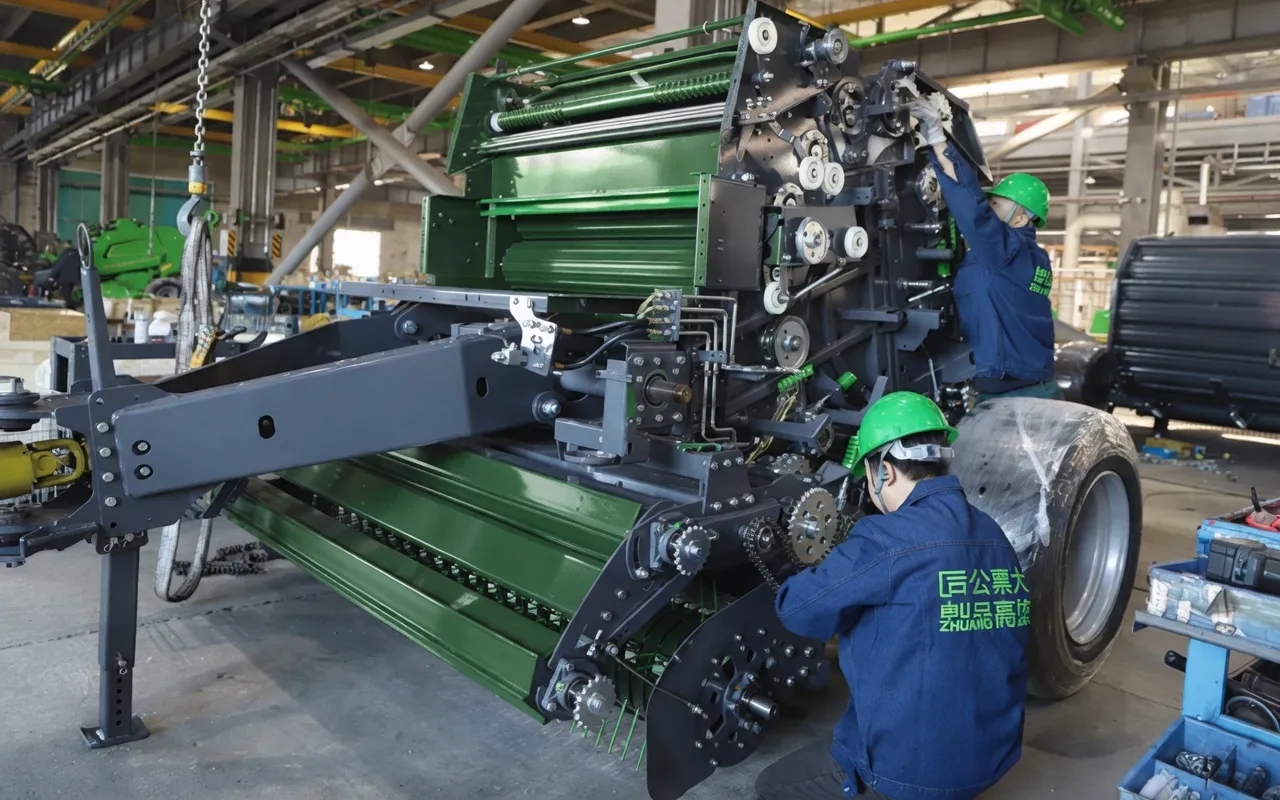
EverPower Baling Machinery Australia Pty Ltd — 27 Harley Crescent, Condell Park NSW 2200 — is the direct Australian arm of an ISO 9001-certified manufacturer operating a 32,000 m² factory with 180 staff and a dedicated R&D centre. Every machine carries a genuine Australian warranty administered from our Sydney office, backed by locally stocked spare parts for 72-hour national delivery.
Call +61 2 9708 3322, email [email protected], or visit silage-baler.com/about-us.
Frequently Asked Questions
Serious Throughput for Serious Feed Operations
Contact EverPower for pricing, availability, and advice on screen configurations for your specific feed processing requirements.