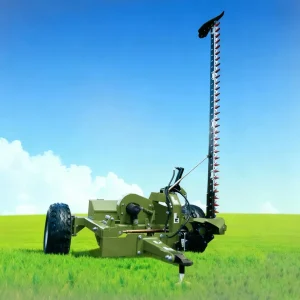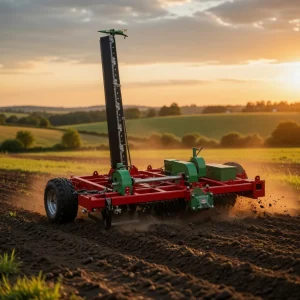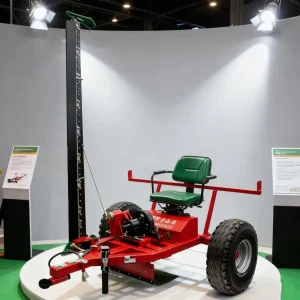
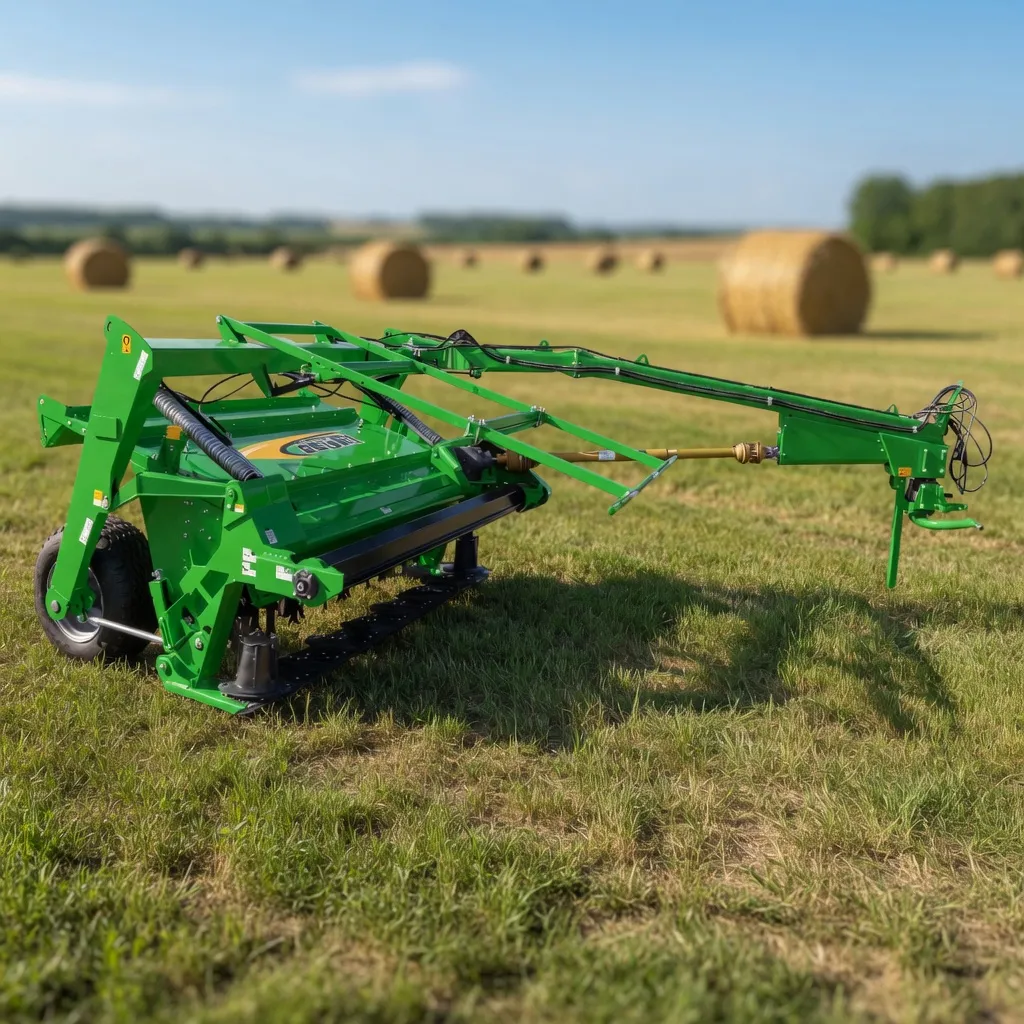
Description
Product Specifications
| No. | Parameter | Unit | Specification |
|---|---|---|---|
| 1 | Model Name | — | 9GQY-3.2 Mower-Conditioner |
| 2 | Traction / Hitching | — | Side Traction Type |
| 3 | Cutting Width | m | 3.2 |
| 4 | Cutter Structure | — | Rotary Type |
| 5 | Number of Cutter Heads | pcs | 8 |
| 6 | Conditioner Type | — | Striking Tooth Conditioner |
| 7 | Laying Width | m | 0.8–2.2 |
| 8 | Matching Power | kW / hp | ≥ 80.88 / 110 |
| 9 | Operation Speed | km/h | 6–15 |
| 10 | PTO Speed | r/min | 540–1,000 |
| 11 | Number of Moving Blades | pcs | 16 |
| 12 | Overall Dimensions (L×W×H) | mm | 6750 × 3500 × 2000 |
| 13 | Average Cutting Height | mm | ≥ 50 |
| 14 | Operators | person | 1 |
| 15 | Structural Weight | kg | 2,185 |
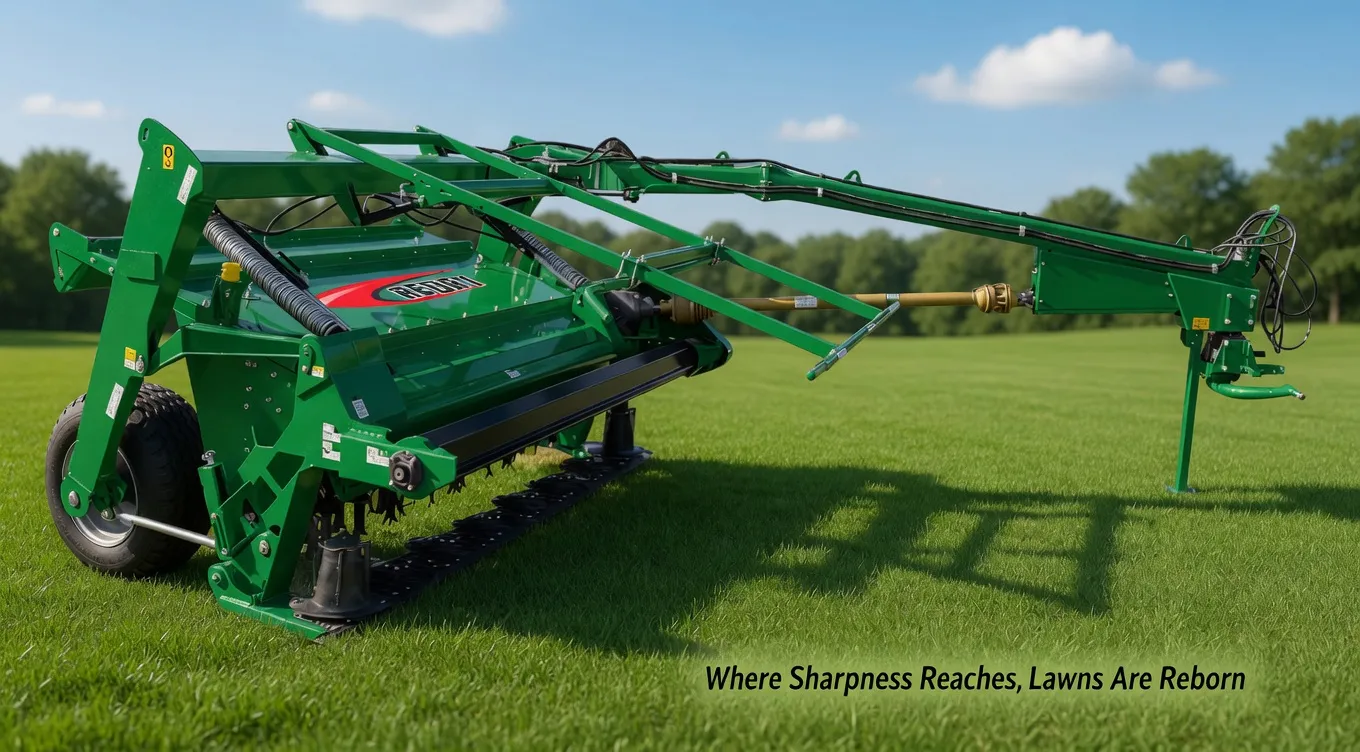
Product Overview
The time between cutting and baling is the most controllable variable in the silage-quality equation, and the mower-conditioner is the machine that determines how short that window can be. A standard disc mower cuts the crop and leaves it lying in the swath with the stem cuticle intact — the waxy surface layer that prevents moisture from escaping the cut stem. Wilting then relies on the cut surface area alone, which is limited. A mower-conditioner adds a conditioning stage immediately behind the cutter: the stem cuticle is cracked, abraded, or crushed, dramatically increasing the rate at which moisture escapes the stem and reducing wilt time by 30–50% compared to unconditioned mowing.
The 9GQY-3.2 uses a striking-tooth conditioner — eight rows of hardened striking teeth that crack and abrade the stem cuticle as cut material passes through. This design is particularly effective on thick-stemmed crops like lucerne and mature ryegrass where the waxy cuticle is well-developed and plain disc mowing alone produces unacceptably slow wilting in variable weather conditions. The 3.2 m cutting width and 8-head rotary cutter cover ground at 6–15 km/h, producing a windrow of adjustable width between 0.8 m (narrow, for baling) and 2.2 m (wide, for faster wilting on thick crops).
Dual-PTO compatibility at 540–1,000 rpm, combined with a ≥ 110 hp power requirement, suits the mid-to-large tractor fleet common on farms making three or more silage cuts per season. Validated compatible tractors include John Deere 6M/6R Series, Case IH Puma, and New Holland T6/T7 Series in the 110–160 hp range — the standard equipment on Australian dairy and beef enterprises with high-output forage programmes.
Technical Features — Why Conditioning Changes the Outcome
Striking Tooth Conditioning — 30–50% Faster Wilt
The striking-tooth mechanism works by passing cut material between rows of hardened teeth rotating at high speed. Each tooth contact cracks the stem at multiple points, breaking the waxy cuticle and allowing moisture to escape through the damaged surfaces. On lucerne at 80% moisture, unconditioned mowing typically requires 8–12 hours of good drying conditions to reach 65% moisture for silage baling. With striking-tooth conditioning, the same crop reaches 65% in 5–8 hours under equivalent conditions. That 3–4 hour reduction translates directly into reduced weather risk — a significant factor in southern Australia’s spring season where 24-hour weather windows are the norm rather than the exception.
3.2 m Rotary Cutter — 8 Heads, 16 Blades
Eight cutter heads across 3.2 m provide a clean, even cut height consistently above 50 mm. The minimum 50 mm cut height is not arbitrary: cutting below this level in ryegrass and lucerne removes growing points and reduces subsequent yield. Maintaining 50–70 mm cut height across the full 3.2 m width in a single pass, even on undulating terrain, requires the rotary disc design’s ability to follow ground contours independently at each cutter head. The 16 moving blades — two per head — process material at the cutting rate the disc speed demands without the blade-loading that single-blade designs experience at high forward speeds.
Adjustable Laying Width 0.8–2.2 m
The ability to adjust windrow width between 0.8 and 2.2 m in the field is a practical advantage that affects both drying rate and baling efficiency. A 2.2 m wide windrow exposes more cut surface to sun and air, accelerating wilting — the right choice when the weather forecast is borderline and the operator wants to minimise total drying time. A 0.8 m narrow windrow concentrates material for efficient baler pickup at the tractor’s maximum working speed — the right choice when the crop is already at target moisture and the priority is baling rate. The operator adjusts without stopping: windrow width is controlled from the cab.
Side Traction Hitch — Offset Working Position
The side traction hitch positions the cutter to the right of the tractor’s travel line, keeping the tractor wheels on previously cut stubble rather than on the standing crop or fresh windrow. This is the standard configuration for multi-pass mowing on large paddocks: the tractor always travels on clean ground, avoiding the plant-material crushing that causes fermentation quality issues when fresh-cut grass is driven over before it dries. On paddocks with row-crop layout (corn silage, sorghum silage), the side offset also allows the tractor wheels to track in the inter-row spacing without damaging adjacent rows.
540–1,000 rpm Dual PTO
The dual PTO range accommodates both older-generation 110 hp tractors running 540 rpm and current-generation machines running 1,000 rpm. On Australian farms transitioning fleet gradually across generations, this compatibility removes the need to match the mower-conditioner to a specific tractor PTO speed — any tractor above 110 hp in the fleet operates the machine.
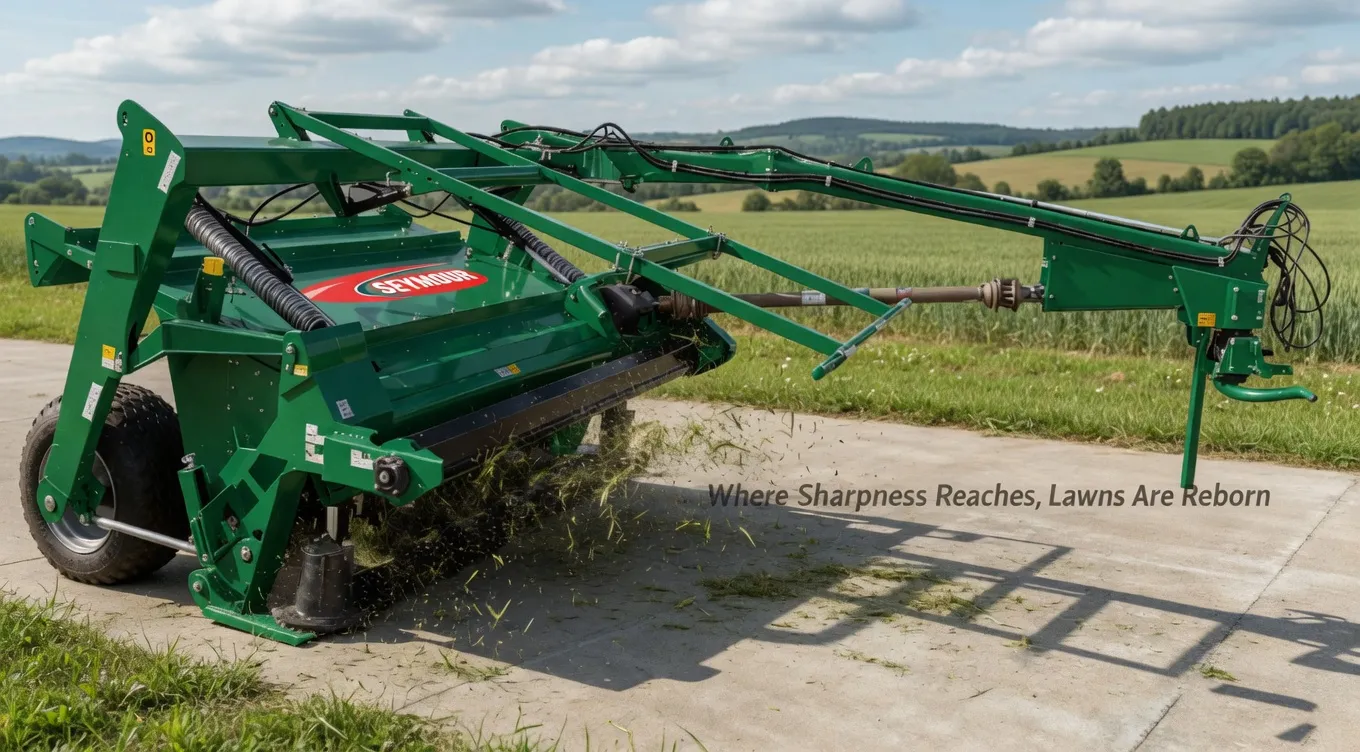
How the 9GQY-3.2 Operates in the Field
Eight cutter heads cut the crop cleanly at ≥50 mm height. At 6–15 km/h forward speed, the 3.2 m cutting width covers 1.9–4.8 ha/h depending on paddock layout and tractor speed.
Cut material immediately passes through the striking-tooth conditioner, cracking the stem cuticle at multiple points. This single pass reduces subsequent wilt time by 30–50% versus unconditioned mowing.
Conditioned material is laid in a windrow of 0.8–2.2 m width, operator-selectable. Narrow for fast baling, wide for maximum wilt rate. Width is adjusted from the cab without stopping.
Conditioned windrow wilts to target moisture in 30–50% less time than unconditioned mowing. The baler follows in a shorter window, reducing weather-risk exposure and improving fermentation quality.
On a 50 ha silage paddock at a comfortable 10 km/h working speed with headland turns, the 9GQY-3.2 completes a cutting pass in approximately 18–22 operating hours — manageable in two intensive working days. Conditioned ryegrass at 75% moisture typically reaches 65% target moisture in 6–9 hours of adequate drying conditions, allowing baling to begin the following morning when a two-day cut-to-bale sequence is planned.
Applications — Where the Conditioner Makes the Difference
High-Output Dairy Silage — Three to Five Cuts per Season
Dairy farms making three to five ryegrass silage cuts per year are the primary user of mower-conditioners in Australia. Each cut is a race against weather: the cut must dry sufficiently before the next rain event, which on the southern tablelands and Gippsland in spring can arrive in 24–36 hours. A mower-conditioner that reduces wilt time by 30–50% relative to a plain disc mower provides a meaningful buffer against weather risk on every cut. Dairy nutritionists also note that faster wilt produces silage with lower effluent losses and better fermentation pH, contributing to the milk production outcomes the farm depends on.
Lucerne — Multiple Annual Cuts, Quality-Sensitive
Lucerne is the crop where striking-tooth conditioning delivers the largest relative benefit. Lucerne stems have a particularly well-developed waxy cuticle that plain disc mowing barely affects — leaving lucerne lying unconditioned often requires 12–16 hours of good drying conditions to reach baling moisture. With striking-tooth conditioning, the same crop regularly dries in 7–10 hours. On a farm making five lucerne cuts per season, that time saving recurs on every cut and compounds into significantly lower annual weather-risk exposure compared to an unconditioned mowing system.
Premium Hay Production — Consistent Moisture at Baling
Export-quality hay buyers specify bale moisture content at baling within narrow tolerance ranges — typically 14–18% for lucerne and 16–20% for grass hay. Baling outside these ranges either results in mould (too wet) or excessive leaf shatter and loss of quality grading (too dry). A mower-conditioner improves moisture-at-baling consistency by accelerating and evening out the drying process across the swath — the conditioned windrow reaches the target moisture window more quickly and holds within it longer than an unconditioned swath, giving the operator a wider practical baling window.
Beef Silage — Reducing the Weather-Window Requirement
Beef enterprises producing silage once per year as a drought-reserve crop often have limited labour and equipment flexibility — the cut needs to go from mowing to baled silage in the shortest reliable window with whatever tractors are available. The 9GQY-3.2 reduces the wilt time requirement sufficiently that single-day mow-to-bale is achievable on warm, dry days with good solar radiation. For properties where the cut must be completed and in the wrapper within a one-day weather window, that compression of the wilting phase from 8–12 hours to 4–7 hours can be the difference between a successful cut and a spoiled one.
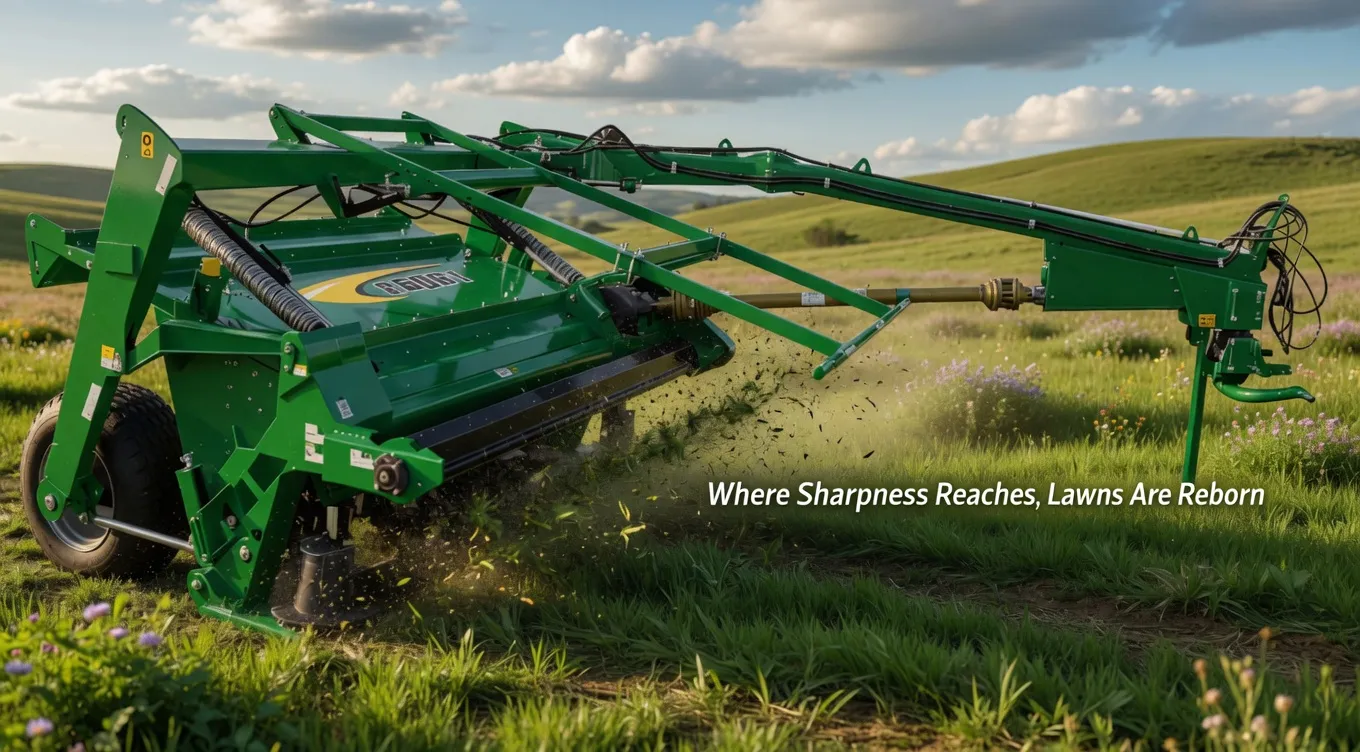
Maintenance — Keeping the Cutting & Conditioning System Sharp
Daily Before Operation
Inspect all 16 cutter blades before the first pass of each day — chipped, cracked, or unevenly worn blades produce an uneven cut height that creates moisture variation across the windrow. Replace damaged blades in balanced pairs (opposite blades on the same cutter head) to maintain cutter-head balance. Check that the striking teeth are intact and correctly oriented — missing or misaligned teeth reduce conditioning effectiveness immediately. Grease the three main daily lubrication points on the side traction hitch and cutter gearbox input.
Every 50 Operating Hours
Change the cutter gearbox oil if not on a sealed-for-life gearbox. Inspect the striking-tooth rotor bearings for play or heat. Check all belt tensions on the conditioning drive — the striking-tooth conditioner is belt-driven from the main cutter PTO shaft, and belt slip under load is the primary cause of inconsistent conditioning intensity across the swath. Inspect the windrow-width adjustment mechanism for wear in the guide channels.
End of Season
Replace all cutter blades as a full set — mixing worn and new blades across cutter heads creates uneven load distribution that accelerates bearing wear. Inspect the side traction frame for fatigue cracking at the main hitch-to-cutter-bar connection point. Clean and inspect the striking-tooth rotor for bent, cracked, or missing teeth and replace as needed. Store with cutter bar lowered to unload the hitch frame and PTO driveshaft universal joints.
Why the 9GQY-3.2 Belongs at the Front of Every Silage Chain
Striking-tooth conditioning cuts average wilt time nearly in half — directly reducing weather-risk exposure on every cut.
Eight-head rotary cutter covers 1.9–4.8 ha/h. Side traction keeps tractor wheels off the fresh windrow.
0.8–2.2 m from the cab — optimise for wilt rate or baling speed without stopping.
Compatible with any tractor above 110 hp in either PTO speed range. No dedicated tractor required.
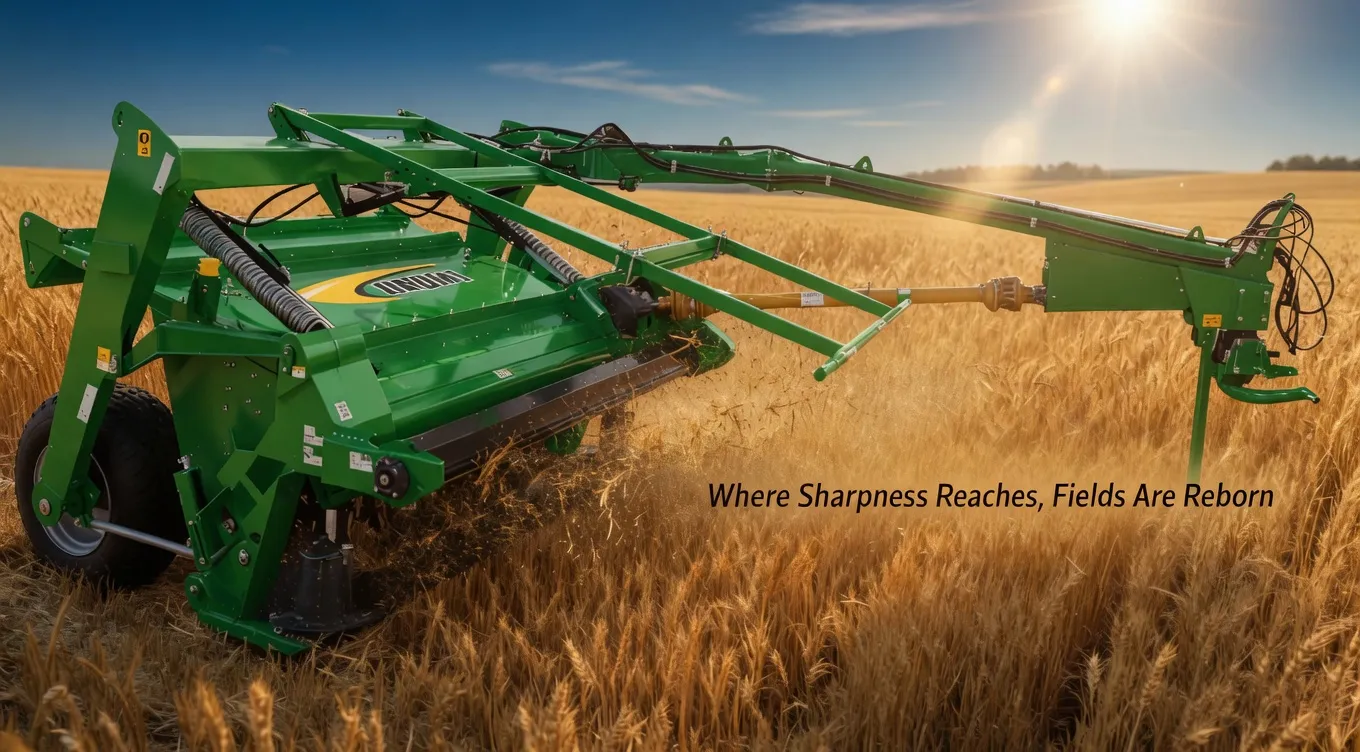
About EverPower Baling Machinery Australia
EverPower Baling Machinery Australia Pty Ltd — 27 Harley Crescent, Condell Park NSW 2200 — is the direct Australian arm of an ISO 9001-certified manufacturer with a 32,000 m² factory, 180 staff, and a dedicated R&D centre. Every machine carries a genuine Australian warranty administered locally, backed by spare parts stocked for 72-hour national delivery.
📞 +61 2 9708 3322 | ✉️ [email protected] | silage-baler.com/about-us
Frequently Asked Questions
Cut Faster, Wilt Sooner, Bale Better
Talk to EverPower Australia about the 9GQY-3.2 for your silage and hay programme — pricing, stock, and tractor-compatibility confirmation same day.