Description
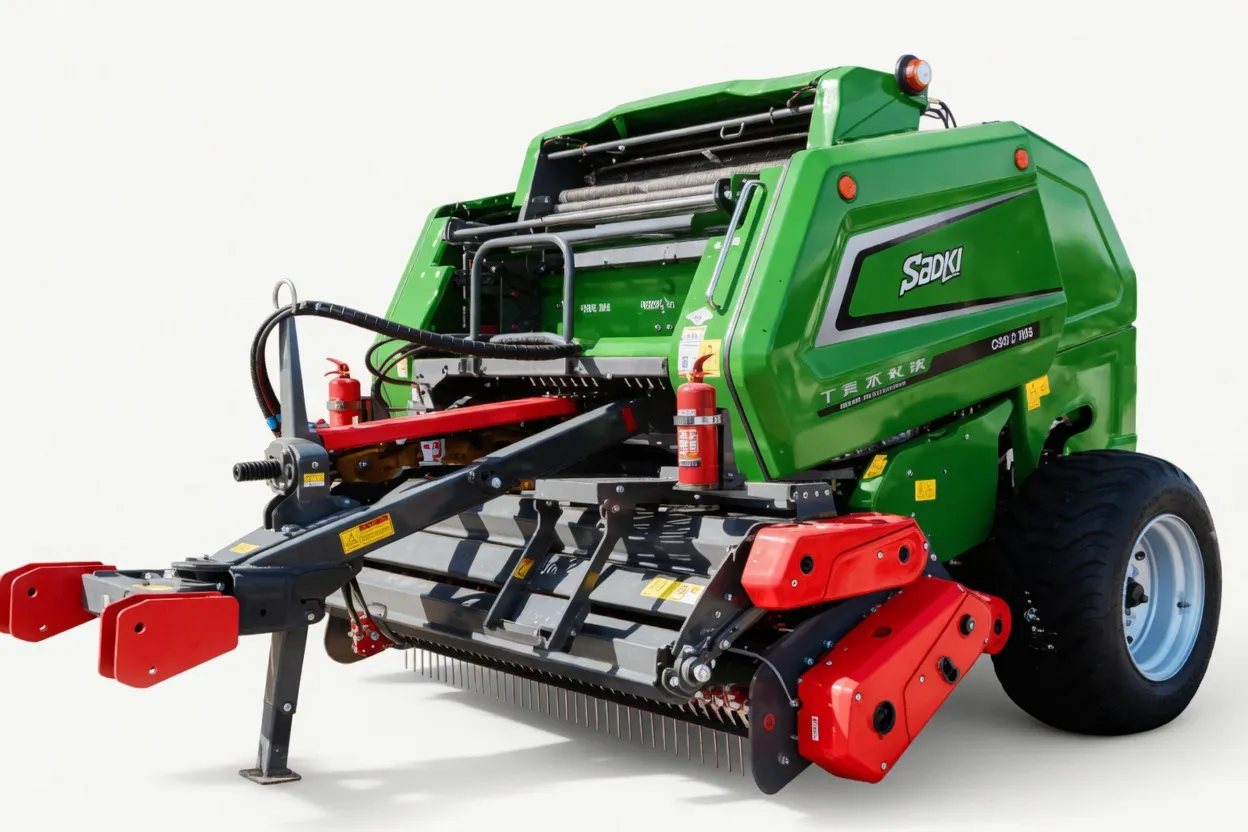
Product Specifications
| No. | Parameter | Unit | Specification |
|---|---|---|---|
| 1 | Model Name | — | 9YG-2.24D S9000 |
| 2 | Hitching Method | — | Tractive |
| 3 | Pickup Width | mm | 2240 |
| 4 | Pickup Structure Type | — | Spring Tooth Type |
| 5 | Feeder Structure Type | — | Finger Roller + Drum |
| 6 | Chamber Mechanism | — | Drum Type |
| 7 | Chamber Width | mm | 1400 |
| 8 | Chamber Diameter | mm | Φ1200 |
| 9 | Rolling Drums | pcs | 18 (Drum) |
| 10 | Drum Diameter | mm | Φ222 |
| 11 | Baling Method | — | Net Wrapping |
| 12 | Matching Power | kW | 55–100 |
| 13 | Structural Mass | kg | 4570 |
| 14 | PTO Shaft Speed | r/min | 720 |
| 15 | Overall Dimensions (L×W×H) | mm | 4600×3010×2370 |
| 16 | Bale Density Control | — | Sensor Control |
| 17 | Bale Size (Dia. × Width) | mm | Φ1300×1400 |
| 18 | Bale Density | kg/m³ | 100–200 |
| 19 | Productivity | bales/h | 40–100 |
| 20 | Wheelbase | mm | 2600 |
| 21 | Operating Speed | km/h | 5–35 |
| 22 | Net Specification | — | 2000 × 1.4 m / bale |
Product Overview
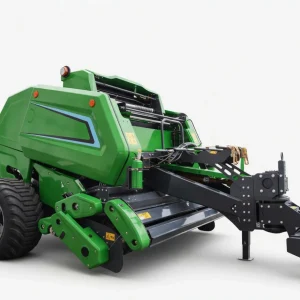
The 9YG-2.24D Round Baler — S9000 is the original heavy-duty flagship model in EverPower’s S9000 series, designed from the outset for the demands of large Australian and New Zealand farming operations. More than 1,200 units have been shipped to Australia since the model launched, making it one of the most widely deployed imported high-density round balers currently working Australian paddocks. Where many balers are designed to a price and then positioned for commercial use, the S9000 was engineered to a performance standard — one that consistently delivers 500–1,000 kg bales that survive road-train transport, container loading, and the full range of Australia’s crop types and field conditions.
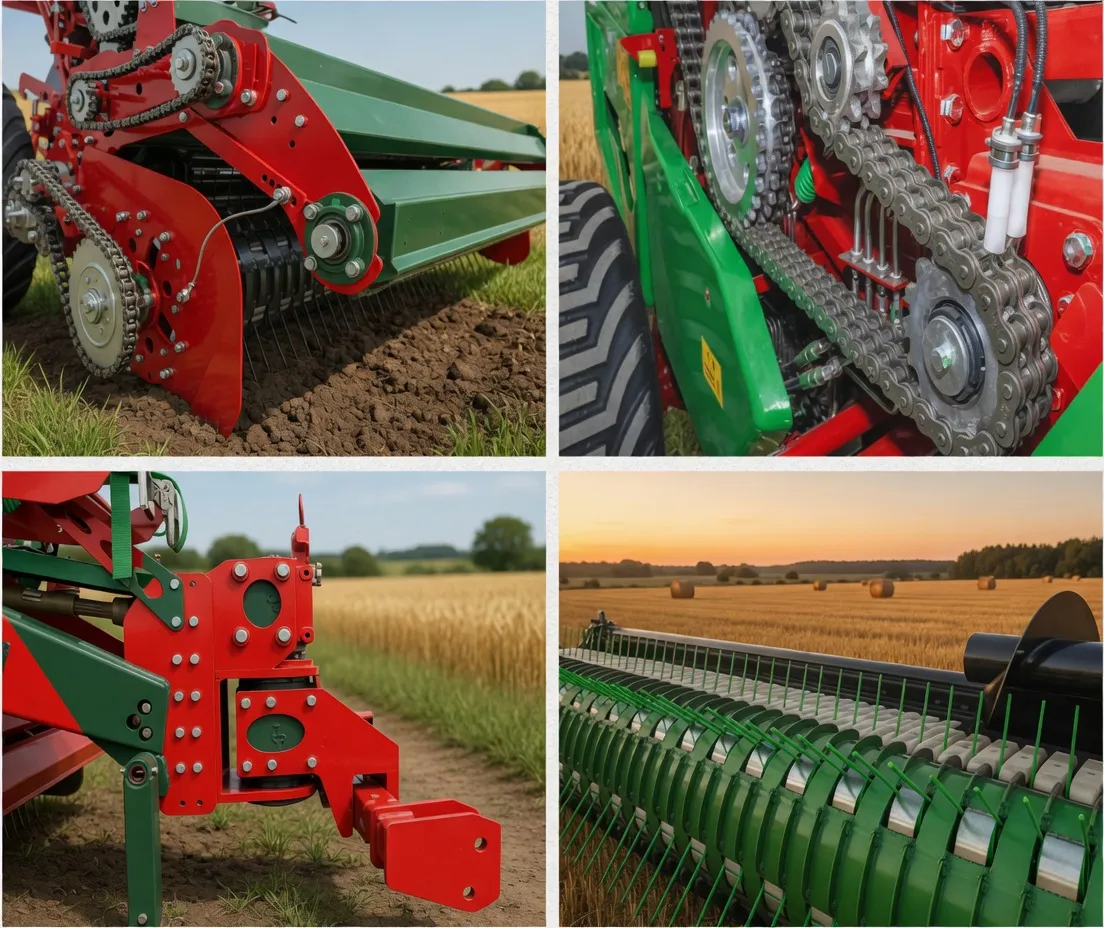
Two features define the S9000’s character more than any specification on the data sheet. The first is the genuine German Rasspe knotters — the same technology fitted to the premium European brands that have been standard equipment on Australian farms for three decades. Rasspe knotters fire reliably, every time, in dust and heat without the missed ties that older-generation or lower-grade knotter systems produce. The second is the fully adjustable 100° drawbar: swings left and right through a full 100° arc, tilts up to 30° on cross-slope work, and keeps the baler’s pickup tracking cleanly through turns that would force a conventional machine to slow sharply or leave strips of crop behind.
ISOBUS integration means the S9000’s control display talks directly to late-model John Deere, Case IH, New Holland, and Fendt cab screens without any secondary monitor. Operators running 14-hour days report that removing the extra screen from the cab genuinely reduces fatigue — a small but real productivity gain over a full season.
Core Features & Technical Advantages
German Rasspe Knotters — Zero-Compromise Tying Reliability
The Rasspe knotter is widely regarded as the gold standard for agricultural bale-tying systems. Its double-knot design fires crisply even in dusty, gritty conditions that cause cheaper twin-disc knotters to jam or miss. For Australian contractors baling on open paddocks in the Queensland heat or WA wheatbelt dust, a missed tie means a bale that falls apart during transport or a production stop to clear a jam. The S9000’s Rasspe knotters eliminate that variable almost entirely. Several Australian operators with 35,000–42,000+ bales on their machines report still running the original knotter set with nothing more than seasonal cleaning — a durability figure that speaks clearly to the quality of the components rather than the marketing copy.
100° Adjustable Drawbar — Slope & Headland Performance
The 100° drawbar swing is wider than virtually any comparable machine in this price category. On flat paddocks it allows sharp headland turns that reduce the unproductive strip at each end of the paddock — a genuine time-saver when working long narrow fields typical of irrigated pasture layouts on the Riverina or in the Lockyer Valley. On hilly paddocks around Armidale or the Adelaide Hills, the 30° tilt tolerance keeps the pickup parallel to the slope face, preventing the front-left tine from digging into the hillside while the right side lifts off the windrow. Operators who have made the switch from machines without this feature frequently describe it as the single biggest change to their working day.
Double 20A Heavy-Duty Chains — Maximum Compression Force
The S9000 uses double 20A heavy-duty chains on both sides of the compression chamber — the same chain specification found on the most expensive European balers. These chains transmit the power that squeezes the 18 Φ222 mm drums against the bale core, and it is their tension that determines whether the bale reaches its full density target or whether the chamber flexes at the moment of peak load. The double-chain design maintains tension uniformity across the full 1,400 mm chamber width, producing bales that are equally dense at the edges as at the centre — essential for bales that are stacked three high on road trains and need uniform loading characteristics.
2,240 mm Pickup & Finger-Roller Feeder
Five rows of spring-tooth tines across a 2.24 m working width. Hydraulic float. The combination clears wide windrows in a single pass at speeds up to 35 km/h — a number that initially surprises operators coming from 1.8 m machines. The finger-roller plus drum feeder smooths crop flow into the chamber so that the density builds gradually and evenly rather than in pulses, which is critical for producing consistent bale weight across a full paddock. The feeder design also handles fibrous crops like sorghum and vetch without the repeated blockages that simpler auger-style feeders experience on these materials.
ISOBUS Integration & One-Touch Net Wrapping
The control system communicates via ISOBUS with any compatible tractor — bale count, density reading, and alert messages appear directly on the tractor’s existing screen. The net fires on a single button press, wraps the bale in two to three passes, cuts cleanly, and the door is closed again within 15 seconds. Running on full automatic, the machine handles all timing decisions so the operator focuses on steering. One roll of 2,000 m net reliably lasts through a full 12-hour day, and most operators find they’re filling the tractor fuel tank more often than they’re changing the net roll.
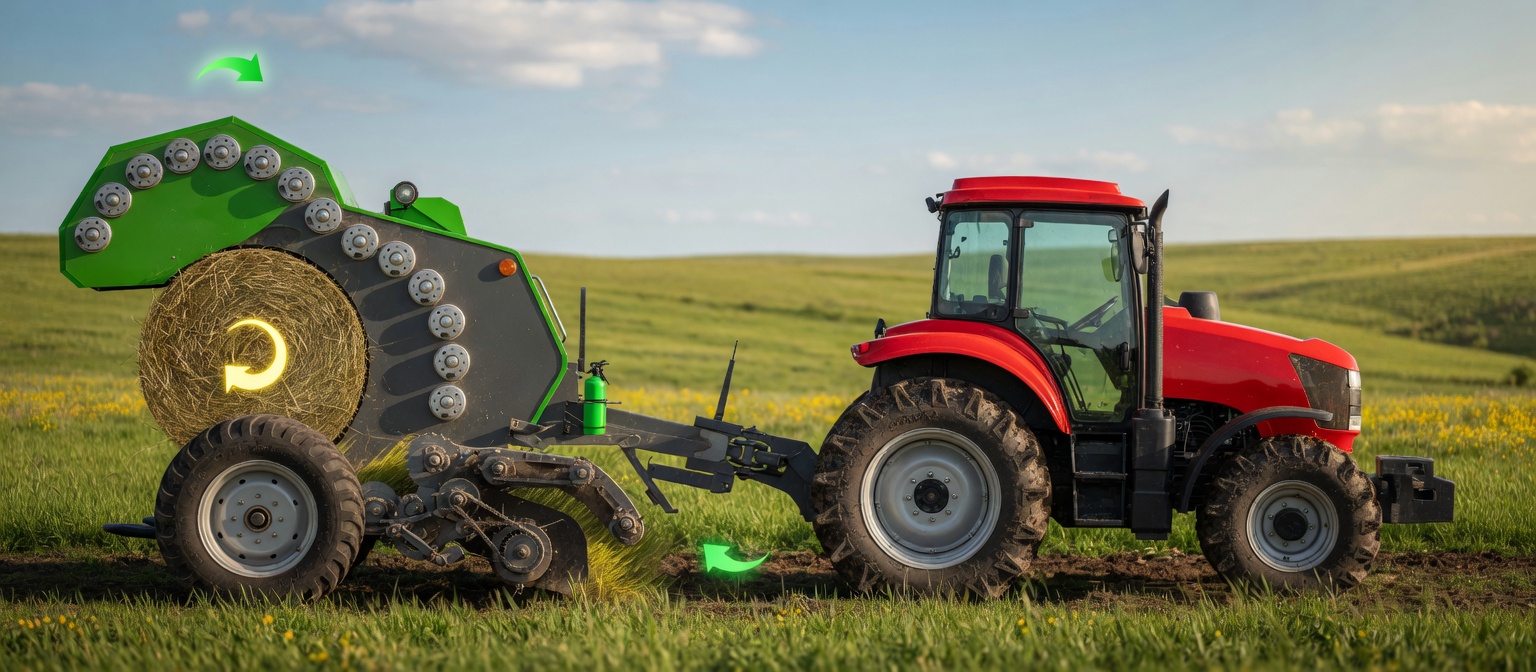
How the S9000 Works in the Field
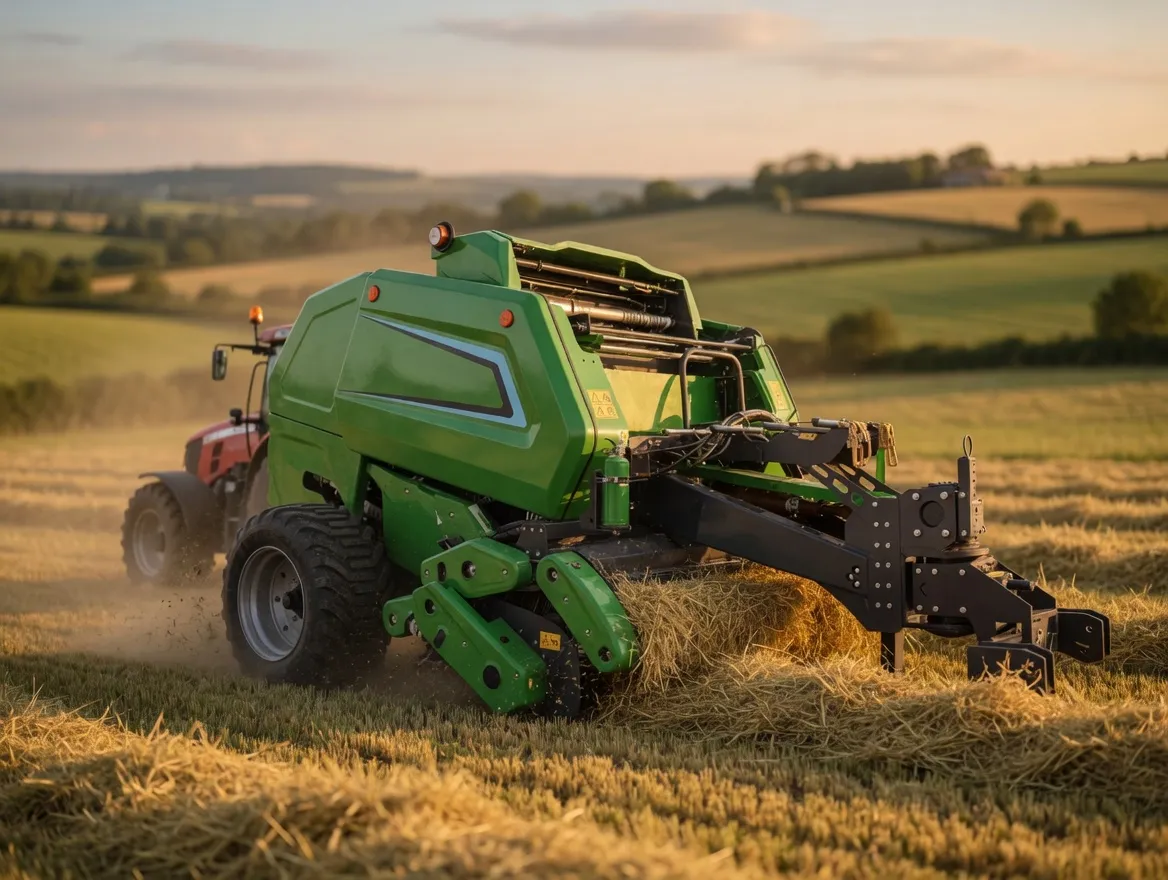
The 2.24 m spring-tooth pickup lifts and delivers the windrow to the finger-roller feeder, which guides crop evenly into the chamber. Hydraulic float keeps tines on the ground through undulations at any speed up to 35 km/h.
The 18 drums — driven by double 20A chains — build even compression across the full 1.4 m chamber width. Sensor feedback monitors density continuously, eliminating the need for the operator to judge timing by sound or feel.
At target density, the one-touch netter or twine system fires. The Rasspe knotters produce a secure double knot every time — no missed ties, no roping, even in heat and dust. The bale is fully bound and ready to eject in seconds.
Door opens, bale rolls clear, door closes. Full cycle under 15 seconds. Running on auto, operators routinely reach 850+ bales per 12-hour shift with minimal stops. The ISOBUS display shows the running count without requiring the operator to look away from the windrow.
A complete baling pass looks like this in practice: the 2.24 m pickup cleans up laid ryegrass or oaten hay in a single pass, the feeder delivers it smoothly to the chamber, the drums build the core to set density, the knotter fires, and the bale drops — all without interrupting forward travel. Operators running 12–14 hour days describe the rhythm as genuinely addictive once the machine is dialled in, with bale output in the 800–950 range being routine on moderately dense crops.
Where the S9000 Performs Best
500–1,000+ Hectare Annual Operations
The S9000 was built with volume operations in mind. The 2.24 m pickup covers a paddock 25% faster than a 1.8 m machine at the same ground speed. The Rasspe knotters eliminate the periodic “miss-and-stop” sequences that cut into hourly output on cheaper machines. And the 100° drawbar reduces non-productive headland time on every pass. Contractors who have moved to the S9000 from 1.8 m machines consistently report 600–900 tight bales per 12-hour day — figures that make the machine cost-neutral within a single season on operations above 500 hectares annually.
Road-Train & Container Loading
The double 20A chain system and 18-drum compression ensure that bales hit 500 kg on light stuff and 800–1,000 kg on dense dry crops. That weight and the consistent Φ1300 mm diameter allow bales to be stacked three high on flat-deck road trains without collapsing or bursting. For export operations loading 40-foot containers, the dimensional consistency directly affects whether a container load fits within the door height and weight limit — a practical engineering requirement that variable or poorly compressed bales frequently fail to meet.
Dairy Support Blocks & Silage
Dairy farms managing three to four silage cuts per year need the baler to keep pace with the mower-conditioner, never holding up the chain. The S9000’s 40–100 bale/hour output rate ensures it’s never the bottleneck. The sensor-controlled density produces consistent silage bales that ferment predictably and unroll cleanly at the feed pad — two outcomes that directly affect milk production consistency across the herd. Operators in Gippsland running fourth-cut rye report bale-to-bale weight variation of less than 30 kg, which is exceptional for a baler in this price category.
Difficult Crops & Challenging Terrain
Sorghum, native pastures, volunteer crops, and heavy summer-dry native grasses — the S9000’s wide finger-roller feeder handles materials that block narrower machines. The 100° drawbar manages the steep-paddock demands of farms around the Darling Downs, New England, and Gippsland foothills without the pickup tipping or digging in that forces a constant speed reduction. The 4,570 kg machine weight keeps it stable on these terrains without the tractor ballast requirements that heavier-framed competitors impose.
Maintenance — What It Takes to Keep the S9000 Running
Every Day or Every 150–200 Bales
Blow the knotters clean with compressed air — hay dust building on the twine disc is the main cause of knotter failure on any baler, and the Rasspe is no exception. A quick grease shot on the ten main nipples (pickup cam tracks, chain tensioners, door latches, drawbar pivot) takes five minutes. Walk the machine over to check the net/twine knife is sharp and the twine fingers move freely. That’s the entire daily routine — straightforward for any operator with basic mechanical awareness.
Every 500 Bales or Weekly
Two grease shots on each of the 18 roller bearings through the side panels. Check the double 20A chain tension — the auto-tensioners handle routine adjustment but benefit from a visual confirmation. Top up the central auto-lube tank (fitted as standard on Australian-spec machines). Inspect the drawbar pivot pins and the 100° swing arc for any abnormal wear or binding.
End of Season — Full Service
Full grease service on all 40-odd points. Pull the knotter covers, clean thoroughly with degreaser, and inspect the twine discs and bill hooks for wear. Replace pickup tines showing significant bending — full sets are stocked in Melbourne for next-day delivery to the east coast, 2–3 days to WA. Hydraulic oil and filter change if the season included long, dusty days. Machines stored correctly — pickup lowered, belt tension released, undercover — routinely complete 10–12 seasons on original knotters. Machines at 35,000+ bales are not uncommon among long-term S9000 owners.
Warranty & Parts Support
Every S9000 carries a 2-year machine warranty backed by EverPower Australia directly. The Sydney (Condell Park) and Melbourne depots stock knotters, bearings, pickup tines, hydraulic rams, and chain sets. 72-hour nationwide delivery for standard parts; same-day for critical items where stock is available. The Rasspe knotter is a globally serviced component — parts are available through multiple Australian suppliers if EverPower stock is ever temporarily depleted, though this situation is rare given our stocking levels.
About EverPower Baling Machinery Australia
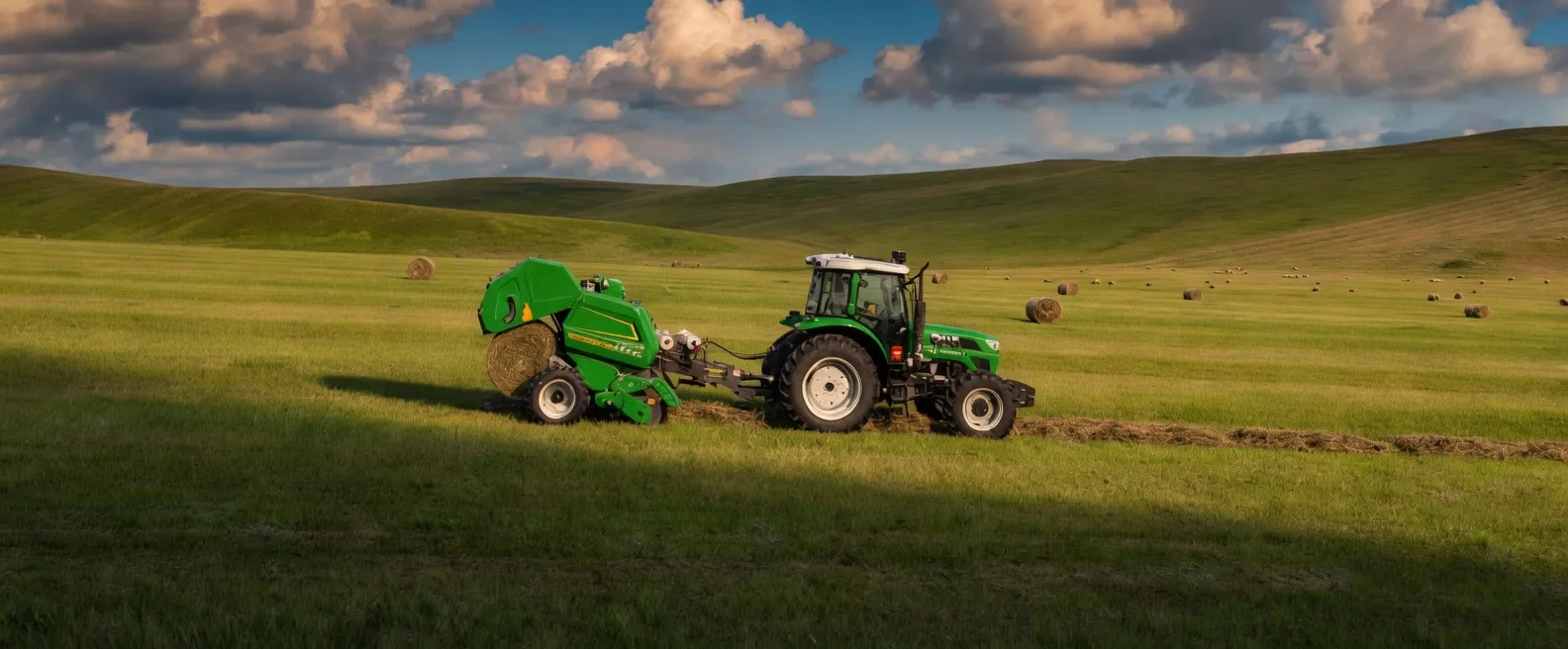
EverPower Baling Machinery Australia Pty Ltd — 27 Harley Crescent, Condell Park NSW 2200 — is the direct Australian operation of a national high-tech manufacturer with over 20 years of baler design and production experience. ISO 9001 certified, with a 32,000 m² factory, 180 staff, and a dedicated R&D centre, we have shipped more than 1,200 S9000 units to Australia and stand behind every machine with a genuine local warranty backed by locally-held parts stock. Our service philosophy is simple: keep Australian farms running rather than waiting. Contact us at +61 2 9708 3322 or [email protected], or read more on the About Us page.
Operator Reviews
“This thing is a weapon — 2.24 m pickup cleans up laid ryegrass like nothing else. I’m doing 850–950 bales a day with just me and the 6140R. The one-touch net is honestly addictive. Best money I’ve spent in years.”
“We run two S9000s now. Fourth-cut ryegrass in Gippsland gets thick and the old 1.8 m balers just couldn’t keep up. These hit 900–1,000 kg bales easy and the adjustable drawbar is a lifesaver on our hilly blocks. Support from the Melbourne warehouse has been unreal.”
“42,000 bales later and it’s still tying every knot and the bales stack three high on the truck without falling apart. The ISOBUS just talks straight to the Fendt screen. I run 14-hour days in 40-degree heat and it never misses a beat. Already put a second one on order.”
“36,000 bales on the clock now and still on the original knotters. Chains haven’t even needed adjusting. Bloody good gear for the money. First machine arrived with a bent drawbar pin (freight damage) but the EverPower boys had a new one on the courier the same day, no dramas.”
Frequently Asked Questions
Put 1,200+ Australian Farms’ Trust to Work
Contact EverPower for current stock, delivered-to-farm pricing, and a no-pressure technical discussion about whether the S9000 suits your operation.