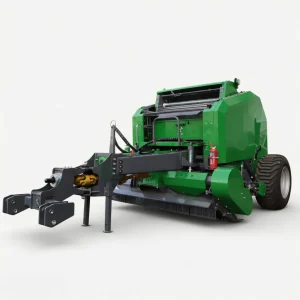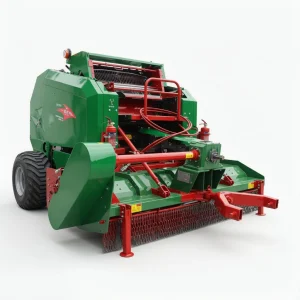
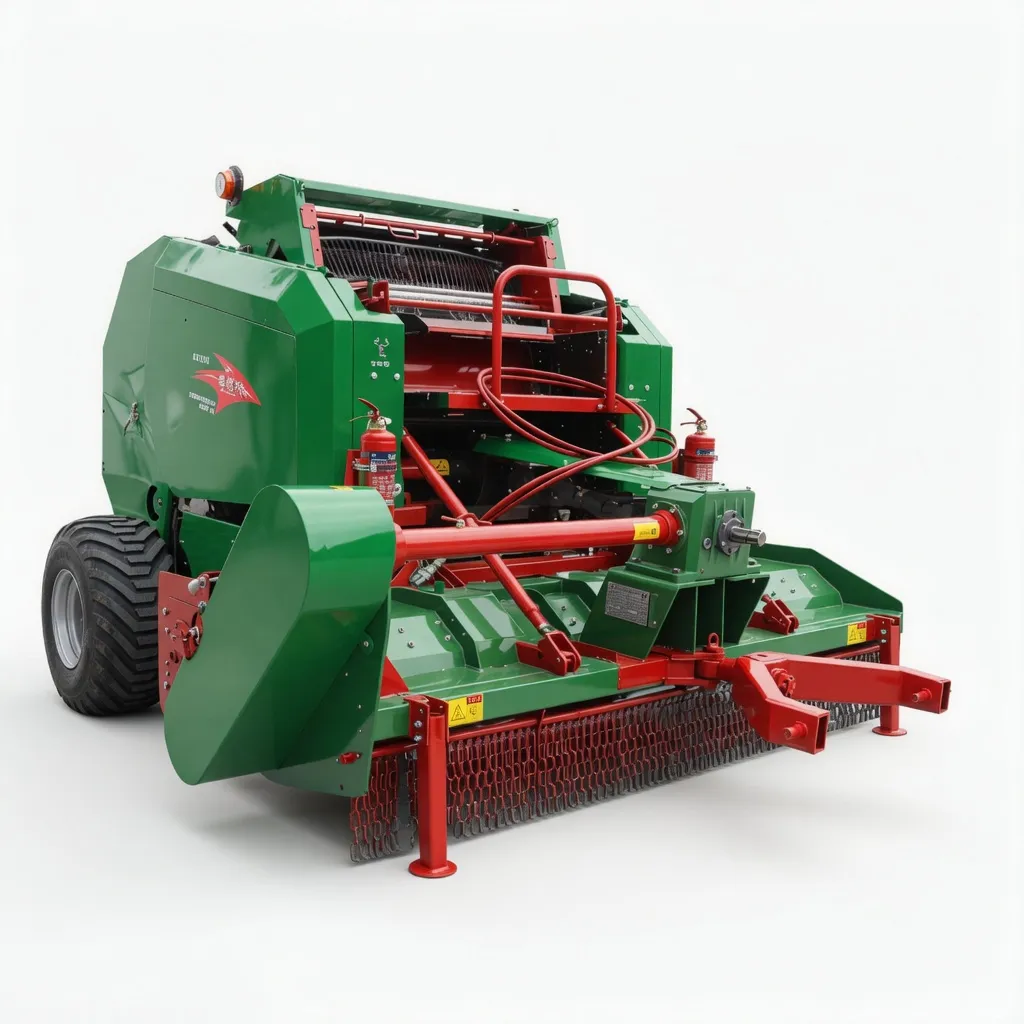
Description
Product Specifications
| No. | Parameter | Unit | Specification |
|---|---|---|---|
| 1 | Model Name | — | 9YG-1.0C Round Baler |
| 2 | Hitching Method | — | Tractive |
| 3 | Pickup Width | mm | 2,400 |
| 4 | Pickup Structure | — | Hammer Claw Type |
| 5 | Feeder Structure | — | Auger + Finger Roller + Drum |
| 6 | Chamber Mechanism | — | Drum Type |
| 7 | Chamber Width | mm | 1,250 |
| 8 | Chamber Diameter | mm | Φ1,000 |
| 9 | Rolling Drums | pcs | 16 (Drum) |
| 10 | Drum Diameter | mm | Φ222 |
| 11 | Baling Method | — | Automatic Net Wrapping |
| 12 | Matching Power | kW / hp | ≥ 69.8 / 95 |
| 13 | Structural Mass | kg | 3,198 |
| 14 | PTO Speed | r/min | 540 |
| 15 | Overall Dimensions | mm | 3800×2850×2200 |
| 16 | Bale Density Control | — | Sensor Control |
| 17 | Bale Size (Dia.×Width) | mm | Φ1,000 × 1,250 |
| 18 | Bale Density | kg/m³ | 115–200 |
| 19 | Productivity | bales/h | 40–80 |
| 20 | Wheelbase | mm | 2,100 |
Product Overview
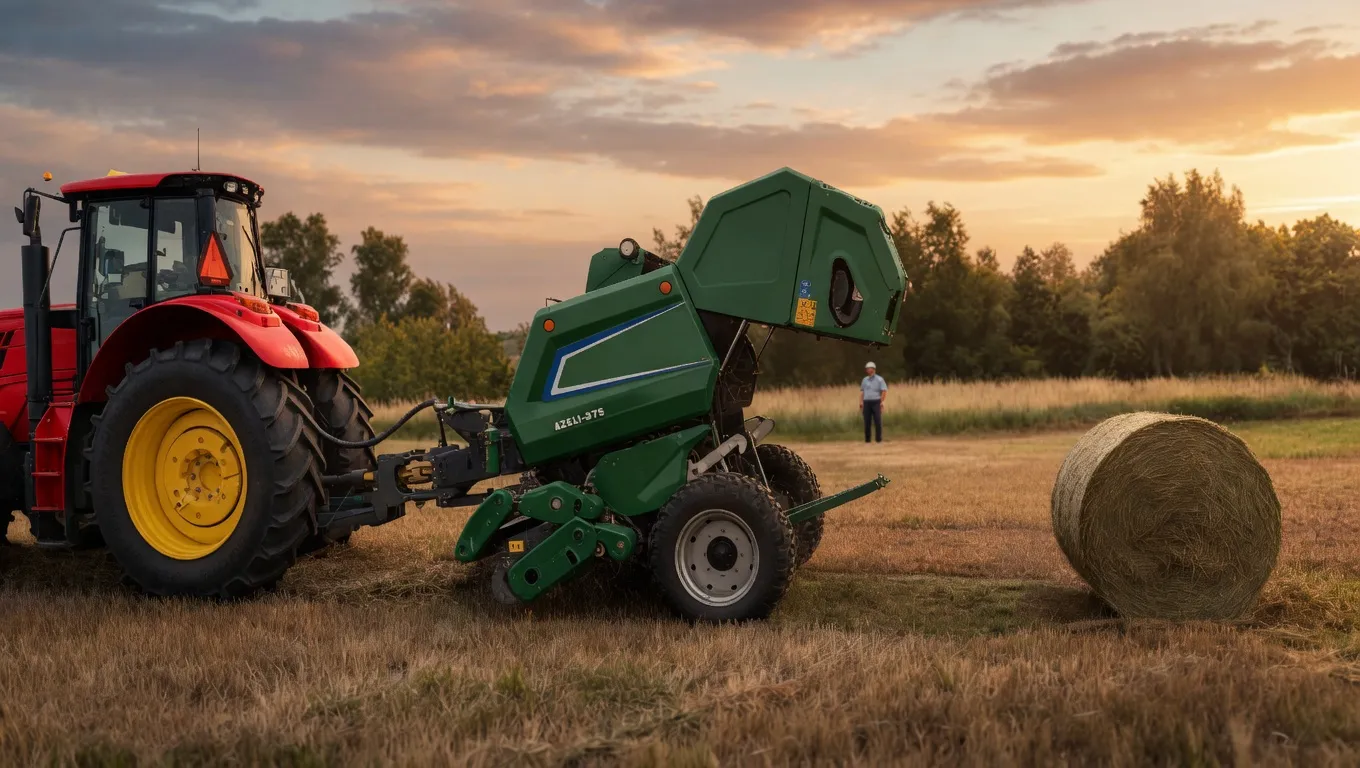
The 9YG-1.0C is the only machine in EverPower’s Australian range built specifically around the hammer-claw pickup — a design choice that reflects a genuine engineering response to Australian conditions rather than a simple product-line extension. Where spring-tooth pickups handle clean windrows of dry hay efficiently, they struggle on the range of conditions that Australian farms actually encounter: wet ryegrass that mats and bridges, standing post-harvest corn stover, high-stem tropical pasture species in Queensland, and the heavy, tangled windrows that coastal Tasmanian silage operations produce. The hammer-claw’s 18-claw grabbing action handles all of these where spring-tooth designs stall.
The pickup is the headline feature, but the full picture includes a 2,400 mm working width — the widest of any machine in EverPower’s lineup — and a three-stage auger-plus-finger-roller-plus-drum feeding system that breaks up dense, tangled material before it reaches the compression chamber. That combination: wide hammer-claw pickup, three-stage feed, 16-drum Φ1,000 mm chamber, and sensor-controlled netter, is the complete answer to the baling challenges that defeat simpler machines on difficult Australian crops.
At 3,198 kg and 3,800 × 2,850 × 2,200 mm working size, the 1.0C is manageable behind tractors from 95 hp upward at 540 r/min PTO. It produces Φ1,000 × 1,250 mm bales at 115–200 kg/m³ density and 40–80 bales per hour. Compatible tractors include John Deere 5M and 6M Series (95–140 hp), Case IH Farmall 100–140 hp, and New Holland T6 Series (100–140 hp) — covering the mid-to-large tractor bracket common on the operations that typically need hammer-claw capability.
Why the Hammer Claw Changes Everything
2,400 mm Hammer-Claw Pickup — Australia’s Widest in This Class
The 2,400 mm working width is the broadest pickup fitted to any machine in EverPower’s current range, and the hammer-claw mechanism is the reason it can be this wide without generating blockages. Where spring-tooth tines rely on material being already organised into a windrow they can slide under, the 18 hammer claws actively grab and orient incoming material — including standing or tangled crop — and direct it into the feeder. This active orientation is what allows the pickup to work cleanly at full width even on the matted, lying-flat windrows that occur after rain events or on dense tropical pastures in North Queensland and the NT.
Three-Stage Feed — Auger, Finger Roller, Drum
The auger stage gathers material from the full 2,400 mm pickup width and centralises it before it enters the chamber — preventing the edge-loading density variation that wide-pickup machines frequently produce when they feed directly into narrower chambers. The finger-roller stage straightens and smooths the flow, and the drum stage delivers it evenly across the 1,250 mm chamber width. On crops like sorghum silage, tropical grass, and post-harvest corn stover, the auger stage specifically breaks up the long, stiff bundles that cause single-stage balers to block within the first hundred bales of a difficult crop.
16-Drum Chamber, Sensor Density — 40–80 Bales per Hour
The 16 × Φ222 mm drums build compression uniformly across the full Φ1,000 mm chamber diameter. Sensor control monitors internal pressure continuously and fires the automatic netter when the preset density is confirmed — the same system used across EverPower’s larger machines, scaled to the 1.0C’s bale size. At 40–80 bales per hour, the output rate is slightly lower than the spring-tooth 1.0 on light dry crops, but on the difficult materials the 1.0C was designed for, the spring-tooth alternatives simply don’t achieve 40–80 bales per hour at all.
Automatic Net Wrapping, 540 rpm PTO
The auto net-wrap system fires on sensor trigger, applies 2–3 passes in under 15 seconds, cuts cleanly, and the door cycles. The 540 rpm PTO input suits the mid-range and older tractors common on Australian properties that run 95–120 hp units purchased before 1,000 rpm PTO became the norm — another design specification that reflects real fleet demographics rather than theoretical ideal conditions.
Handles Wet & Dry — No Re-Setup Required
The 9YG-1.0C moves between crop types and moisture conditions without configuration changes. Wet ryegrass in the morning and dry cereal straw in the afternoon require nothing more than a density-target adjustment on the control screen. The hammer-claw pickup maintains its action regardless of crop condition — it does not rely on material being dry and light to achieve clean pickup, which is the hidden limitation of spring-tooth designs that only becomes apparent after a rain event.
Working Principle — Crop In, Bale Out
18 claws actively grab and orient incoming material across the full 2,400 mm working width — including standing, matted, or tangled crop that defeats spring-tooth pickups. Hydraulic float adjusts tine height to terrain automatically.
The auger gathers material from the full pickup width and centres it before the finger-roller stage, preventing the edge-heavy density variation that wide pickups feeding narrow chambers typically produce.
16 × Φ222 mm drums build bale pressure uniformly. Sensor feedback monitors chamber pressure in real time — the netter fires only when the preset density is confirmed, removing timing variability from bale weight entirely.
The net system fires automatically, applies 2–3 wraps in under 15 seconds, cuts cleanly, and the door cycles. Operator maintains forward travel — no stop required at any point in the cycle.
On full-auto mode, operators working a 12-hour shift on difficult crops — wet ryegrass, tropical grass, high-stem pasture — report maintaining consistent 45–65 bale/hour rates on material where spring-tooth alternatives either block repeatedly or produce unsatisfactory bale shape. The control display shows live bale count and density reading; ISOBUS connection is available for compatible tractors.
Applications — The Crops the 1.0C Was Made For
Wet & High-Moisture Silage — Ryegrass, Kikuyu, Mixed Pasture
The combination of hammer-claw pickup and three-stage feed makes the 1.0C the most capable machine in EverPower’s range on wet, high-moisture silage crops. In coastal Gippsland, the Hawkesbury lowlands, or humid tropical regions of North Queensland, where morning dew or post-rain conditions regularly push crop moisture above 65%, the 1.0C collects and forms bales that spring-tooth machines either refuse cleanly or produce with irregular density. Dairy farms in these regions consistently cite the hammer-claw pickup as the reason they selected the 1.0C over lighter machines with lower price tags.
Tropical & Subtropical Pastures — Native Grass, Mitchell, Couch, Kikuyu
Native grasses, Mitchell grass, couch, and kikuyu present a combination of high stem strength, tangled growth habit, and variable moisture that challenges most baler designs. The 1.0C’s hammer claws handle these materials consistently where spring-tooth tines jam, and the auger feed stage breaks up the long, fibrous stems before they reach the chamber. Properties in North Queensland, the NT, and the Kimberley running large-scale cattle operations have found the 1.0C the first machine to handle their diverse native pasture mix reliably across a full working day.
Corn Stover & High-Stem Crop Residue
The hammer-claw pickup was originally developed for standing corn stover collection — a task that spring-tooth pickups fail at almost universally. The 1.0C handles this application in the same configuration as wet ryegrass silage, with no hardware changes required. Farms in Queensland and NSW growing corn for grain now have a practical means of collecting the residue without hiring a separate specialist machine or contractor for the stover pass.
Conventional Hay in Difficult Conditions
Even on conventional hay crops, the 1.0C outperforms spring-tooth balers when conditions are less than ideal — post-rain, heavily lodged, or where the windrow has been rained on and partially matted. The hammer-claw action works equally well on dry and wet material, meaning the 1.0C doesn’t require the operator to wait for crop to dry to a level where the pickup becomes effective. In short-weather-window operations, that ability to start baling while the crop is still slightly damp can be the difference between making a cut and losing it.
Maintenance — Hammer Claw Specifics
Daily — Claw Inspection First
The hammer claws are the highest-wear component on the 1.0C in tough conditions. Before each shift, walk the claw row and check for bent, cracked, or seized claws — a seized claw that fails to release reduces pickup efficiency and can damage the claw mounting. The claw action should be free and springy by hand. Grease the six main daily nipples, check the net knife, and verify PTO engagement. On heavy stover or tropical grass operations, inspect claws after every 200 bales during peak-load conditions.
Every 300–400 Bales
Grease the 16 drum bearings through side-panel nipples. Check chain tension on both drive sides. Inspect the auger flight bearings at each end for heat — the auger works harder on fibrous crops than on grass hay, and bearing failure in the auger is the most common non-claw failure mode on the 1.0C. Top up the auto-lube tank. Clean the density sensor face.
After Corn Stover or Tropical Grass Operations
Blow the entire feeder path — auger, finger rollers, chamber entry — with compressed air before parking. Silica-rich dust from these crop types accelerates wear on feeder surfaces disproportionately if allowed to cake and abrade. Inspect auger-to-roller clearance and confirm it is within the manufacturer’s tolerance. These crops are harder on the feeder system than grass or hay and benefit from a post-shift clean rather than only an end-of-season service.
End of Season
Full grease service across all lubrication points. Replace worn claws as a complete set — mixing worn and new claws creates an uneven pickup action that affects bale formation quality through the following season. Hydraulic oil and filter change. Inspect the auger flight welds for fatigue cracking, particularly near the flight-to-shaft welds at each end. EverPower holds 1.0C-spec claw sets and auger components at the Condell Park depot.
Why the 9YG-1.0C Is Australia’s Wet-Condition Answer
Handles wet, matted, standing, and tangled crop where spring-tooth designs stall. Purpose-designed for Australia’s challenging season conditions.
Widest pickup in the EverPower range. Covers the broadest combine-header residue widths and the widest pasture windrows in a single pass.
Auger + finger roller + drum eliminates the bridging and blockage that single-stage feeders produce on fibrous tropical and stover crops.
Whole-machine cover from EverPower Australia. Hammer-claw sets, auger components, and bearings stocked at Sydney for 72-hour national delivery.
About EverPower Baling Machinery Australia
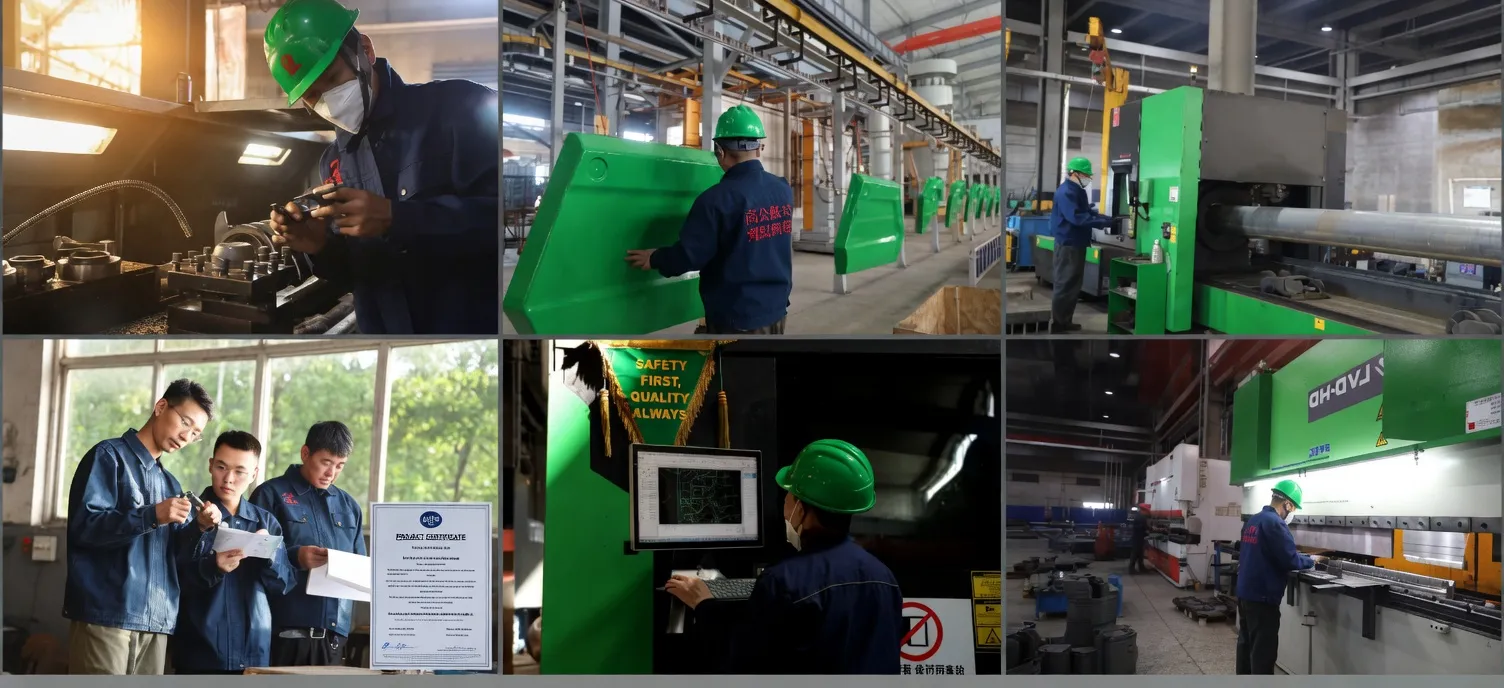
EverPower Baling Machinery Australia Pty Ltd — 27 Harley Crescent, Condell Park NSW 2200 — is the direct Australian arm of a high-tech manufacturer with ISO 9001 certification, a 32,000 m² factory, 180 staff, and a dedicated R&D centre. Every machine is backed by a genuine Australian warranty administered from our Sydney office. Spare parts are stocked locally for 72-hour national delivery. We do not process warranty claims offshore.
Call +61 2 9708 3322, email [email protected], or read more at silage-baler.com/about-us.
Frequently Asked Questions
Handle Every Crop, Every Condition
Talk to EverPower Australia about the 9YG-1.0C for your wet-condition and difficult-crop applications — no obligation, same-day response during business hours.