Description
Product Specifications
| No. | Parameter | Unit | Specification |
|---|---|---|---|
| 1 | Model Name | — | 9GS-5.0 Double-Blade Mower |
| 2 | Structure Type | — | Reciprocating Type |
| 3 | Hitching Method | — | Traction Type |
| 4 | Matching Power | kW | 20–30 |
| 5 | Cutting Width | m | 5.0 |
| 6 | Overall Dimensions (L×W×H) | mm | 2800 × 5630 × 1500 |
| 7 | Operating Speed | km/h | 6–7 |
| 8 | PTO Speed | r/min | 540 |
| 9 | Side Output Shaft Speed | r/min | 1,240 |
| 10 | Average Cutting Height | mm | 60–70 |
| 11 | Productivity | ha/h | 2.4–2.8 |
| 12 | Operators | person | 1 |
| 13 | Structural Mass | kg | 750 |
Product Overview
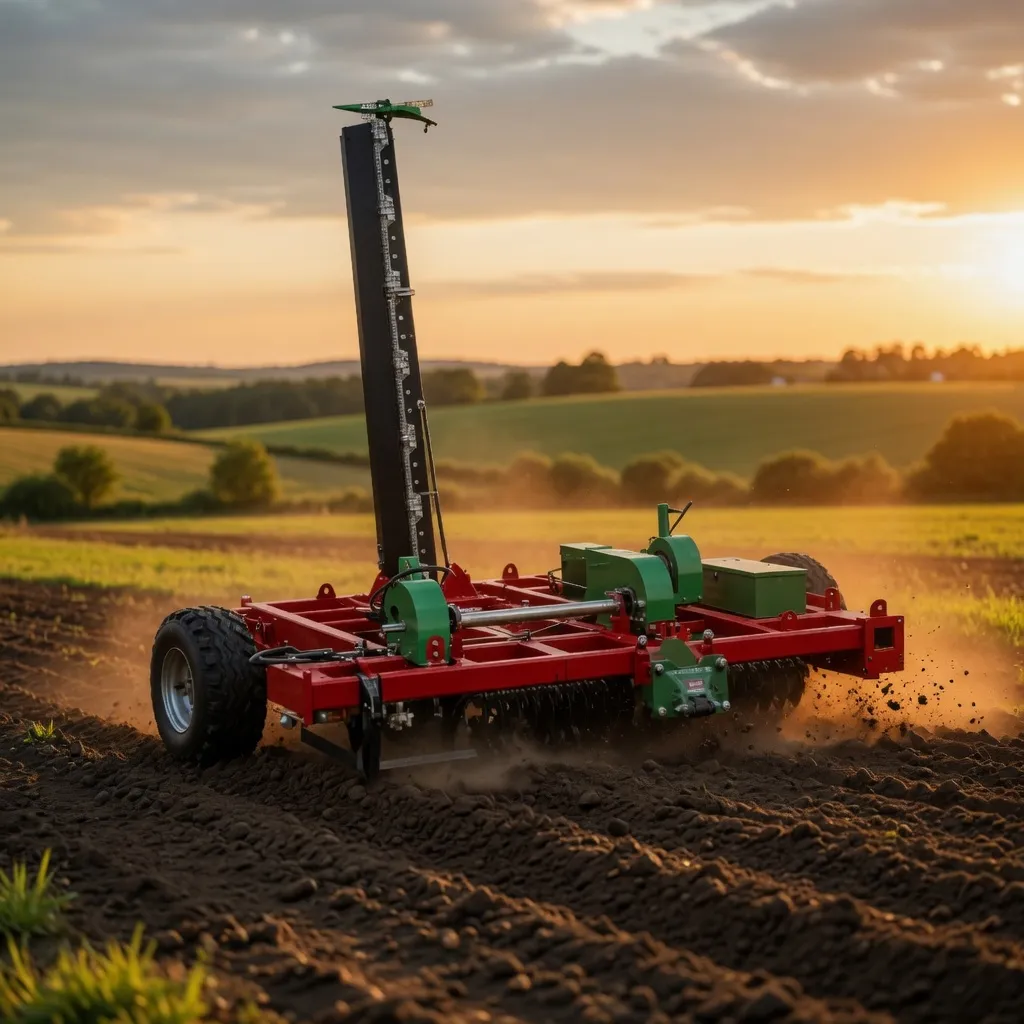
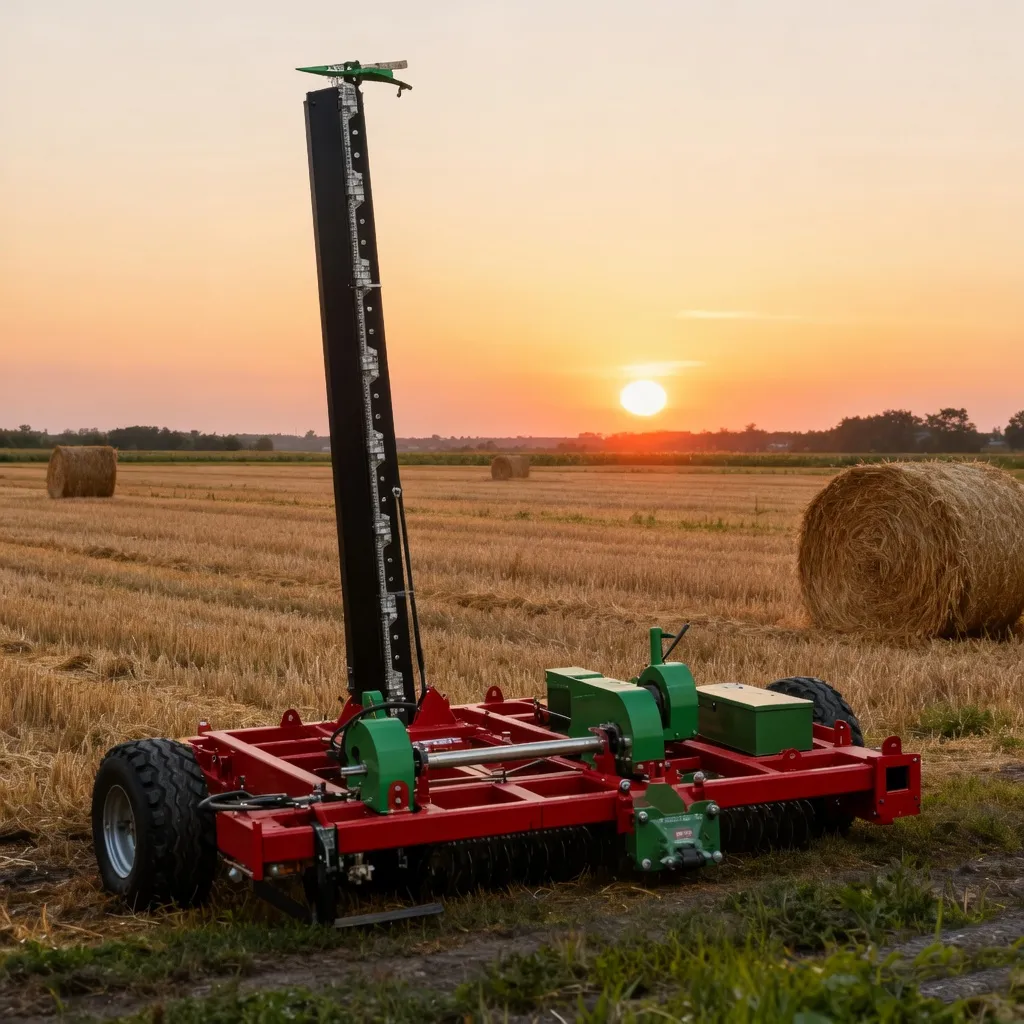
The headline specification that stops people mid-scroll is the power requirement: 20–30 kW for a 5 m working-width mower. That figure demands explanation, because at first it appears to contradict everything that 5 m mowing equipment has conventionally required. Standard disc mowers at 5 m working width typically need 60–90 kW to run the high-speed rotary discs that define their cutting mechanism. The 9GS-5.0 achieves the same 5 m coverage at 2.4–2.8 ha/h through a fundamentally different approach: the double-blade reciprocating mechanism.
A double-blade reciprocating system runs two opposing cutter bars moving in counter-phase — as one bar moves left, the other moves right — which cancels the lateral vibration that plagues single-blade reciprocating designs at wide working widths. The cancellation of lateral vibration is what allows the 9GS-5.0 to run a 5 m cutter bar behind a 20 kW compact tractor without shaking the machine apart or requiring the operator to reduce forward speed to control vibration. The PTO input is 540 rpm, with an internal gearbox stepping up to the 1,240 rpm required for the side output shaft that drives the cutter mechanism at working speed.
At 750 kg tare and 2,800 × 5,630 × 1,500 mm overall dimensions, the 9GS-5.0 is the widest-cutting machine in the EverPower range that can be run behind a compact tractor. John Deere 5E Series (25–35 kW), Kubota M Series (20–30 kW), and New Holland’s compact T4 range are all compatible — the tractors that smaller farms, hobby properties, and rural enterprises are already running for general maintenance tasks. For operations that need 5 m coverage but cannot justify or afford the 70–90 kW tractor a rotary disc mower demands, the 9GS-5.0 is the machine that makes that coverage attainable.
Technical Features — The Double-Blade Advantage
Counter-Phase Double Blade — Vibration Cancelled at 5 m Width
Single-blade reciprocating mowers at 5 m width produce lateral vibration that at working speed becomes structurally problematic: the mass of the blade bar moving left and right creates oscillating lateral forces that stress the frame, the hitch point, and — in severe cases — the tractor’s rear axle. The 9GS-5.0 resolves this with a counter-phase design: two blade bars move in opposite directions simultaneously, so when the left-travelling forces from one bar are at their peak, the right-travelling forces from the other are also at their peak. The net lateral force on the frame approaches zero, and the machine runs smoothly at full speed across the full 5 m width behind a 20 kW tractor that would be shaken to a standstill by a single-bar alternative.
5 m Coverage at 20–30 kW — The Economic Case
Consider the real-world cost comparison a farm faces when evaluating mowing equipment for 5 m coverage. A rotary disc mower at 5 m requires a 70–90 kW tractor — if the farm doesn’t already have one, the tractor purchase to support the mower is the dominant cost of the system, not the mower itself. The 9GS-5.0 runs behind a 20 kW compact tractor the farm already owns. The total system cost — machine plus existing tractor versus machine plus tractor upgrade — can differ by AU$80,000–$150,000. For operations where 5 m daily coverage is genuinely needed but the capital for a large-tractor system is not available, the 9GS-5.0 closes that gap completely.
540 rpm / 1,240 rpm Step-Up Gearbox
The internal gearbox steps the 540 rpm standard PTO input up to 1,240 rpm for the side output shaft that drives the double-blade cutter mechanism. This step-up ratio is what allows the cutter bars to operate at the blade-speed needed for clean cutting while accepting the 540 rpm input universal to compact tractors in the 20–30 kW class. No speed adaptor, no slip clutch, no special PTO configuration — plug in the standard 540 rpm shaft and the machine handles the rest.
60–70 mm Consistent Cut Height
The 60–70 mm cut height is agronomically sound across Australian pasture species: above the ryegrass growing-point threshold (typically 50–55 mm), within the preferred range for perennial pastures, and above the 50 mm minimum for kikuyu node preservation. The skid-shoe height adjustment allows setting within this range for the specific species mix in each paddock, and the counter-phase blade mechanism maintains consistent height across the full 5 m width even on undulating terrain because the opposing blade forces keep the cutter bar stable rather than bouncing.
750 kg — Compatible with Compact Tractor Tow Limits
At 750 kg, the 9GS-5.0 falls comfortably within the hydraulic lift and drawbar tow capacity of compact tractors in the 20–30 kW class. Kubota M5040 (28 kW) has a rear hydraulic lift capacity of approximately 2,500 kg and a drawbar pull sufficient for 750 kg at 6–7 km/h. John Deere 5E Series (27 kW) has comparable figures. No front-end ballast is needed to maintain steering contact at the 9GS-5.0’s tow weight — an important practical point on compact tractors where adding ballast reduces versatility for other tasks.
How the 9GS-5.0 Works in the Field
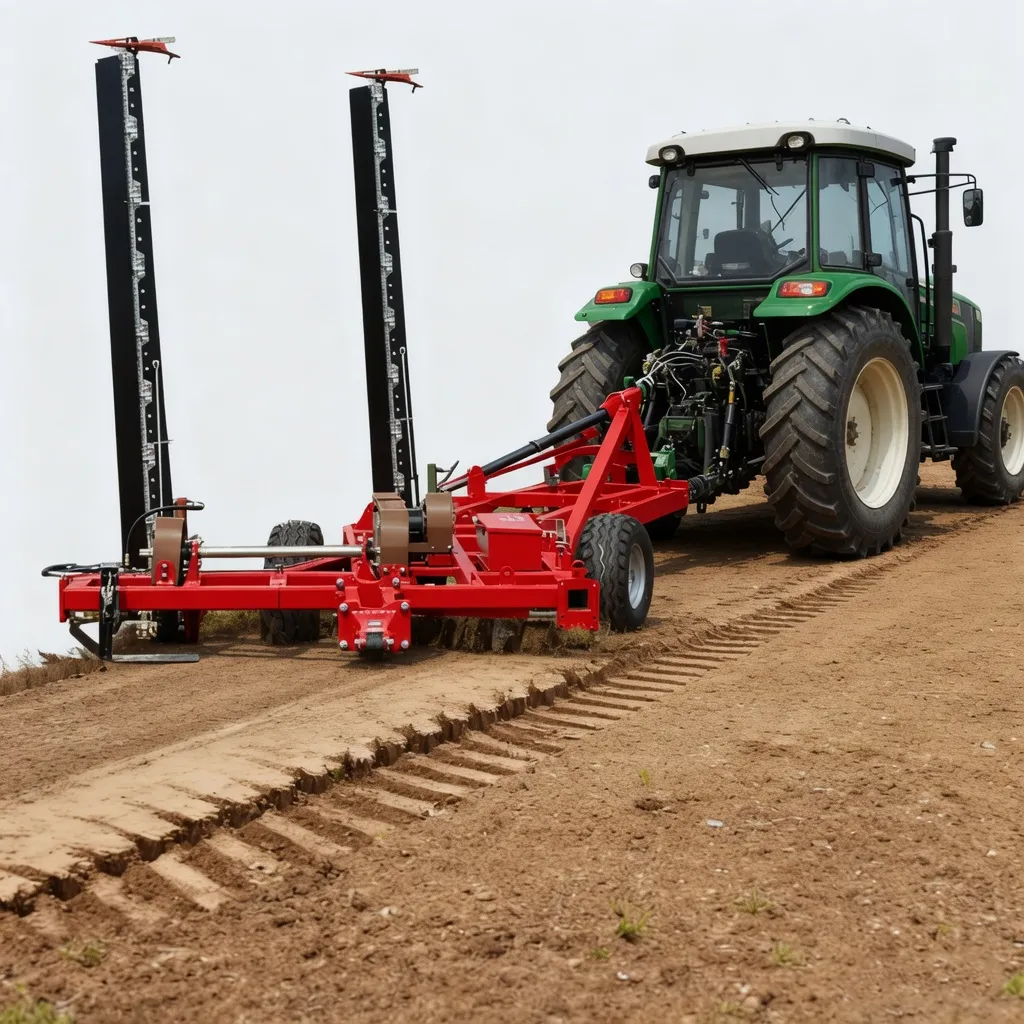
Connect the standard 540 rpm PTO shaft. The internal step-up gearbox brings the side output shaft to 1,240 rpm for cutter operation. Engage at low engine speed and bring up to 540 rpm before increasing ground speed.
Both blade bars engage simultaneously in counter-phase motion. The 5 m cutting width cleans up the full swath in a single pass at 6–7 km/h. Lateral vibration is cancelled by the opposing blade forces — the machine tracks smoothly behind a compact tractor.
Cut material lies in a 5 m wide swath at 60–70 mm height. For hay production, the swath wilts in place before raking. For silage, a wheel rake or rotary rake consolidates the swath before baling. No second mowing pass required.
At headlands, reduce forward speed and disengage PTO before the full turn, then re-engage at low speed before increasing to working speed on the next pass. The 5,630 mm working width means relatively few passes cover a large paddock quickly.
A practical note on daily coverage: at 6.5 km/h working speed on a standard 20 ha paddock with 90% field efficiency, the 9GS-5.0 covers 14–16 ha per day. That is the full mowing requirement for a mid-size lifestyle property or small grazing operation in a single day’s work — no multi-day mowing programme, no tractor tied up across multiple shifts.
Applications — Where 5 m Coverage Matters at Compact Tractor Scale
Lifestyle & Hobby Farms — Large Paddocks, Compact Tractors
The gap in the mowing market that the 9GS-5.0 fills most directly is the lifestyle or hobby farm with 20–80 ha of grass to manage and a 25–30 kW compact tractor as the primary machine. These properties need 5 m coverage to cut their paddocks in a practical timeframe, but the capital cost and running cost of a large-tractor system is disproportionate to the scale of the operation. The 9GS-5.0 provides the coverage rate that makes the work achievable in a day while running behind the tractor already in the shed.
Pasture Maintenance on Unimproved Country
Semi-improved and unimproved pasture — the paddock type covering millions of hectares of beef and sheep country across Queensland, NSW, WA, and SA — contains the stone contact risk that makes high-speed rotary disc mowers genuinely dangerous to operate without careful prior paddock preparation. The 9GS-5.0’s reciprocating mechanism is stone-forgiving: a blade strike damages the blade, not the disc or housing. For operations managing unimproved country where full stone removal is not practical, the double-blade reciprocating design is the appropriate choice.
Roadside and Firebreak Management — Wide Coverage, Low Cost
Council and rural property managers maintaining roadside corridors, firebreaks, and easements value the 9GS-5.0 for the 5 m coverage that reduces pass count on long linear cuts, combined with the compact tractor compatibility that keeps operating costs low. A 10 km firebreak mown at 5 m width takes approximately 35–40 tractor hours at 6.5 km/h with the 9GS-5.0 — a manageable seasonal task behind a compact tractor rather than a multi-day operation requiring specialist equipment.
Small Hay Operations — Pre-Rake Mowing
Small hay operations producing 100–400 bales per year from paddocks up to 15 ha find the 9GS-5.0 covers the mowing phase in 5–7 hours, leaving the afternoon for a rotary rake pass and the following morning for baling. The wide 5 m swath laid by the 9GS-5.0 also provides good initial wilt surface area before raking, which can shorten the overall cut-to-bale timeline on warm days — a useful feature for operations working against narrow weather windows.
Maintenance — Counter-Phase Mechanism Service
Daily Before Operation
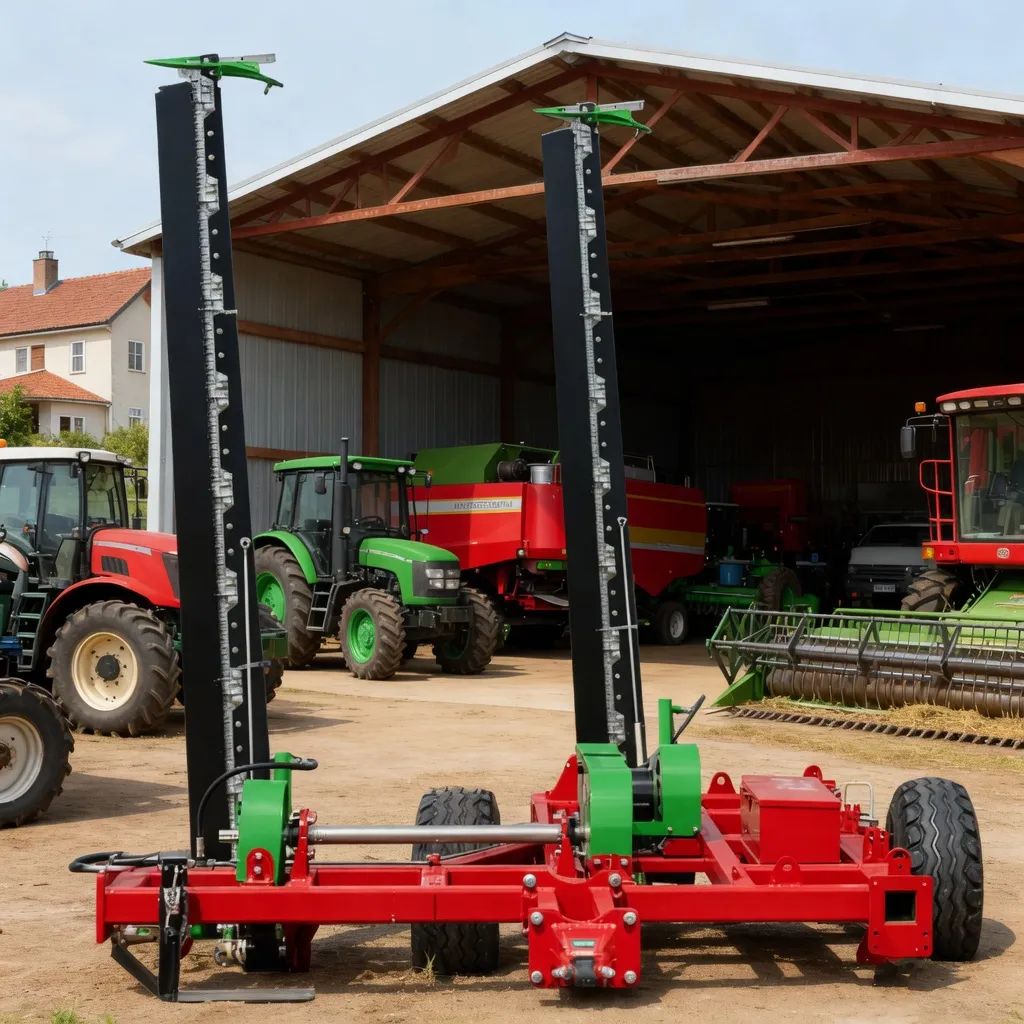
The double-blade design requires inspection of both cutter bars rather than one — walk the full 5 m length and check all blades on both bars for chips or cracks. Because the two bars operate in opposition, a damaged blade on one bar creates an imbalance in the counter-phase cancellation — the machine will vibrate noticeably if a blade on one bar is significantly heavier or lighter than its counter on the other bar. Replace damaged blades and check the counter-bar for matching wear condition. Grease the two main gearbox nipples and the PTO input shaft sleeve.
Every 30–50 Operating Hours
Inspect the step-up gearbox oil level through the sight glass — the 540-to-1,240 rpm ratio means the gearbox works continuously at speed and oil level must be maintained. Check the blade-drive link mechanism on both sides for any wear at the pin connections — the drive links on a double-blade design carry the opposing motion loads that define the mechanism’s vibration-cancelling function, and link wear is the primary source of gradually increasing vibration that develops on high-hour machines. Replace worn links in matched pairs.
End of Season
Replace all blades on both cutter bars as a complete matched set — mixing worn and new blades between the two bars creates a mass imbalance in the counter-phase system. Inspect the cutter bar frame welds at both wing fold points for fatigue cracking — the counter-phase mechanism loads these points differently from single-bar designs and they benefit from a thorough weld inspection after each season. Change the step-up gearbox oil annually.
The 9GS-5.0: Five Metres, One Compact Tractor
Vibration cancelled at 5 m width — runs smoothly behind a 20 kW tractor where a single-bar alternative would shake.
System cost 80–150k less than a disc mower alternative requiring a 70–90 kW tractor the farm doesn’t have.
Blade damage on stone contact, not disc shattering. Safe on unimproved pasture without prior stone picking.
Covers 14–16 ha per day — a full small-farm mowing requirement done without multi-day scheduling.
About EverPower Baling Machinery Australia
EverPower Baling Machinery Australia Pty Ltd — 27 Harley Crescent, Condell Park NSW 2200 — is the direct Australian arm of an ISO 9001-certified manufacturer with a 32,000 m² factory, 180 staff, and a dedicated R&D centre. Every machine carries a genuine Australian warranty administered locally, backed by spare parts stocked for 72-hour national delivery.
📞 +61 2 9708 3322 | ✉️ [email protected] | silage-baler.com/about-us
Frequently Asked Questions
Five Metres of Coverage — One Compact Tractor
Contact EverPower to confirm the 9GS-5.0 matches your tractor and mowing programme. Pricing and stock available same day.