Every Australian farmer who produces silage or hay faces the same annual decision: hire a contractor or own the equipment. Both options deliver bales, but they carry fundamentally different risk profiles, cost structures, and operational constraints. The answer depends on volume, timing sensitivity, and how much control over the quality of the finished product the farm requires.
The Break-Even Calculation
The financial case for ownership starts with a simple comparison: the annual cost of owning a round baler versus the annual cost of contractor charges for the same volume of bales. Contractor rates in eastern Australia typically range from AUD 12 to 25 per bale for baling only, or AUD 22 to 40 per bale for baling plus wrapping. These rates vary by region, season demand, and whether the contractor provides the forage processing (mowing, raking) as well.
Ownership costs include the annual depreciation of the machine, finance costs if applicable, annual maintenance and consumables (net wrap, lubricants, replacement parts), and the opportunity cost of the operator’s time. For a mid-range round baler purchased at AUD 35,000 to 45,000 with a 15-year service life, the annual ownership cost — including depreciation, maintenance, and consumables — is approximately AUD 4,000 to 6,000 per year. At a contractor rate of AUD 18 per bale, the break-even point is approximately 250 to 350 bales per year. Farms producing more than this volume annually are paying more for the contractor than they would spend on ownership. Farms producing less may find contractor hiring more economical unless timing and quality control factor into the calculation.
+ operator time
+ fuel (tractor share)
500 bales = $9,000–$17,500
800 bales = $14,400–$28,000
The Hidden Cost of Waiting for the Contractor
The contractor rate per bale is the visible cost. The invisible cost is the forage quality lost while waiting for the contractor to arrive. During peak baling season, contractors work through a queue of clients, and the farm that is fifth in the queue may wait 3 to 7 days after its crop is ready before the baler arrives. During that waiting period, the wilted windrow continues to lose dry matter through respiration, leaf shatter, and weather exposure. Research indicates that each additional day of field exposure after the target moisture is reached costs approximately 2 to 4 percent of the crop’s dry matter. For a farm producing 500 bales, a 3-day wait costs the equivalent of 30 to 60 bales worth of dry matter — feed that never reaches the herd. That lost feed has a replacement value of AUD 3,000 to 9,000 at current supplementary feed prices.
Quality Control: Baling on Your Terms
Owning the baler means controlling every variable that affects bale quality: the moisture at which the crop is baled, the chamber pressure setting, the bale density, the time between baling and wrapping, and the number of film layers applied. A contractor makes these decisions based on efficiency across multiple clients, not necessarily on what is optimal for your specific crop, your herd’s nutritional requirements, or your storage conditions. The contractor may bale at a slightly different moisture than you would choose, may set a lower chamber pressure to increase throughput, and may wrap with 4 layers where 6 would better suit your 12-month storage plan. These compromises are rational for the contractor’s business model but may not align with the farm’s feed quality objectives.
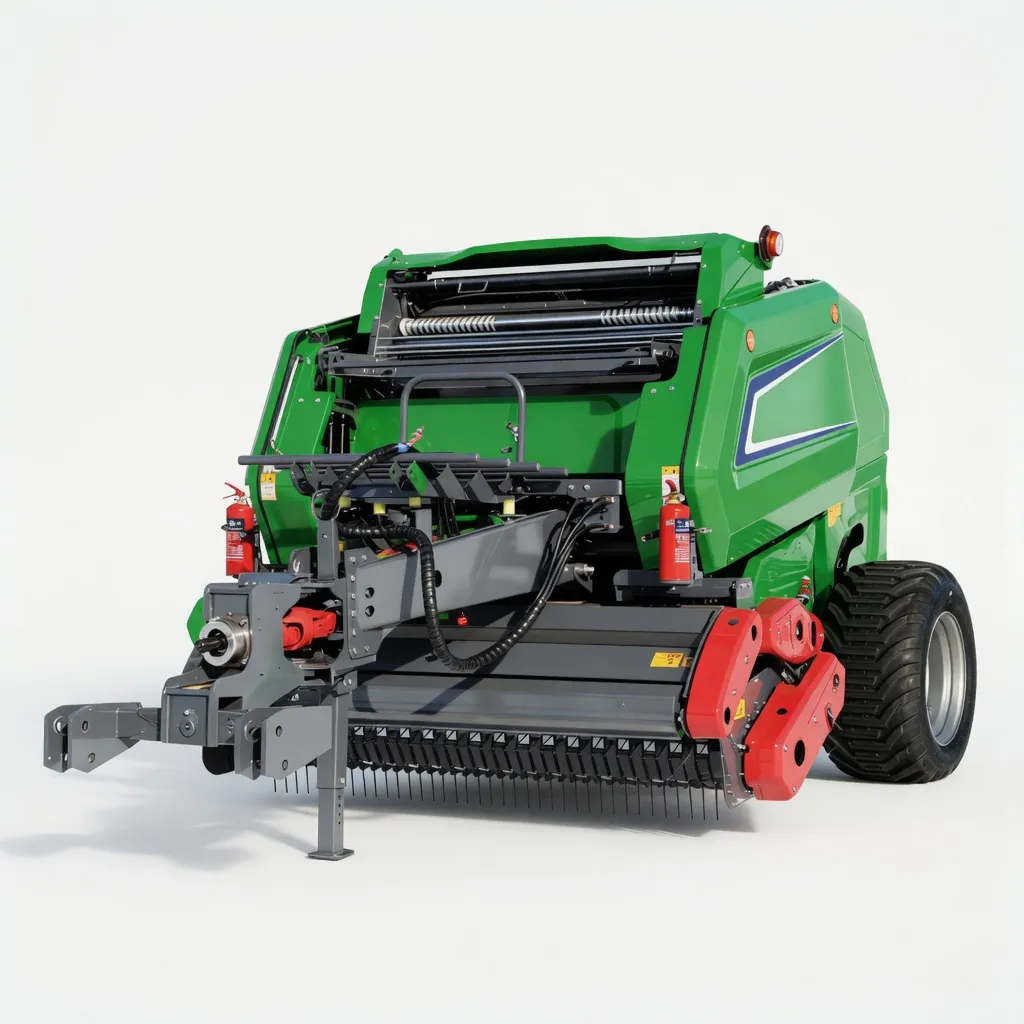 Owning the baler means baling when the crop is ready, not when the contractor is available — timing control is the hidden advantage of ownership
When Hiring a Contractor Still Makes Sense
Ownership is not the right answer for every operation. Farms producing fewer than 150 to 200 bales per year may find that the annual ownership cost exceeds the contractor charge, particularly if the farm already has a reliable contractor relationship with consistent availability. Properties where the baling season is very short (a single cut per year) generate low annual utilisation of the machine, extending the payback period. Farms without a suitable tractor (minimum 35 to 60 PTO hp for compact balers, 60 to 140+ PTO hp for commercial models) would need to invest in tractor capacity as well, which shifts the break-even calculation significantly. In these situations, hiring a contractor remains the more economical approach — provided the waiting time and quality compromises are acceptable.
Flexibility for Multiple Cuts and Opportunistic Baling
Ownership transforms baling from a scheduled contractor event into an on-demand capability. When an unexpected growth flush produces surplus pasture mid-season, the farm can bale it within hours of the decision rather than booking a contractor who may not be available for a week. When a weather window opens for 36 hours between rain events, the farm can mow and bale in a single operation rather than waiting for the contractor’s schedule to align. This flexibility is particularly valuable in higher-rainfall dairy and livestock regions of Australia where short weather windows and multiple growth flushes through the season create baling opportunities that a contractor-dependent farm cannot capture.
Revenue Generation: Contracting for Neighbours
A silage baler that sits idle after the farm’s own baling is complete represents underutilised capacity that can generate additional revenue. Many farm-owned balers produce income by offering baling services to neighbouring properties during the season. This contracting income offsets a significant portion of the ownership cost and, in some cases, covers the entire annual cost of the machine. The transition from “farmer who owns a baler” to “farmer who also offers baling services” is a natural extension of the ownership decision and creates a revenue stream that fundamentally changes the break-even arithmetic.
Recommended Product: EverPower 9YG-1.0 Round Baler
For farms considering the transition from contractor dependence to baler ownership, the EverPower 9YG-1.0 Round Baler provides an entry point that minimises the capital commitment while delivering the timing control and quality advantages of ownership. The 1.0m bale format matches the handling capacity of standard front-end loaders, the low tractor requirement (35+ PTO hp) avoids the need for a tractor upgrade, and the purchase price sits well below the threshold where break-even volumes become impractical for small to mid-size operations.
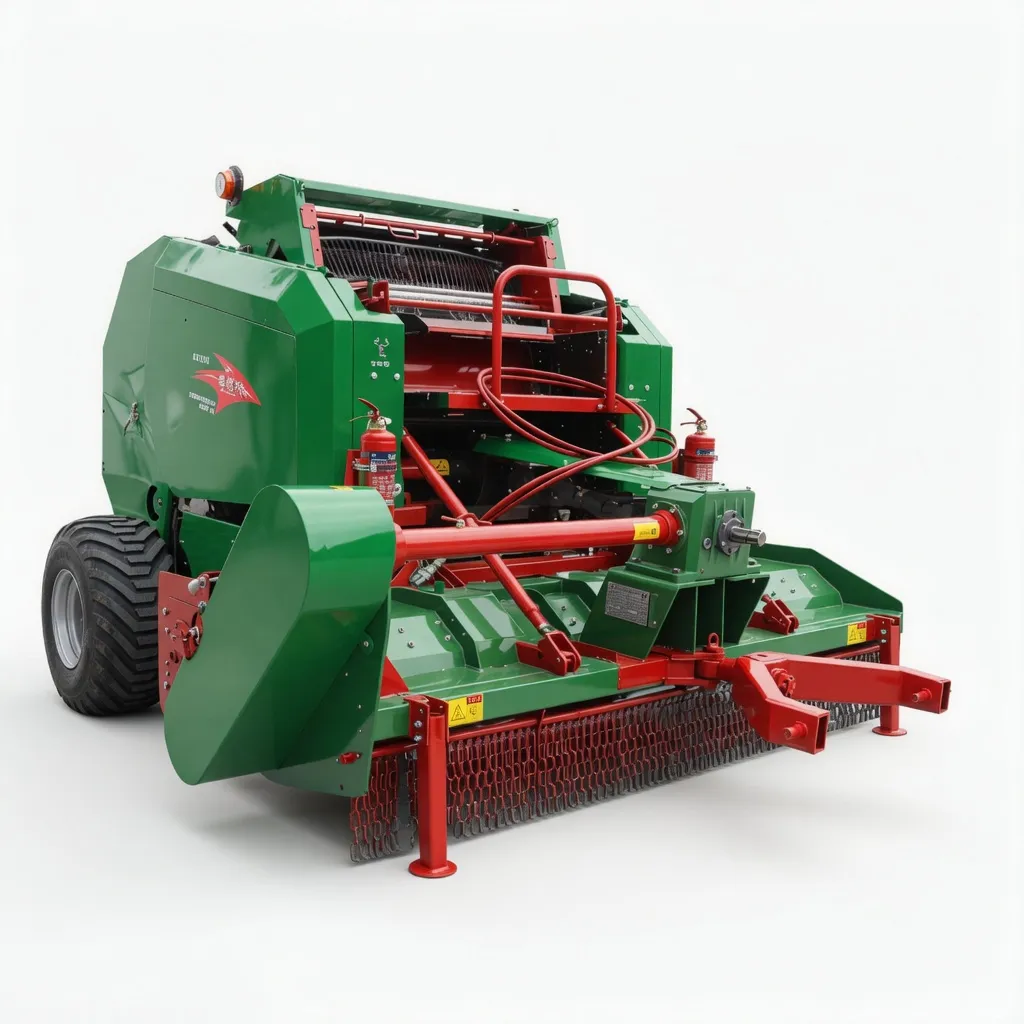
Related reading: See which baler size suits small to mid-size sheep farms: Best Round Baler for Small to Mid-Size Sheep Farms.
EverPower Baling Machinery Australia Pty Ltd
27 Harley Crescent, Condell Park NSW 2200
+61 2 9708 3322
[email protected]
Frequently Asked Questions
27 Harley Crescent, Condell Park NSW 2200 | +61 2 9708 3322 | [email protected]
About Us | Contact Us