
Making silage bales is a time-sensitive process with a clear sequence of steps. Each step has a specific purpose, a target parameter, and consequences if it goes wrong. This guide walks through the full process in the order you will execute it in the paddock, from the first mower pass to placing the sealed bale in storage.
Mow at the Right Growth Stage
The quality of your silage is largely determined before the baler touches the crop. Grass species (ryegrass, fescue, kikuyu) should be mowed when they reach the late vegetative to early boot stage — when the seed head is just beginning to emerge from the stem sheath. At this stage, the plant has the highest combination of digestible energy and crude protein. Waiting until the plant is fully headed reduces digestibility by 3 to 5 percent per week and increases fibre content, producing silage that is less palatable and less nutritious for livestock.
Mow in the morning after the dew has lifted. The cut height should be 60 to 80mm — cutting lower risks contaminating the windrow with soil (which introduces Clostridial bacteria), while cutting higher leaves valuable forage standing. Use a disc mower or mower-conditioner for clean cutting; a conditioner speeds the wilting process by cracking the stems and allowing moisture to escape more quickly.
Wilt to the Target Moisture
After mowing, the cut forage needs to wilt in the paddock until its moisture content drops to the target range: 45 to 65 percent for bale silage. Freshly mown grass is typically 75 to 85 percent moisture, so the wilting period usually takes 12 to 36 hours depending on weather, crop density, and whether a conditioner was used. Tedding (spreading the swath) after mowing accelerates wilting by exposing more surface area to air movement and sunlight.
How to test moisture: The simplest field test is the squeeze test. Grab a handful of wilted forage and squeeze it tightly for 30 seconds. If water drips freely, the crop is above 70 percent moisture and needs more wilting. If the forage holds its compressed shape and your hand feels damp, the moisture is approximately 60 to 65 percent — ideal for silage baling. If the forage springs back and your hand is dry, the moisture has dropped below 40 percent and the crop is too dry for effective silage fermentation. A handheld moisture meter provides more precise readings and is recommended for operators building experience.
Rake into Windrows
Once the forage reaches target moisture, rake it into windrows that are sized for your baler’s pickup width. The windrow should be approximately 60 to 80 percent of the pickup width, centred in the baler’s path, and consistent in height and density along its length. An uneven windrow produces uneven bales. If the crop volume per hectare is light, merge two mower passes into a single windrow using a twin-rotor rake to ensure each windrow contains enough material for a full, well-formed bale. Keep the rake tine height above the soil surface to avoid dragging dirt and stones into the windrow, which introduces spoilage bacteria and damages baler components.
Set Up the Baler
Before entering the paddock, complete the baler pre-start checks: verify PTO driveline condition and guard security, check belt tension and condition (for variable chamber models), confirm net wrap is loaded with the correct feed direction, verify the net knife is sharp, set the chamber pressure to the manufacturer’s recommendation for silage (typically moderate pressure — lower than dry hay), and set the target bale diameter.
Connect the PTO and hydraulic lines to the tractor, engage the PTO at the specified speed (usually 540 rpm), and confirm all functions operate correctly before driving into the windrow. The first bale of the session is a test bale — inspect it after ejection for shape, density, net wrap coverage, and any issues before committing to full production speed.
Bale the Windrow
Drive along the windrow at a steady forward speed that keeps the pickup feeding consistently without overloading. For most round baler models, this is 5 to 10 km/h depending on windrow density and crop moisture. The baler’s monitor or indicator will signal when the bale has reached the target diameter and density. The net wrap cycle activates automatically on most modern balers, applying 2.5 to 3.5 rotations of net around the bale. After the net wrap cycle completes, the tailgate opens and the bale is ejected. Do not stop the tractor during ejection — continue forward to clear the bale and immediately begin feeding the next bale. Maintaining rhythm and forward momentum maximises throughput and minimises the time the baled forage sits unwrapped.
Wrap Within 2 Hours
This is the most time-critical step in the entire process. Every hour between bale ejection and wrapping is an hour of aerobic spoilage activity inside the bale. The target is to wrap every bale within 2 hours of ejection — preferably faster. If using a separate wrapper, coordinate the baling and wrapping operation so the wrapper follows behind the baler in the same paddock. If using a combined baler wrapper, wrapping happens within seconds of ejection, eliminating this timing risk entirely. Apply a minimum of 4 layers of stretch film (6 layers for bales stored longer than 9 months or in high-UV environments). Ensure the film pre-stretch is set correctly for the film specification — typical pre-stretch is 55 to 70 percent.
Transport and Store Carefully
Wrapped bales are vulnerable to film punctures during handling and transport. Use a bale grab or squeeze attachment on the loader rather than a spike, which pierces the film. Transport at low speed over smooth tracks — rough ground and high speed cause bales to bounce and the film to contact sharp edges. At the storage site, place bales on a flat, well-drained surface — not directly on stubble, which can puncture the film from below. Store bales standing on their flat ends rather than on their sides to minimise ground contact area and reduce the risk of moisture pooling.
Inspect bales within 48 hours of placement for any film damage from transport. Repair punctures immediately with silage tape. Inspect the storage site monthly through the storage period and repair any new damage from birds, rodents, or weather before the spoilage zone can expand
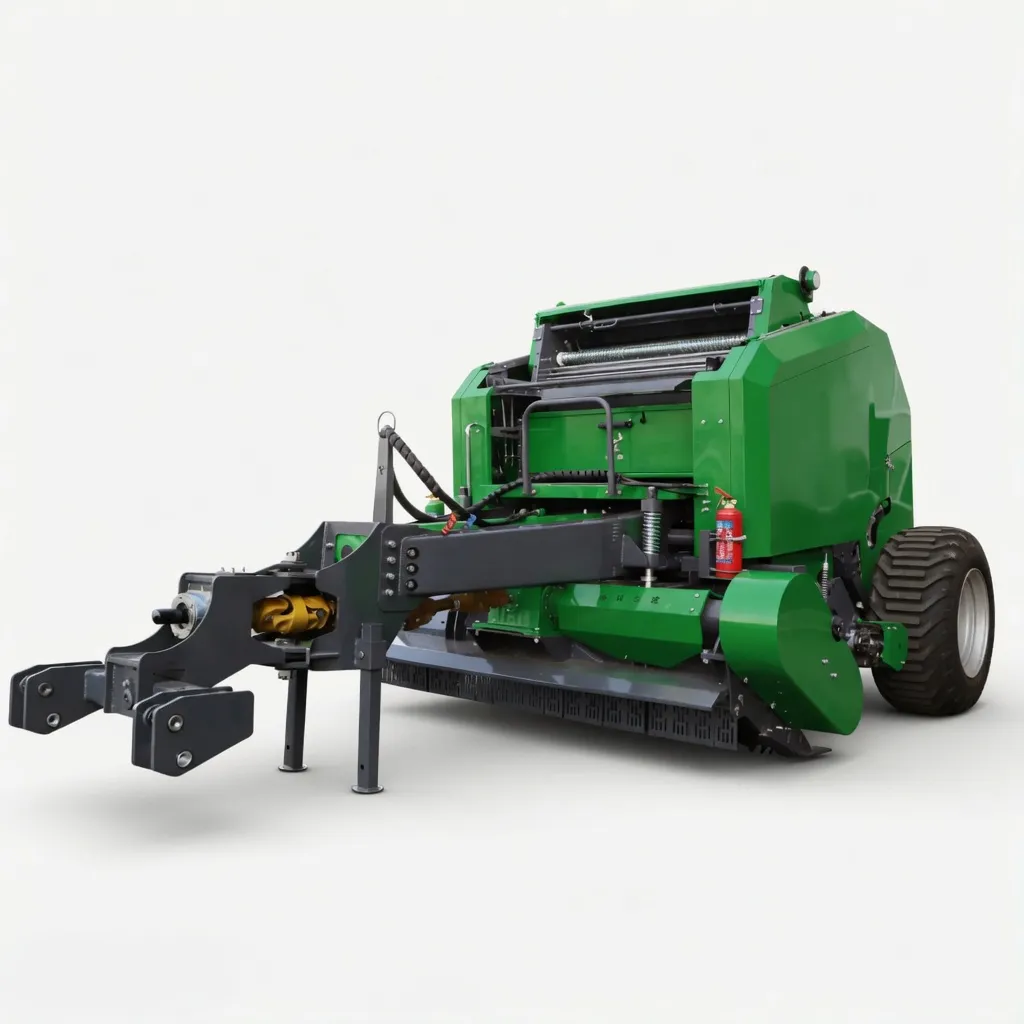
Recommended Product: EverPower 9YG-1.25 Round Baler
For beginners stepping into silage bale production, the EverPower 9YG-1.25 Round Baler offers a practical balance of capacity, simplicity, and build quality. The 1.25m bale format is the most common in southeastern Australian dairy and livestock operations, compatible with standard wrappers and loaders. The pickup and net wrap systems are designed for straightforward setup and reliable operation, reducing the learning curve for first-time baler owners.
Related reading: See how mixed-farm operators bale oaten hay and straw without a contractor: How to Bale Oaten Hay and Straw on a Mixed Farm Without a Contractor.
EverPower Baling Machinery Australia Pty Ltd
27 Harley Crescent, Condell Park NSW 2200
+61 2 9708 3322
[email protected]
Frequently Asked Questions
27 Harley Crescent, Condell Park NSW 2200 | +61 2 9708 3322 | [email protected]
About Us | Contact Us