The effort invested in cutting at the right growth stage, wilting to the correct moisture, baling at the optimal density, and wrapping within the quality window is wasted if the wrapped bales are stored in conditions that allow the stretch film to deteriorate, puncture, or fail. Storage is the final link in the bale silage quality chain, and like every other link, it needs to be managed deliberately rather than left to chance.
Choosing the Storage Site: Ground and Drainage
The ideal storage site for wrapped silage bales has three characteristics: a firm, compacted surface that prevents bales from sinking into soft ground; natural drainage or constructed fall that prevents water pooling around bale bases; and proximity to the feed-out area that minimises handling distances and reduces the risk of film damage during transport.
Compacted gravel or crushed rock provides the best balance of firmness, drainage, and cost. Concrete pads are excellent but rarely justify the construction cost for bale storage alone. Bare earth sites can work in well-drained positions but become problematic in wet seasons when saturated soil allows bales to sink, creating depressions that trap water against the film surface. Stubble paddocks are the worst storage option: the sharp stubble remnants puncture the bottom layer of film on contact, creating spoilage points along the entire base of every bale stored on stubble. If no prepared surface is available, a single row of used tyres or a layer of straw bales beneath the silage bales provides a sacrificial barrier between the ground and the film.
Stacking Configurations: Single Layer vs Pyramid
Silage bales can be stored in a single layer (flat ends down, standing upright) or stacked in a pyramid configuration (first row flat, second row nestled into the gaps between first-row bales). The single-layer approach is safest for the film because it eliminates bale-to-bale contact pressure that can stretch or puncture the film, and it allows air circulation around each bale that reduces surface condensation. It does, however, require the most storage area per bale.
Pyramid stacking reduces the footprint by approximately 40 percent and is standard practice on farms where storage area is limited. The key to successful pyramid stacking is ensuring that the bales in the bottom row are firm, well-formed, and positioned on their flat ends so that the upper-row bales nest between them without excessive pressure on the film at the contact points. Bales that are soft, misshapen, or have uneven flat ends should not be placed in the bottom row of a pyramid — the deformation under load creates film stretching and potential puncture points. Three rows high is the practical maximum for on-farm storage; stacking higher increases the risk of stack collapse and makes bale retrieval more difficult and dangerous.
Preventing Bird, Rodent, and Animal Damage
Birds — particularly crows, magpies, and cockatoos — are the most common cause of film damage on Australian farms. These species peck through the stretch film to access insects or moisture trapped beneath it, creating small holes that admit oxygen and initiate localised spoilage. On farms with significant bird pressure, the most effective deterrent is physical: netting draped over the bale stack, or reflective tape strung across the storage area to discourage landing. Chemical deterrents applied to the film surface have limited effectiveness and require reapplication after rain.
Rodents (rats and mice) tunnel into bales from the base, particularly during winter when the bale interior provides warmth and food. Keeping the storage site clear of vegetation that provides rodent harbourage, positioning bale rows away from existing structures where rodents nest, and maintaining active bait stations around the perimeter of the storage area are the standard control measures. Cats are also effective but unreliable as a sole control method. The economic damage from rodent activity is often underestimated because the spoilage occurs inside the bale where it is not visible until the bale is opened for feeding.
UV Degradation: The Silent Film Killer
Stretch film degrades under ultraviolet radiation. The UV stabilisers incorporated into silage film provide protection for 12 to 18 months under typical Australian UV conditions, but the actual protection period depends on the film specification, the number of layers applied, and the intensity of UV exposure at the storage site. Bales stored in full sun in northern NSW or Queensland will exhaust their UV protection faster than bales stored in partial shade or in Tasmania. For bales intended for drought reserves that will be stored for more than 12 months, two practical strategies extend film life: use 6-layer wrapping (which doubles the UV-absorbing material) and store bales where natural shade from trees or structures reduces direct UV exposure during the peak summer months. Alternatively, a simple shade structure over the storage area provides protection at a modest cost relative to the value of the stored feed.
Film Repair: What to Do When Damage Occurs
When film damage is discovered during routine inspection, the speed of repair determines whether the damage produces localised surface spoilage (the outer 5 to 10cm) or deep spoilage that extends through a significant portion of the bale. Silage repair tape — a self-adhesive UV-resistant tape designed specifically for stretch film repair — is the correct product for patching. Standard duct tape or electrical tape does not bond reliably to stretch film and detaches within days. Apply the repair tape in clean, dry conditions, extending at least 10cm beyond the edges of the damaged area in all directions, and press firmly to ensure full adhesion. For larger tears or punctures, apply multiple overlapping layers. The repair does not restore the bale to as-new condition, but it stops further oxygen ingress and limits the spoilage to the material that has already been exposed.
Handling Bales Safely Without Damaging Film
Every time a wrapped bale is lifted, transported, or repositioned, the handling equipment is in contact with the film — and that contact is the most controllable source of film damage on most farms. Bale spears designed for wrapped silage have rounded tips and smooth shaft surfaces that minimise puncture risk; sharpened spears intended for dry hay bales should never be used on wrapped silage bales.
Bale grabs (squeeze clamps) handle wrapped bales without any surface penetration and are the preferred tool for operations that move large numbers of bales. The EverPower 9JYY-4.5 Bale Conveyor moves multiple bales from the paddock to the storage site in a single trip, reducing the number of individual handling events per bale and the associated film damage risk. Minimising the number of times each bale is handled between wrapping and feedout is the simplest strategy for reducing handling-induced spoilage.
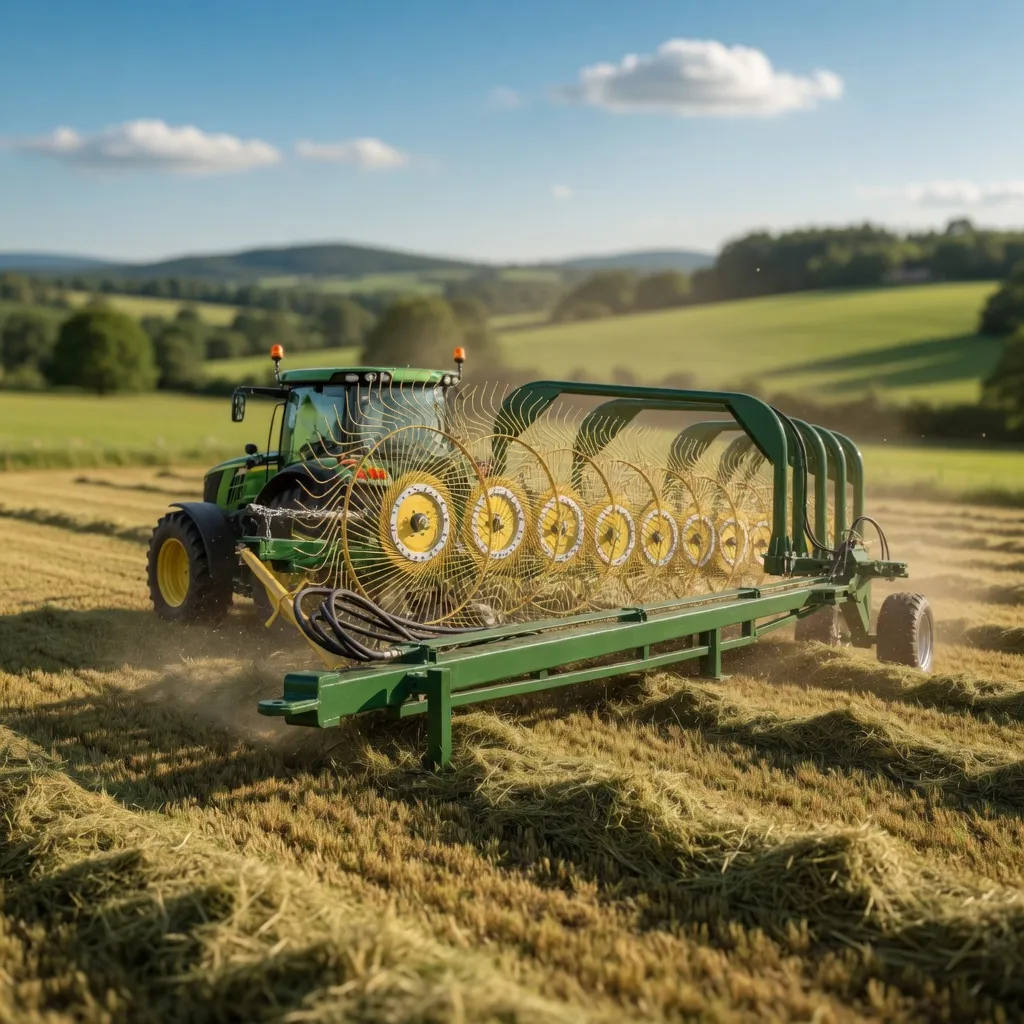
Recommended Product: EverPower 9YG-1.0C Round Baler
For farms where storage space is a constraint — small properties, hobby farms, horse properties, and leased land where permanent storage infrastructure is not practical — the EverPower 9YG-1.0C Type Round Baler produces compact 1.0m bales that stack more efficiently per square metre of storage area than larger-format bales. The compact bale size also means each bale can be handled with a standard front-end loader without requiring a dedicated bale spear or clamp, reducing the equipment investment needed for the storage and feedout operation.
Related reading: See how stored silage bales support drought feed reserve strategies: Building Drought Feed Reserves with Silage Round Balers.
EverPower Baling Machinery Australia Pty Ltd
27 Harley Crescent, Condell Park NSW 2200
+61 2 9708 3322
[email protected]
Frequently Asked Questions
27 Harley Crescent, Condell Park NSW 2200 | +61 2 9708 3322 | [email protected]
About Us | Contact Us