_0141_01.webp)
Description
Product Specifications
| No. | Parameter | Unit | Specification |
|---|---|---|---|
| 1 | Model Name | — | 4BYH-3.25 Kidney Bean Puller (5 Ridges) |
| 2 | Hitching Method | — | Suspension Type |
| 3 | Picker Type | — | Spring Tooth Type |
| 4 | Ridge Configuration | — | 5-Ridge Gripping Profile |
| 5 | Working Width | m | 3.25 |
| 6 | Matched Power | kW | 103–132 |
| 7 | Operation Speed | km/h | 6–10 |
| 8 | Overall Dimensions (L×W×H) | mm | 3800 × 3400 × 1500 |
| 9 | PTO Speed | r/min | 540 |
| 10 | Wheel Track | mm | 3,250 |
| 11 | Productivity | hm²/h | 1.95–3.25 |
| 12 | Operators | person | 1 |
| 13 | Structural Mass | kg | 1,540 |
_0146_01.webp)
Product Overview
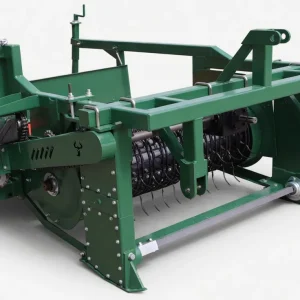
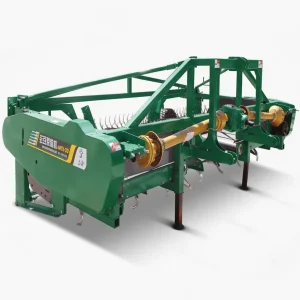
The 4BYH-3.25 (5 Ridges) sits at the top of the 4BYH pulling range — the machine for large-scale commercial bean operations where daily coverage rate determines whether the entire crop is harvested before the maturity window closes. At 3.25 m working width across a 3,250 mm wheel track, it covers 5 rows simultaneously at standard 750 mm row spacing, matching the output capacity of large self-propelled harvesters at a fraction of their capital cost and with the flexibility of a three-point suspension machine that stores and transports like any standard implement.
The five-ridge gripping profile is the technical feature that earns this machine its place above the 4-ridge models in the range. Where the 4-ridge pushing-type machine addresses soil adhesion by displacing soil laterally before the spring teeth pull, the 5-ridge design adds a fifth contact element that provides an additional stabilising grip on the plant stem above the root crown as the pull occurs. This stem stabilisation prevents the lateral rocking motion during extraction that causes pods to detach and fall on high-yielding varieties with dense pod clusters near the plant base. On Australia’s premium kidney bean varieties — including Tendergreen, Processors, and high-value import-substitution types grown for supermarket supply — the 5-ridge profile regularly records harvest losses 1–2 percentage points lower than 4-ridge equivalents on the same crop.
The 103–132 kW power requirement places this machine firmly in the large-tractor bracket: John Deere 6120M through 6155R, Case IH Maxxum 125 through Puma 145, New Holland T6.155 through T7.175, and Massey Ferguson 6700S and 7700S Series all fall within this range. For large bean operations already running 120–140 hp tractors for other cultivation and harvesting tasks, the 4BYH-3.25 adds large-scale pulling capability to an existing tractor investment without requiring a dedicated pulling tractor.
Technical Features — The Five-Ridge Advantage
Five-Ridge Gripping Profile — Stem Stabilisation During Extraction
The additional fifth ridge in the 4BYH-3.25’s gripping profile performs a function distinct from the four ridges in the pushing-type model. In the 5-ridge design, the fifth element is positioned to contact the plant stem above the root crown — not just the soil around the root. This stem contact creates a stabilising grip that prevents the plant from rocking laterally as the spring teeth apply lifting force. On dense-podded varieties where pod clusters sit close to the stem base, this rocking motion is the primary cause of pod detachment during extraction. Eliminating it with the fifth stabilising ridge produces the measurable 1–2 percentage point loss reduction on high-pod-density varieties that makes the 5-ridge model the preferred specification for premium and high-yielding production.
3.25 m Working Width — Five Rows Per Pass
At 3.25 m working width with a 3,250 mm wheel track, the 4BYH-3.25 covers 5 rows simultaneously at 750 mm row spacing, with the tractor wheel track positioned precisely in the inter-row spaces on both sides of the central operating zone. This 5-row-per-pass capability delivers the daily coverage mathematics that large-scale operations require: at 2.5 hm²/h on a 200 ha paddock, the entire crop is pulled in 80 operating hours — a 10-day timeline with a single operator that compresses the harvest risk window dramatically versus a 2.6 m machine needing 15 days for the same area.
103–132 kW — Large-Tractor Fleet Compatibility
Operations running 140–180 hp tractors for primary cultivation, seeding, and spraying tasks can run the 4BYH-3.25 behind the same machines without a dedicated pulling tractor. At 1,540 kg structural mass, the machine sits within the rear-linkage capacity of all compatible tractors. The PTO demand at 103–132 kW is within the rated PTO output of all tractors in this class at 540 rpm, without requiring the operator to choose between full engine power and full PTO power — the machine’s peak load does not exceed what these tractors deliver routinely to other implements.
Spring-Tooth Picker — Maintained Compliance at 3.25 m
Scaling the spring-tooth system to 3.25 m introduces greater bar flex potential than at 2.6 m — the longer bar can bow under uneven load distribution if the tooth compliance specification is not adjusted for the wider geometry. EverPower’s engineering on the 4BYH-3.25 addresses this with a stiffer carrier bar cross-section at the centre span and slightly softer tooth spring rates at the outer positions to compensate for the reduced bar stiffness at the extremities. The result is consistent compliance across all 5 rows simultaneously rather than the stiffer centre and softer edges that simple linear scaling would produce.
Productivity of 1.95–3.25 hm²/h — Large-Farm Benchmark
At the upper end of the 3.25 hm²/h productivity range — 10 km/h on flat, open paddocks with optimal soil conditions — the 4BYH-3.25 covers the daily pulling requirement of the largest commercial Australian kidney bean operations within a single-shift working day. At the conservative 1.95 hm²/h end — 6 km/h on medium-to-heavy soils with careful loss management — the machine still covers 15–17 ha per 8-hour shift, which is adequate for operations where quality retention takes priority over maximum throughput speed.
_0147_02.webp)
How the 4BYH-3.25 (5 Ridges) Works
The 3,250 mm wheel track is set to align tractor wheels precisely in the inter-row spaces at 750 mm row spacing. The three-point linkage is set to the soil-type-specific depth at which the 5-ridge profile contacts both root zone and stem correctly.
All five ridges engage simultaneously — four displacing soil laterally from root zones, one stabilising each plant stem above the root crown. The stem contact element prevents lateral rocking during the subsequent lift phase.
With soil displaced and stems stabilised, the spring teeth apply upward lift to all five rows simultaneously. The reduced extraction force requirement from soil pre-loosening and the stem stabilisation from the fifth ridge work together to hold losses within specification.
Extracted plants from all five rows are deposited in a uniform windrow behind the machine. The consistent plant geometry from the controlled extraction produces a windrow that field-dries evenly and feeds the combine pickup uniformly across the full windrow width.
The 4BYH-3.25 is typically the last machine to enter a large commercial paddock before the combine — it works across the full paddock in a single pass direction, with the combine following behind and processing the dried windrow. The operational rhythm on a 100 ha property is: pull days 1–4 (at 25 ha/day), field dry days 3–6, combine follows from day 5. The overlapping pull-and-dry schedule means the combine is never waiting for dried material.
Applications — High-Volume Bean Production at Scale
Large-Scale Commercial Kidney Bean — 100 to 500+ ha
The primary application is commercial kidney bean production at the upper end of the Australian market: large-scale growers in the Riverina, Queensland’s Darling Downs, and Victoria’s Wimmera managing 100–500+ ha annually for processing, export, and supermarket supply contracts. At this scale, daily harvest throughput determines whether the entire crop is pulled within the maturity window — and that window is typically 10–21 days before over-maturity causes natural pod shatter in the field that no harvesting equipment can recover. The 4BYH-3.25’s 20–30 ha daily coverage at moderate operating speed keeps a 200 ha crop safely within a 10-day pulling programme with one machine.
Navy Bean & Soybean at High Volume
Australia’s growing processing navy bean sector and food-grade soybean production at 100+ ha scale face the same maturity-window constraint as kidney beans. The 4BYH-3.25’s 5-ridge system produces lower losses on high-pod-density navy bean varieties than standard pulling equipment, and the 3.25 m coverage rate allows a single machine to service the pulling requirements of large operations without contractor dependence. Food-grade soybean operations targeting premium tofu and edamame markets find the 5-ridge loss performance on high-value material financially compelling at the scale where even fractional loss reduction represents significant revenue per crop.
Multi-Variety Production — Consistent Performance Across Crops
Large operations growing multiple bean varieties on the same property face the challenge that different varieties have different pod-density profiles and different optimal harvest timing. A machine that performs well on one variety but poorly on another complicates scheduling. The 4BYH-3.25’s 5-ridge system maintains consistent extraction quality across variety types because the stem-stabilisation function of the fifth ridge is effective regardless of pod density — it prevents lateral rocking on any variety, not just the highest-density types.
Contract Harvesting — Premium Service at Large Scale
Harvest contractors servicing multiple large bean properties across a regional season find the 4BYH-3.25 their most commercially valuable machine: it covers the most area per day behind a standard large tractor, produces the lowest harvest losses on difficult soils and high-value varieties, and positions the contractor as a premium-quality service provider that growers with quality-sensitive supply contracts specifically seek out. The ability to quote a documented 2–4% harvest-loss specification on heavy clay-loam soils is a genuine commercial differentiator in a market where competitors with older equipment may measure 8–12% losses on the same conditions.
_0148_03.webp)
Maintenance — Large Machine, Disciplined Schedule
Daily Inspection — Five Ridge Elements and Full Tooth Bar
At 3.25 m working width, the daily tooth inspection covers approximately 60% more bar length than the 2.6 m model — allow 10 minutes for a thorough walk of the full tooth bar. Check the fifth ridge element (stem stabiliser) specifically for soil packing around the contact face — accumulated clay between the stem contact face and the carrier can prevent the element from seating correctly on the plant stem, which reduces its stabilising function without being visible from the tractor seat. Clear any packing from the stem contact face with the provided cleaning tool before the first pass each day.
Every 30–40 Operating Hours
Inspect all five ridge elements for tip wear by measuring against the new-tip dimension. Replace ridge tips when wear reaches the indicator mark — on heavy clay soils at commercial pace, this may be as frequently as every 25–30 hours during peak harvest. Inspect the carrier bar at the centre span for any lateral bow development — the 3.25 m bar can develop a slight bow under sustained heavy-soil load that affects row alignment and should be addressed before it becomes a ground-contact issue. Grease all seven main lubrication points on the pivot joints.
Post-Season Full Service
Replace all spring teeth as a complete bar set. Replace all five ridge element tips regardless of apparent wear. Inspect and re-torque all tooth mounting bolts across the full 3.25 m bar. Inspect the three-point hitch interface pins and bushings for wear — the heavier 1,540 kg machine imposes more load on the tractor’s lower-link pins than the smaller models, and worn pins allow depth variability that affects row alignment across the wide bar. EverPower holds full service kits — complete tooth sets, full ridge-tip sets, and hitch hardware — at Condell Park NSW.
The 4BYH-3.25 (5 Ridges): The Flagship Pulling Machine
Prevents lateral rocking during extraction. 1–2% lower losses versus 4-ridge on high-pod-density varieties. The detail that makes the difference on premium crops.
25% wider than the 2.6 m models. The same 200 ha paddock pulled in 10 days instead of 15.
Runs behind the primary cultivation tractor already on the farm. No dedicated pulling tractor investment.
Complete warranty cover on both spring-tooth and ridge mechanism components, administered by EverPower Australia from Condell Park NSW.
_0149_04.webp)
| Specification | 4BYH-1.3 | 4BYH-2.6 | 4BYH-3.25 (5R) |
|---|---|---|---|
| Working Width | 1.3 m | 2.6 m | 3.25 m |
| Power Required | ≥ 40 kW | 66–88 kW | 103–132 kW |
| Productivity | 0.65–1.04 hm²/h | 1.56–2.6 hm²/h | 1.95–3.25 hm²/h |
| Ridge Count | None | 4 ridges (push) | 5 ridges (grip+stabilise) |
| 100 ha Pull Time | ~10–15 days | ~4–6 days | ~3–5 days |
| Best For | Small / organic | Commercial 20–150 ha | Large-scale 100–500+ ha |
About EverPower Baling Machinery Australia
EverPower Baling Machinery Australia Pty Ltd — 27 Harley Crescent, Condell Park NSW 2200 — is the direct Australian arm of an ISO 9001-certified manufacturer with a 32,000 m² factory, 180 staff, and a dedicated R&D centre. Every machine carries a genuine Australian warranty administered locally, backed by spare parts stocked for 72-hour national delivery.
📞 +61 2 9708 3322 | ✉️ [email protected] | silage-baler.com/about-us
_0150_05.webp)
Frequently Asked Questions
Australia’s Widest Spring-Tooth Puller — Five Ridges, Five Rows
Contact EverPower for pricing and availability on the 4BYH-3.25 (5 Ridges) — and for a full 4BYH range comparison to confirm the right model for your operation.
_0141_01-300x300.webp)