Description
Product Specifications
| No. | Parameter | Unit | Specification |
|---|---|---|---|
| 1 | Model Name | — | 9GD-2.5 Traction Single-Blade Mower |
| 2 | Hitching Method | — | Traction Type |
| 3 | Cutter Structure | — | Reciprocating Type |
| 4 | Cutting Width | m | 2.5 |
| 5 | Matching Power | kW | 15–35 |
| 6 | Operation Speed | km/h | 6–10 |
| 7 | Number of Moving Blades | pcs | 34 |
| 8 | Overall Dimensions (L×W×H) | mm | 2000 × 4300 × 950 |
| 9 | PTO Speed | r/min | 540 |
| 10 | Average Cutting Height | mm | 50–70 |
| 11 | Productivity | hm²/h | 2.0–3.0 |
| 12 | Operators | person | 1 |
| 13 | Structural Weight | kg | 490 |
Product Overview
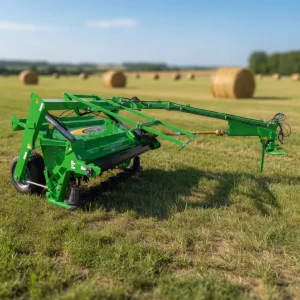
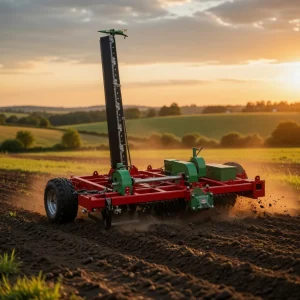
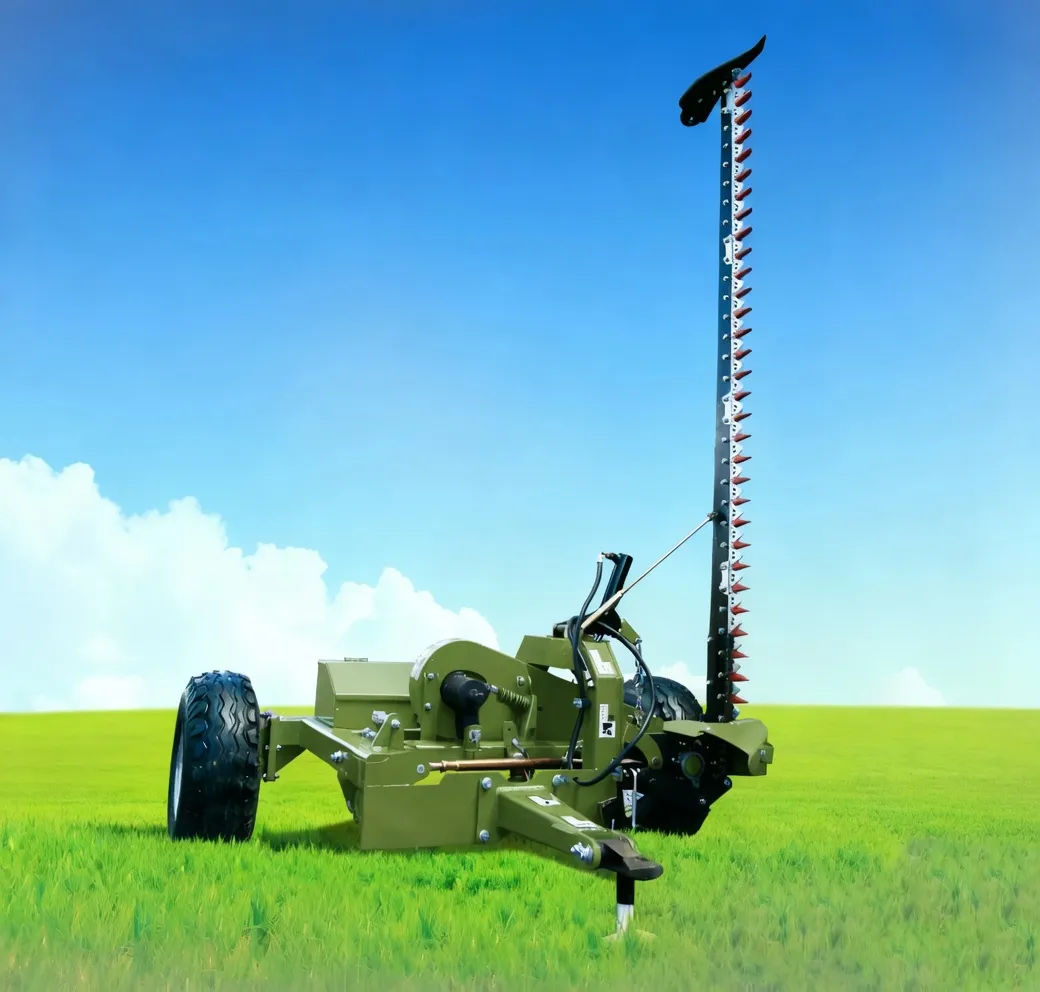
There is a class of farm task where technical sophistication is not an advantage — where reliability, simplicity, and low cost of ownership matter more than productivity statistics or feature counts. Cutting pasture on a 15–40 hp compact tractor is exactly that task. The 9GD-2.5 Traction Single-Blade Mower was designed specifically for this context: a reciprocating cutter mechanism with 34 blades across a 2.5 m working width, driven from a standard 540 rpm PTO, producing 2.0–3.0 ha/h of cleanly cut pasture behind any tractor from 15 to 35 kW.
The reciprocating design — blades that move back and forth rather than spinning at high speed — has been the workhorse of small-farm mowing for a century because it is mechanically simple, tolerant of occasional stone contact without catastrophic failure, and easy to sharpen or replace in the field. A blade strike on a rock damages the blade at most; the same strike on a rotary disc mower can shatter the disc, damage the cutter housing, and send fragments in unpredictable directions. For farms where the paddocks are not stone-picked and the operator is not a specialist, the reciprocating design’s forgiveness is genuine practical value.
At 490 kg tare weight and 2,000 × 4,300 × 950 mm overall dimensions, the 9GD-2.5 stores in a standard machinery shed bay without modification and tows on any registered trailer or ute-hitch tow connection at transport speed. For the small-farm operator who needs a mower that works, stores simply, and costs little to maintain, the 9GD-2.5 is the direct answer.
Features & Technical Advantages
15–35 kW Power Range — Compact Tractor Territory
The 15–35 kW power window covers virtually every compact utility tractor in the Australian small-farm market: Kubota BX and B Series (15–25 kW), John Deere 1 and 2 Series (15–30 kW), Mahindra eMax and mPower Series (18–33 kW), Kioti CS and CK Series (16–29 kW), and Branson 20–35 Series. For farmers running these tractors — which are also used for slashing, post-hole digging, box blade work, and general property maintenance — the 9GD-2.5 connects to the same 540 rpm PTO these tractors already use for other implements, with no specialist configuration.
Reciprocating 34-Blade Cutter — Reliable & Stone-Forgiving
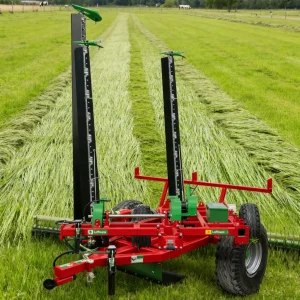
The 34-blade reciprocating system cuts clean at 50–70 mm height across the full 2.5 m width. Reciprocating cutters shear material between a fixed lower guard and a moving upper blade — the shearing action produces a clean cut stem end rather than the torn or crushed end that struggling rotary cutters produce on thick grass at lower forward speeds. Clean cut ends heal faster and create less entry point for fungal disease in subsequent regrowth, which matters on irrigated pastures making multiple cuts per season.
50–70 mm Cut Height — Protecting Pasture Regrowth
The 50–70 mm height range is not set arbitrarily — it reflects the agronomic minimum for maintaining vigorous regrowth on the pasture species Australian small farms typically manage: perennial ryegrass, kikuyu, couch, clover, and native grass mixes. Cutting below 50 mm removes growing points and root-energy reserves in a way that slows regrowth markedly. The 9GD-2.5’s consistent 50–70 mm height across the 2.5 m cutting width in field conditions ensures the pasture is not inadvertently set back at the same time it is being managed.
490 kg — Light Enough for Any Property
At 490 kg, the 9GD-2.5 is light enough to be repositioned by a compact tractor with front-loader capability, stored in a standard shed bay without dedicated parking space, and transported on a standard single-axle tipping trailer for properties that share equipment between locations. The low weight also means it does not impose significant ballast demands on the compact tractors at the bottom of its power range — a 15 kW tractor can tow the 9GD-2.5 without needing front-end weights to maintain steering contact.
2.0–3.0 ha/h Productivity — Right-Sized for Small Paddocks
At the 9GD-2.5’s 6–10 km/h operating speed and 2.5 m cutting width, the 2.0–3.0 ha/h productivity is matched to the paddock sizes typical of small farms: 1–8 ha blocks that need a full cut in 1–4 hours rather than the multi-day operation that larger paddocks require. For the hobby farm managing grass for aesthetic reasons, the lifestyle property maintaining a horse paddock, or the small beef block managing pasture cover before the dry season, this productivity range covers the work in a practical timeframe without the machine waiting for the next paddock to need attention.
Operating the 9GD-2.5 — Simplicity by Design
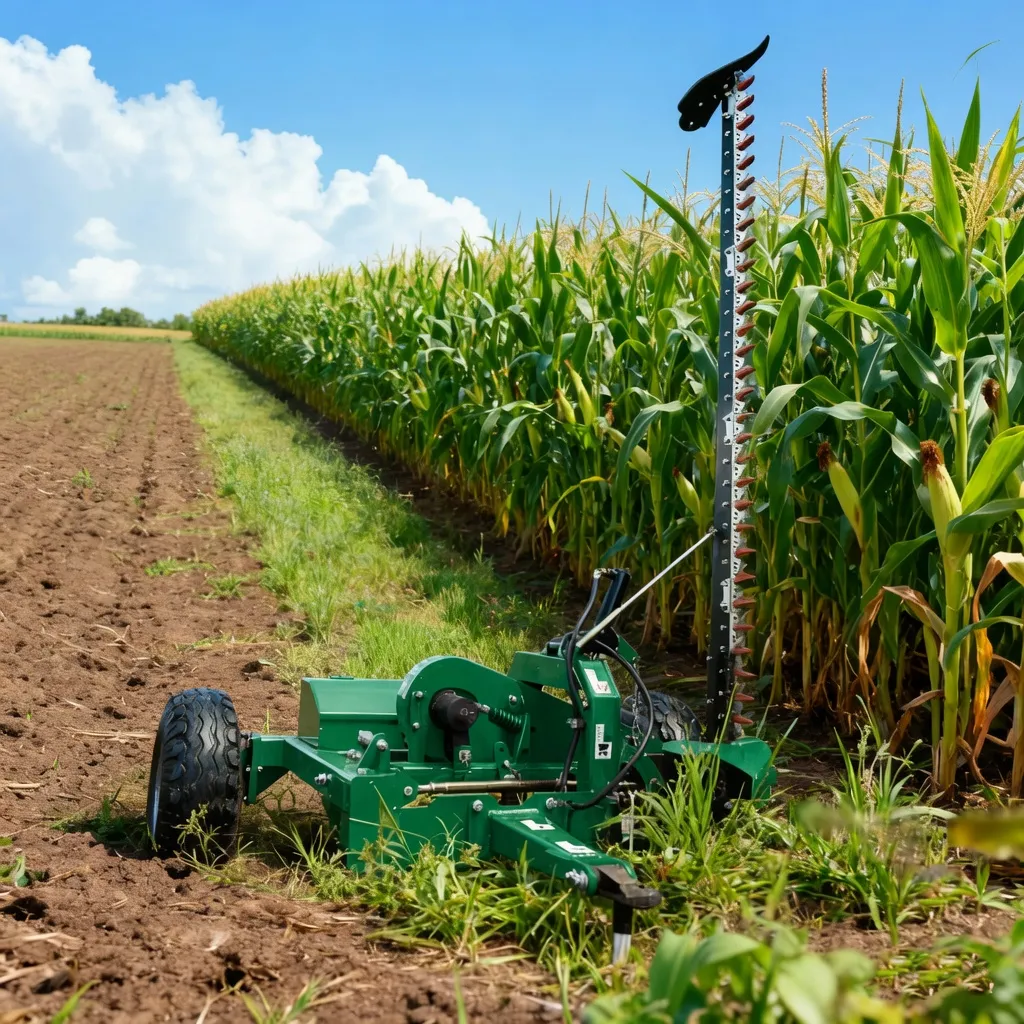
Attach to the tractor drawbar hitch and connect the PTO shaft to the 540 rpm output. The standard traction hitch and PTO connection suit every tractor in the 15–35 kW range without adapters.
Adjust the skid shoes on the cutter bar to set cutting height within the 50–70 mm range. Setting takes two minutes with the included wrench — no specialist tools required.
Engage the PTO at a low engine speed, then bring the tractor to operating speed. The reciprocating blades reach working speed within seconds. Forward speed of 6–10 km/h produces the clean 50–70 mm cut across the full 2.5 m width.
Disengage PTO at headlands before turning. The 2,000 × 4,300 mm transport configuration stows alongside the tractor for road travel. End-of-day maintenance is limited to blade inspection and light grease.
One detail that operators consistently notice after using the 9GD-2.5 for the first season: the absence of the vibration and noise characteristic of high-speed rotary cutters. The reciprocating mechanism runs at a fraction of the blade tip speed of a rotary disc, making extended operating sessions noticeably less fatiguing — relevant for solo operators mowing all day on a compact tractor.
Applications — Every Small-Farm Mowing Need
Pasture Management — Horses, Sheep & Beef
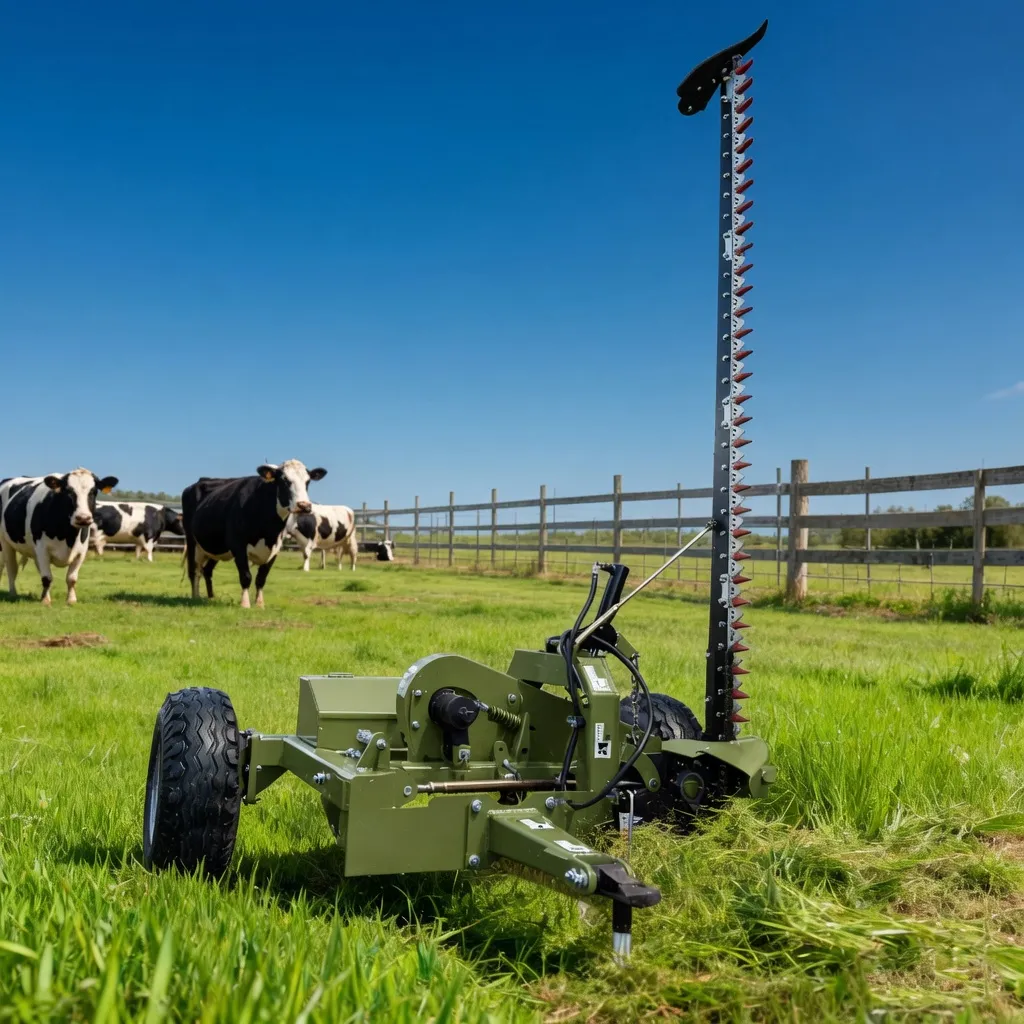
Managing pasture cover on horse paddocks, sheep grazing blocks, and small beef enterprises requires cutting 1–8 ha blocks at least once or twice per season to control rank grass, manage weed competition, and maintain the pasture density that grazing animals prefer. The 9GD-2.5 handles this work behind the compact tractor that the property is already running, without requiring a dedicated mowing tractor or specialist operator. The clean 50–70 mm cut height maintains pasture health across repeated cuts better than lower-cut equipment.
Roadside & Fence-Line Maintenance
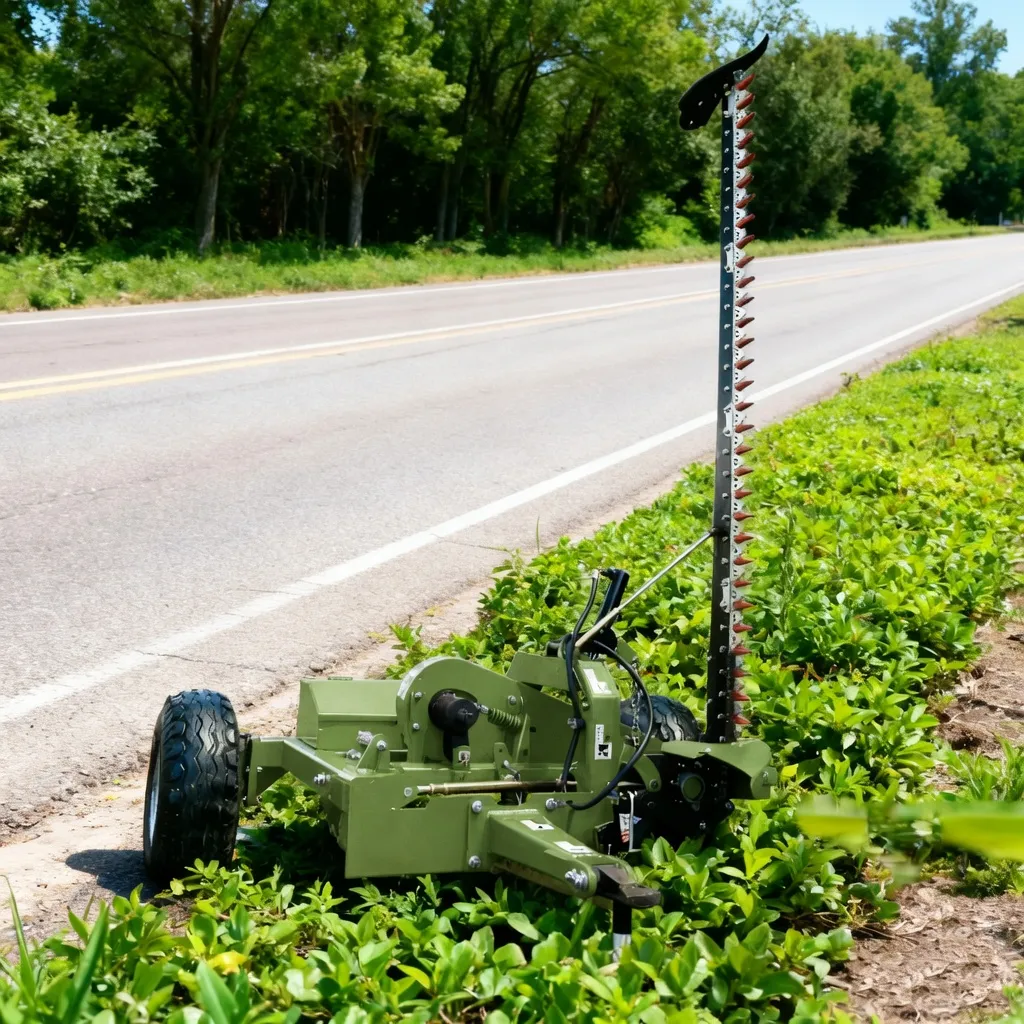
The 9GD-2.5’s 2.5 m cutting width and compact overall dimensions make it practical for fence-line and roadside slashing on properties that maintain internal laneways and track edges. The traction hitch configuration — which positions the cutter bar behind and to the side of the tractor — allows the cutter bar to run close to fence posts without the tractor wheels needing to approach the fence line. Combined with the reciprocating cutter’s tolerance for occasional contact with fence post bases and rough terrain, this makes the machine a practical choice for maintenance work that disc cutters often cannot approach safely.
Pre-Cut Before Baling on Small Paddocks
On small paddocks producing 50–200 bales of hay per season, the 9GD-2.5 serves as the cutting machine in a two-step mow-and-bale system: the 9GD-2.5 cuts and lays the windrow, and the baler follows after sufficient wilting. This approach keeps capital cost low — the mower costs a fraction of a dedicated mower-conditioner — and on small-paddock operations where total annual area is modest, the 9GD-2.5’s 2.0–3.0 ha/h rate covers the cutting work in a half to a full day before the baler begins.
Rural Lifestyle Properties — General Grass Management
Lifestyle and hobby properties maintaining grass on 2–20 ha blocks for aesthetics, fire management, or light grazing don’t need commercial-grade mowing capacity. The 9GD-2.5 covers these properties comfortably behind the compact utility tractor most lifestyle farms own, at a purchase price and maintenance cost that aligns with the scale of the task. Compatible brands — Kubota, John Deere, Mahindra — represent the tractors these properties typically already run.
Maintenance — Five-Minute Checks, Long Service Life
Before Each Use
Walk the 34-blade cutter bar and check for chipped or cracked blades before the first pass. A single damaged blade at the end of the bar creates an uneven cut pattern across the full pass. Remove any grass wrapping from the blade sections from the previous use — grass wrap is the most common cause of blade heating and premature wear on reciprocating cutters. Grease the two main nipples on the cutter drive gearbox and the PTO input shaft sleeve.
Every 10 Operating Hours
Sharpen or replace any blade showing significant edge wear. Reciprocating blades can be sharpened with a standard angle grinder and a file — no specialist equipment required. Replace damaged blades in matched pairs (the two blades sharing a cutter section) to maintain even cutter action across the bar. Check the PTO driveshaft universal joints for clicking or resistance — early detection prevents shaft failure in the field.
End of Season
Remove all 34 blades, clean the blade sections and guards, sharpen any blades still within usable thickness, and replace the remainder. Inspect the cutter bar for straightness — a bent cutter bar produces an uneven cut height across the width and is usually the result of a significant stone strike. EverPower stocks replacement blade sets and cutter bar sections at Condell Park for next-day east coast delivery. Store with the cutter bar lowered to remove stress from the drive link mechanism.
Why the 9GD-2.5 Is the Right Entry Point
Connects to the compact utility tractor already on the property. No dedicated mowing tractor, no specialist PTO adapter.
Blade strike damages the blade at most. No risk of disc shattering or housing damage from occasional ground contact.
Repositionable with a front loader, storable in a standard shed bay, transportable on a standard single-axle trailer.
Simple mechanical design means low entry price and minimal servicing — matched to the scale of small-farm mowing requirements.
About EverPower Baling Machinery Australia
EverPower Baling Machinery Australia Pty Ltd — 27 Harley Crescent, Condell Park NSW 2200 — is the direct Australian arm of an ISO 9001-certified manufacturer with a 32,000 m² factory, 180 staff, and a dedicated R&D centre. Every machine carries a genuine Australian warranty administered locally, backed by spare parts stocked for 72-hour national delivery.
📞 +61 2 9708 3322 | ✉️ [email protected] | silage-baler.com/about-us
Frequently Asked Questions
Simple Mowing for the Farm That Needs It Done
Contact EverPower for pricing on the 9GD-2.5 and the rest of the forage equipment range — same-day response during business hours.