Description
Product Specifications
| No. | Parameter | Unit | Specification |
|---|---|---|---|
| 1 | Model Name | — | 4BYHD/4BYHS-3.9 Kidney Bean Puller (6 Ridges) |
| 2 | Hitching Method | — | Suspension Type |
| 3 | Picker Type | — | Spring Tooth Type |
| 4 | Ridge Configuration | — | 6-Ridge Reinforced Profile |
| 5 | Series Compatibility | — | 4BYHD & 4BYHS Series |
| 6 | Working Width | m | 3.25 |
| 7 | Matched Power | kW | 103–132 |
| 8 | Operation Speed | km/h | 6–10 |
| 9 | Overall Dimensions (L×W×H) | mm | 3800 × 3400 × 1500 |
| 10 | PTO Speed | r/min | 540 |
| 11 | Wheel Track | mm | 3,250 |
| 12 | Productivity | hm²/h | 1.95–3.25 |
| 13 | Operators | person | 1 |
| 14 | Structural Mass | kg | 1,540 |
Product Overview — The Range Flagship
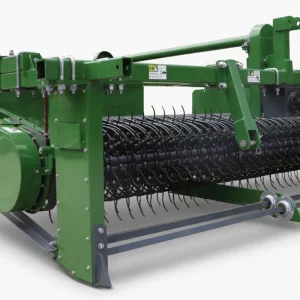
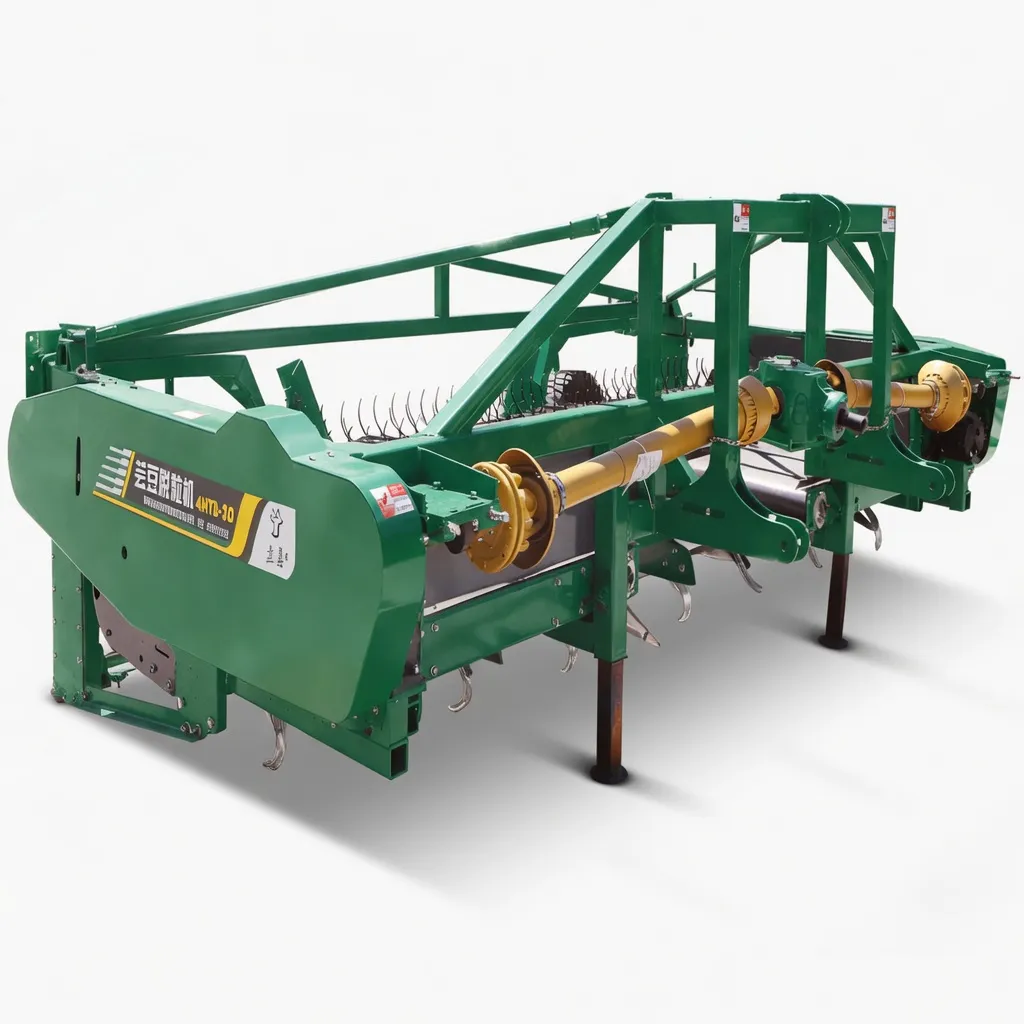
The 4BYHD/4BYHS-3.9 is EverPower’s heaviest-specified kidney bean puller — the machine that closes the range with the most ridge elements, the most robust component specification, and compatibility with two series of harvesting equipment rather than one. The 6-ridge reinforced profile represents the full development of the ridge-pulling concept introduced in the 4-ridge and 5-ridge models: six contact elements work across the root zone and stem of each plant simultaneously, providing the most comprehensive soil-displacement and stem-stabilisation coverage in the 4BYH series.
The 4BYHD and 4BYHS designations indicate two distinct harvesting system configurations that the 3.9 puller serves. The D series (4BYHD) is a direct-to-combine configuration where pulled material moves immediately into the harvester’s threshing system without field drying — suited to irrigated operations with controlled moisture conditions. The S series (4BYHS) is the standard windrow-and-combine configuration where pulled plants are deposited for field drying before a combine pass. One machine serves both operational approaches; the operator switches between them by changing the deposition guide configuration, which takes under 20 minutes in the field.
At 103–132 kW power requirement and 1,540 kg structural mass, the 4BYHD/4BYHS-3.9 runs behind the large tractors common on Australia’s biggest commercial bean operations: John Deere 6155R and 6175R, Case IH Puma 145 and 155, New Holland T7.175 and T7.190, and Massey Ferguson 7718 and 7720 Series. For operations already running these tractors for grain harvesting support, cultivation, and spraying, adding the 4BYHD/4BYHS-3.9 requires no tractor investment — only the implement.
Technical Features — Six Ridges, Two Series, One Machine
Six-Ridge Reinforced Profile — Maximum Root-Zone Coverage
The addition of a sixth ridge element over the five-ridge 4BYH-3.25 provides incremental coverage of the root zone that further reduces residual soil adhesion at the moment of spring-tooth lift. In the 6-ridge design, the root zone is surrounded by six contact points rather than five, and the reinforced profile specification means each ridge element is manufactured to a heavier cross-section than earlier models — providing more lateral soil displacement force per element on the hardest clay-loam soils. On the cracking black soils of Queensland’s Darling Downs and the heavy red clays of northern Victoria, where soil adhesion to bean roots at harvest is at its maximum, the 6-ridge system consistently records harvest losses 0.5–1.5 percentage points lower than the 5-ridge model under matched operating conditions.
Dual 4BYHD / 4BYHS Series Compatibility
The ability to operate in both the BYHD (direct combine) and BYHS (windrow-and-combine) configurations from a single machine is a commercial flexibility that large operations and harvest contractors particularly value. A direct-combine operation that encounters weather risk mid-harvest can switch to windrow mode — preserving the crop if rain is coming — without requiring a different machine. A windrow operation that gains access to additional combine capacity mid-season can switch to direct mode to accelerate throughput. The configuration change is a deposition guide swap that takes under 20 minutes; no specialist tools are required.
Reinforced Component Specification Throughout
The ‘HD’ in the 4BYHD designation stands for Heavy Duty — the entire machine is built to a heavier specification than the standard 4BYH range, reflecting the sustained daily operating loads of large commercial operations. Carrier bar wall thickness is increased by 20% over the standard 4BYH-3.25. Ridge element mountings use higher-grade fasteners than the lighter models. Spring-tooth coils are wound from a slightly heavier wire gauge for the same compliance characteristic but greater fatigue resistance. These incremental specification upgrades do not change the machine’s operating behaviour — the compliance and ridge-contact geometry are the same — but they extend service life on machines accumulating 200–350 operating hours per season at full commercial intensity.
Harvest Loss Rate on Difficult Soils — The Cumulative Advantage
Across the 4BYH range — 4-ridge, 5-ridge, 6-ridge — there is a progressive reduction in harvest losses on medium-to-heavy soils as ridge count and specification increases. The 6-ridge machine is not simply marginally better than the 5-ridge; it is the machine specified when the financial case for minimum harvest loss is strongest: premium export contracts, certified organic crops, high-value fresh-market varieties where each percentage point of loss reduction is directly worth $800–2,000 per 100 ha at market prices. For operations at this value level, specifying the 6-ridge machine is a straightforward investment calculation, not a marginal equipment decision.
Spring-Tooth Picker — Calibrated for 3.25 m Heavy-Duty Bar
The spring-tooth specification on the 4BYHD/4BYHS-3.9 is calibrated for the heavier bar cross-section — the thicker carrier bar is stiffer than standard, so spring-tooth compliance rates are adjusted to compensate, maintaining the same effective compliance at the tooth tip as the lighter models. This calibration is a factory setting, not a field adjustment — operators transitioning from lighter 4BYH models will find identical tooth-tip behaviour despite the heavier machine specification. The heavy-duty bar does not change how the machine feels to operate; it changes how long it lasts at commercial intensity.
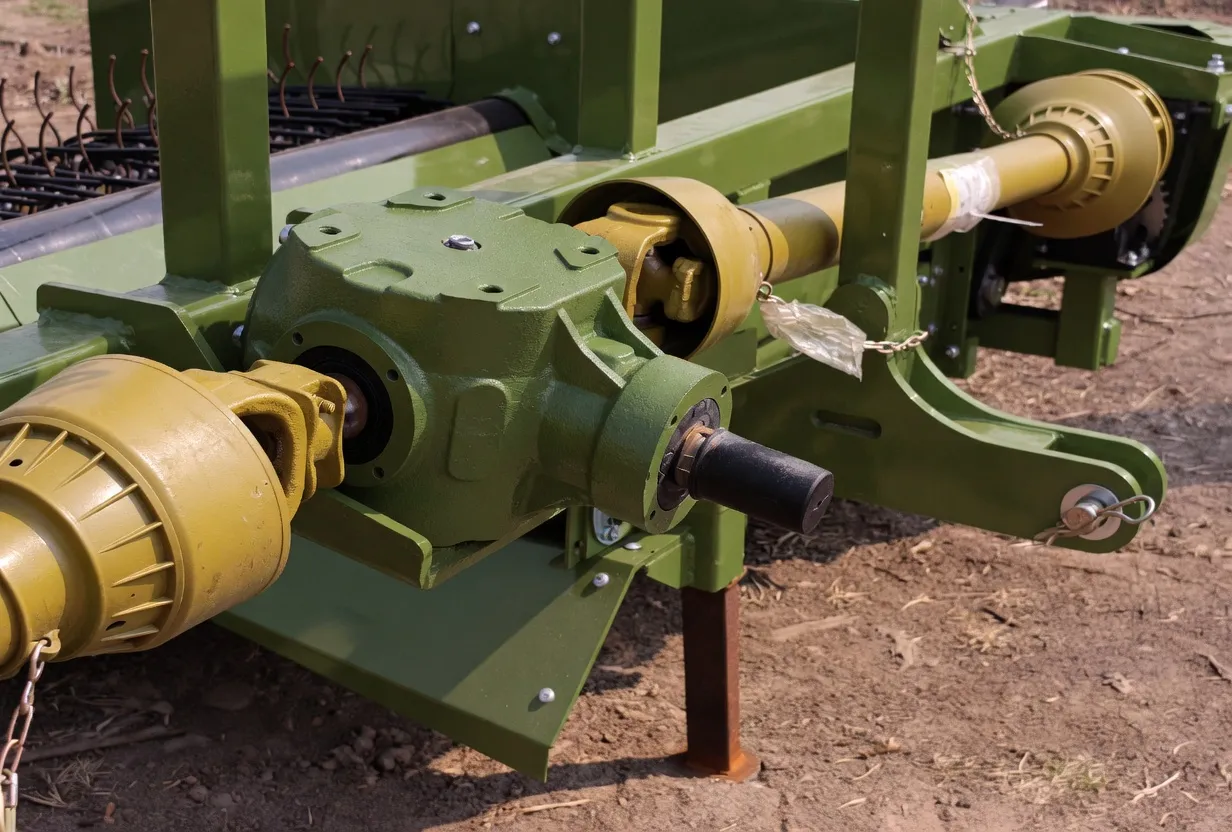
BYHD vs BYHS — Choosing Your Configuration
Understanding when to use each configuration is the key operational knowledge for the 4BYHD/4BYHS-3.9. The choice is driven primarily by combine availability and weather risk:
| Factor | 4BYHD — Direct Combine | 4BYHS — Windrow & Combine |
|---|---|---|
| Moisture at Harvest | Controlled / lower moisture | Variable; requires field drying |
| Combine Requirement | Must follow immediately | Can follow 1–3 days later |
| Weather Sensitivity | Higher (no drying buffer) | Lower (windrow provides buffer) |
| Throughput | Combine-limited | Pull-limited until combine arrives |
| Best On | Irrigated, controlled crops | Dryland, weather-variable conditions |
| Configuration Change | Deposition guide fitted | Deposition guide removed |
Most large operations start their season in BYHS windrow mode and switch to BYHD direct mode if they gain additional combine access mid-season. The flexibility to make that switch without changing machines or calling in different equipment is the defining practical value of the dual-series design.
How the 4BYHD/4BYHS-3.9 Works
Select BYHD or BYHS mode by fitting or removing the deposition guide (20-minute field change). Confirm row alignment with the 3,250 mm wheel track positioned in the inter-row spaces at your row spacing.
All six ridge elements engage simultaneously as the machine moves forward. Ridges 1–5 loosen soil adhesion from root zones; ridge 6 provides the final stabilisation of the stem above the root crown. The full root zone is surrounded by contact points.
With soil adhesion minimised by six contact points, the spring teeth apply the lowest extraction force in the 4BYH range to each plant. Harvest losses are held within specification even at 9–10 km/h on medium soils.
In BYHS mode: plants are deposited in a windrow for field drying before combine pickup. In BYHD mode: plants are transferred directly to a following combine or collection wagon without ground deposition.
The full-day operating rhythm on a 300 ha paddock in BYHS mode with a 4BYHD/4BYHS-3.9: at 25 ha/day the paddock is pulled in 12 days. Field drying begins from day 1, and the combine can start on day 3 on the first-pulled sections while pulling continues on the remainder. The overlapping schedule means the combine is never idle waiting for dry material, and the puller is never waiting for the combine to clear windrows ahead — both machines work continuously through the harvest window.
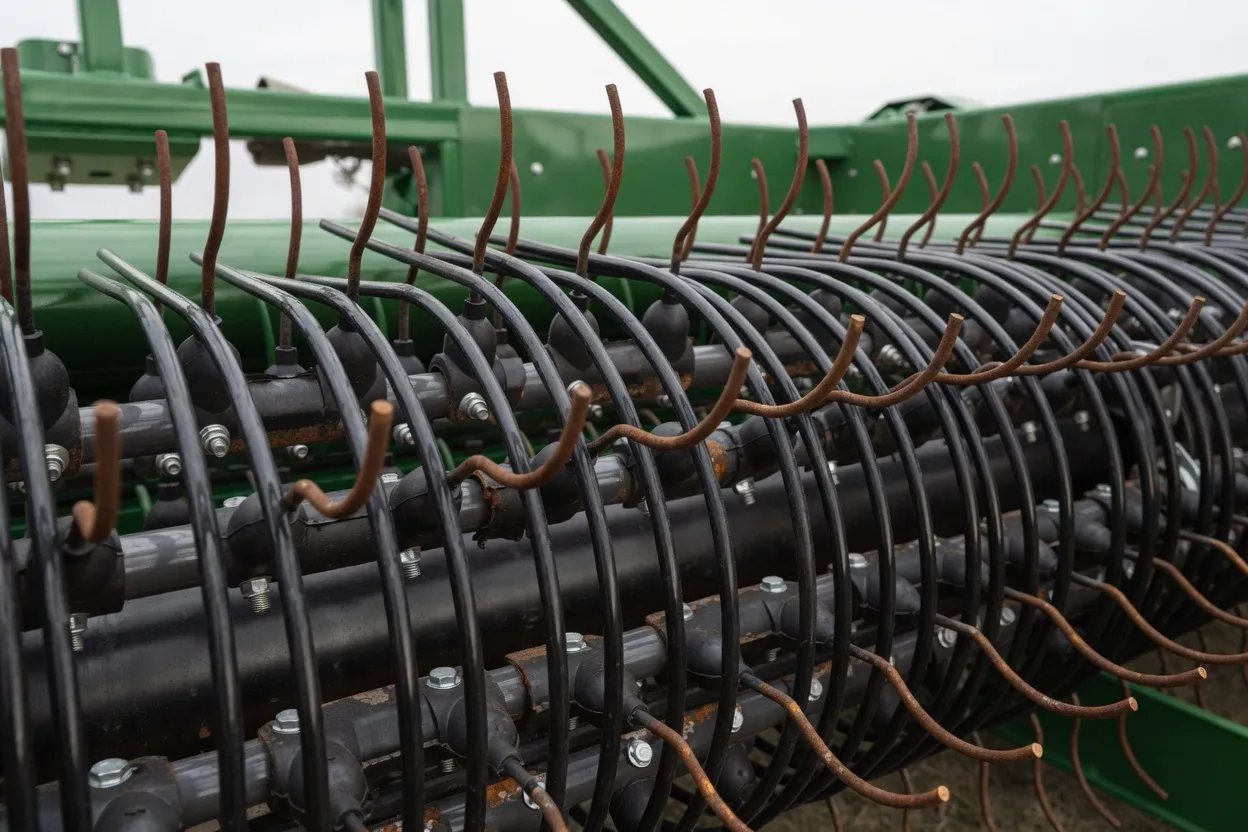
Applications — Where the 6-Ridge Flagship Belongs
Premium Export-Grade Kidney Bean — Maximum Recoverable Value
Australia exports kidney beans primarily to Japan, South Korea, and the Middle East through export contracts that specify maximum tolerance on harvest damage, impurity levels, and visual grade. A crop that enters the supply chain with 8% harvest loss at the field gate has already sacrificed 8% of the contracted tonnage before any subsequent handling loss is counted. The 4BYHD/4BYHS-3.9 on premium export crops regularly achieves 2–3% field harvest losses on heavy soils — a 5 percentage-point improvement over standard equipment that, on a 300 ha export crop at 3 t/ha and $1,100/tonne, represents AU$49,500 of additional recovered crop per season before any price premium.
Certified Organic Large-Scale Production
The Australian organic kidney bean market has grown significantly with supermarket private-label demand for certified organic canned and dried beans. Large organic certified operations — 50 to 200+ ha — supplying direct-to-processor contracts find the 4BYHD/4BYHS-3.9 their preferred machine for combining the low-loss specification with the heavy-duty build quality needed for the extended daily operating hours of large-operation harvest seasons. The purely mechanical operation with no chemical or electrical contact with the crop is inherently compatible with organic certification requirements.
Multi-Property Contract Harvesting — Premium Service Positioning
The most commercially successful kidney bean harvest contractors in Australia’s bean-growing regions position themselves on quality metrics rather than price — the ability to quote a documented 2–3% harvest-loss rate on heavy soils, versus the 8–12% that standard equipment delivers, is the basis for a premium contract rate that makes the 4BYHD/4BYHS-3.9 investment straightforward to justify. A contractor charging a premium of $20/ha over standard equipment on 500 ha of annual bean area recovers $10,000 per year in additional margin — payback on the incremental investment over the 5-ridge model in under two seasons.
Dual-Mode Flexibility for Weather-Variable Seasons
Any operation that has lost a bean crop to rain between pulling and combining — or has been forced to pull at sub-optimal moisture to beat incoming weather — understands the value of switching between BYHS and BYHD mode without calling in different equipment. The 4BYHD/4BYHS-3.9’s 20-minute configuration change is the practical tool that allows a single machine to be the right machine for whatever the season demands, not just for ideal conditions.
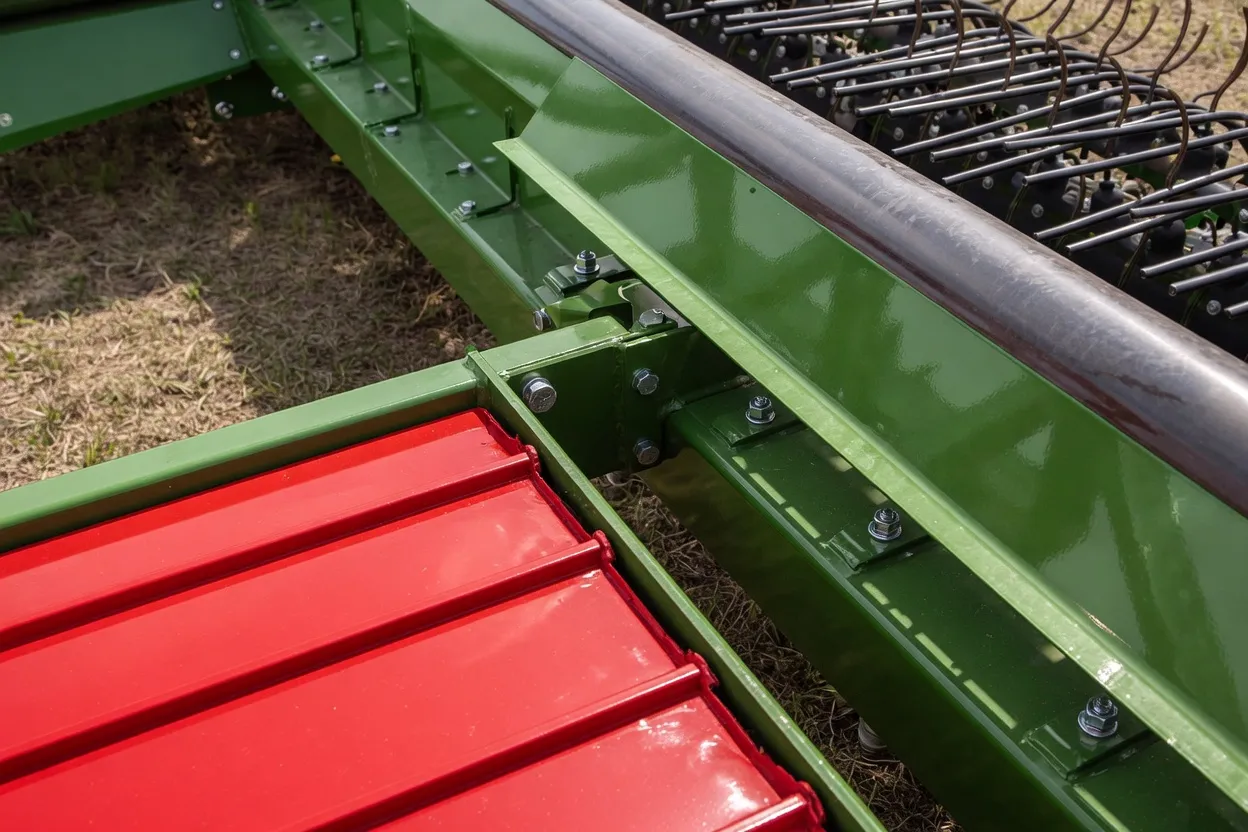
Maintenance — Heavy-Duty Specification, Commercial Schedule
Daily — Six Elements and Full Heavy-Duty Bar
The daily inspection covers six ridge elements plus the full 3.25 m heavy-duty tooth bar. Check all six ridge elements for soil packing on contact faces, tip wear, and secure mounting — the increased number of elements makes a methodical per-element check more important than on lighter models. The reinforced carrier bar makes bent or cracked bars less likely than on the standard 4BYH range, but is not immune to the occasional paddock obstruction. Run a hand along the full bar length to detect any deformation that visual inspection might miss in field lighting conditions.
Every 25–35 Operating Hours
Measure all six ridge tip dimensions against the wear-indicator specification — the sixth ridge element (outermost, performing final stabilisation) tends to accumulate slightly more wear than the inner elements due to its position at the maximum plant density zone. Replace ridge tips in matched sets of three (inner three, outer three) to maintain consistent geometry across the six-element array. Inspect the BYHD/BYHS deposition guide mounting interface for wear at the guide retention pins if used in deposition mode, as guide rattle from worn pins creates variable deposition geometry that affects windrow uniformity.
Post-Season — Flagship-Grade Full Service
Full tooth bar replacement as a set. Full six-element ridge-tip replacement. Inspect the heavy-duty carrier bar welds at the full bar length under workshop lighting — the additional bar wall thickness does not eliminate fatigue cracking risk on machines completing 300+ operating hours per season. Clean and inspect the BYHD/BYHS deposition guide for any deformation. All service components — heavy-duty tooth bar kit, six-element ridge-tip set, deposition guide hardware — are stocked at Condell Park NSW for next-day delivery on order.
Why the 4BYHD/4BYHS-3.9 Is the Final Word in Bean Pulling
The full 4BYH ridge concept at its most complete. Six contact points per plant — soil loosened, stem stabilised, extraction force minimised.
Switch between direct-combine and windrow-and-combine in 20 minutes. The right configuration for any weather condition, without a different machine.
Heavier bar, stronger mountings, more fatigue-resistant tooth coils. Built for 300+ operating hours per season at full commercial intensity.
Documented loss performance on Riverina irrigation soils. Premium export contract compliance on the hardest soil conditions in Australia.
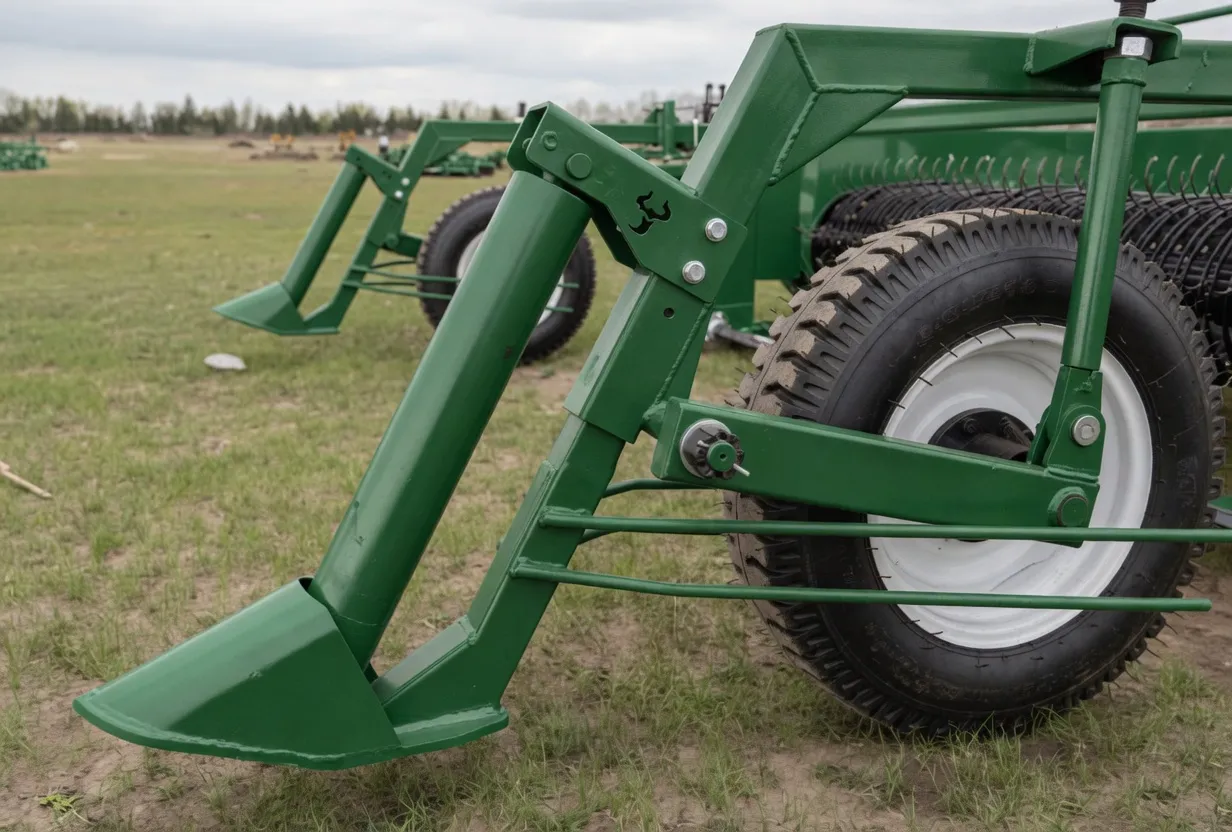
About EverPower Baling Machinery Australia
EverPower Baling Machinery Australia Pty Ltd — 27 Harley Crescent, Condell Park NSW 2200 — is the direct Australian arm of an ISO 9001-certified manufacturer with a 32,000 m² factory, 180 staff, and a dedicated R&D centre. Every machine carries a genuine Australian warranty administered locally, backed by spare parts stocked for 72-hour national delivery.
📞 +61 2 9708 3322 | ✉️ [email protected] | silage-baler.com/about-us
Frequently Asked Questions
The Complete Bean Harvesting Solution — Six Ridges, Dual Configuration
Contact EverPower for pricing on the 4BYHD/4BYHS-3.9 and a full 4BYH range comparison. We will help you identify the right model for your soil type, annual area, and harvest system.
_0141_01-300x300.webp)